The Traditional Osage Orange Hedge

It’s been a while since I’ve posted, I know. Today will be another post not about apples, but with them on the periphery- and that’s probably going to be more of the case moving forward. So, with that, here’s an essay on traditional osage orange hedges – the barriers, the planting and the management.

Background Intro of how I discovered osage orange, comparable to the preamble of a recipe website:
Back in 2016? 2015? I can’t even remember, I went on a wild cider drinking/apple exploring mission from VA to NC to AL and GA with Pete Halupka. We visited all the Southern apple greats, Tom Burford, Lee Calhoun, Joyce Neighbors and Jim Lawson to glean as much wisdom as we could in the realm of fruit exploring, growing and propagating. The unexpected twist of this trip happened when Jim Lawson shared that he had sold thousands of old grafted trees to some brothers in Georgia who planted them all over a small mountain/large hill, and had heard that the lower slopes of this mountain were covered in seedling apples from this original planting. Enamored with the idea of basically finding a 2nd generation Southern apple seed orchard, we set out to find it. And struck out. Turns out, a megachurch bought the property and had long done away with the trees. Feeling rejected, we went to the church’s coffee shop to get a coffee because that was the closest thing to a pick-me-up snack we could find. And that’s when magic happened…

It was probably 1pm and we were the only ones in this coffee shop, so we chatted with the guy behind the counter, who was a youth minister with passion for seemingly two things: coffee and Jesus. We told him our mission to find this wild seedling apple orchard and how we came so far only to discover that it was cut down. He then said: “You know, there’s an old estate near to here that was traditionally known for its peaches and peach brandy, but they might have apples! It’s called Barnsley Gardens. I’ll connect you with my contact there, she goes by the name Fairy Godmother.”

Some due diligence was needed to make sure that going to see the Fairy Godmother wasn’t code for showing up to a Baptist revival, after all we were in a megachurch coffee shop. And after some quick cell phone research, we discovered that Barnsley Gardens contained a different kind of revival… a gothic revival…designed by none other than the young prodigy Andrew Jackson Downing! For those of you who might not know, AJD was a prominent 19th century author, landscape architect and horticulturalist who, with his brother Charles, did much to advance fruit tree culture in the US during his short time on earth. We immediately and excitedly hopped in the car to go meet this Fairy Godmother.
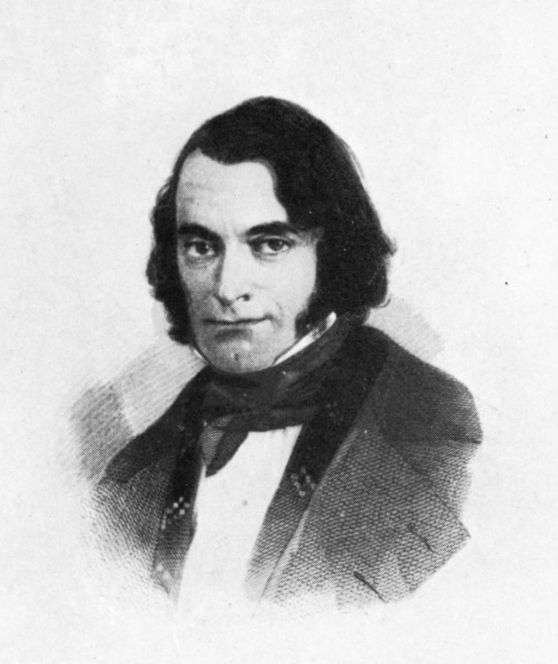
Andrew Jackson Downing

Rather than talk about how much booze the Fairy Godmother fed us once we got there, or her red sparkly kitten healed shoes, or the forest of seedling peaches and ancient muscadine vines, there was another aspect to Barnsley Gardens that is stuck in my mind. Driving through the former estate/now elite vacation destination, one of the roads was lined with very old Osage Orange (Maclura pomifera) trees. Loads of them. I’d never seen anything like that before and wondered why someone would plant so many of these trees along a road. Osage orange, or hedge apple, isn’t really something you study much in forestry school, and since they don’t produce commercial crops of fruit, I had never spent much time thinking about them. So, I filed this day and the road lined with osage trees away for years until a new client contacted me wanting to find out how to recreate the traditional living osage-orange hedge. This was my opportunity to do the deep dive, one of my favorite activities.

The American Osage Orange Hedge
When I had been tagged to do this deep dive, I had been living in Northern Virginia for a few years and had acquainted myself with some of the old 18th and early 19th century Quaker farms in the area. Over the years in this area, I noticed that old osage orange trees grew in lines in pastures and in woodlands. I knew, given their other name of hedge apple, that they must have once been part of an old hedgerow/fence system, but the questioned remained: How did farmers turn these trees into hedgerows? And where were they getting their information?

For hundreds of years post colonization (and even today), the goal of many wealthy landowners was/is to have a landscape that mimics the English garden and countryside. One aspect of the English countryside that many people wanted to implement in the 18th and 19th centuries in order to keep livestock in (or out) of their property was that of the thorn-hedge, which was overwhelmingly constructed of English hawthorn in its home country. The problem with using this in the US was that the English hawthorn, an apple cousin, doesn’t like the heat, humidity or fireblight pressure of the Southeastern/Mid-Atlantic climate. When the American hawthorn was tried in its place, people soon found out that when planted densely in a hedge, it would get absolutely hammered by the apple borer. Other thorny plants were tried in its place, such as honeylocust (Jefferson planted juniper with honeylocust and trimmed them to 3 feet tall)- which did not keep pigs out or in, while others trialed trifoliate orange-which never grew tall enough, and the imported buckthorn- which did great in the Northeast (now loathed for how well it did) but underperformed in the South.

It wasn’t until Lewis (of Lewis and Clark) sent osage orange seedlings from the Osage tribe in Missouri to Jefferson (who then gave them to the Landreth Seed Company in Philadelphia, Pennsylvania) for this tree to slowly start taking root in the East. 30 years later, a young Andrew Jackson Downing, noticing this tree on the grounds of the Landreth Seed Company, soon became it’s greatest champion.


Andrew Jackson Downing: American Hedge-Master
When you start to dig deep into a landscape’s history, you may find relics of horticultural history hiding in plain sight. I now believe that the old osage orange trees growing in lines throughout pastures, woodlands, and alongside old roads are a remnant of Andrew Jackson Downing’s passion for employing this tree as a hedge and getting loads of influential early adopters on board in order to make this tree more accessible/affordable throughout the nursery trade. It has it all. Robust, thorns, vigor, glossy orange-tree like foliage, few insect problems, long-lived, can take a rough and severe pruning, and grows in lots of different soil types. Who wouldn’t get on board?!


In 1847, AJD was the editor of The Horticulturalist, and wrote a chapter on American hedges (volume 1, no. 8). It’s a great read and is also the only thorough explanation I’ve been able to find of how osage (in the South) and buckthorn (in the North) were propagated, planted and cultivated to produce an “everlasting fence.” Everyone who talked about osage hedges referred back to Downing’s work, so it does seem like he was the one to instigate the development of this plant as a hedge.

The large, wizened trees that remain today are the most successful trees in these hedges. Over the last 150+ years, combined with changes in fencing materials and land use, they’ve outcompeted/shaded out their counterparts in order to become single trees in a line. And these are the lucky ones. Though there is no turning back the time on these trees and transitioning them back into a hedgerow (you’d need to plant new trees), their canopies now provide valuable shade to livestock and their hollowed trunks are ecological hideouts for all sorts of critters. The picture below is one of the more visually intact relics of the osage orange hedge for keeping livestock out of the orchard/garden. Most are far more overgrown than this and have lost that first layer. It’s located in Frederick, MD.


The second iteration of Osage Orange Plantings:
About 90 years later, FDR through the Works Progress Administration planted osage orange throughout the Midwest for windbreaks to reduce soil erosion. Millions of them. These were not managed in the same way I’m going to describe below, so if you are in a Midwestern state and have a line of osage, it’s probably best to assume they were planted during this era.

Also, it’s worth being said that many outlets back in the 19th century will complain how osage orange hedgerows to keep out livestock are failing because they were shoddily planted (plants in poor health, spaced too far apart, not cut back) and not managed the way they were meant to be managed. That correct way is what I’m laying out for you below for livestock fencing. It’s crazy to see various photos from permaculture sites showing cartoons of how to grow an osage orange hedge to keep out livestock, and the number of modern media sites referencing these cartoons.
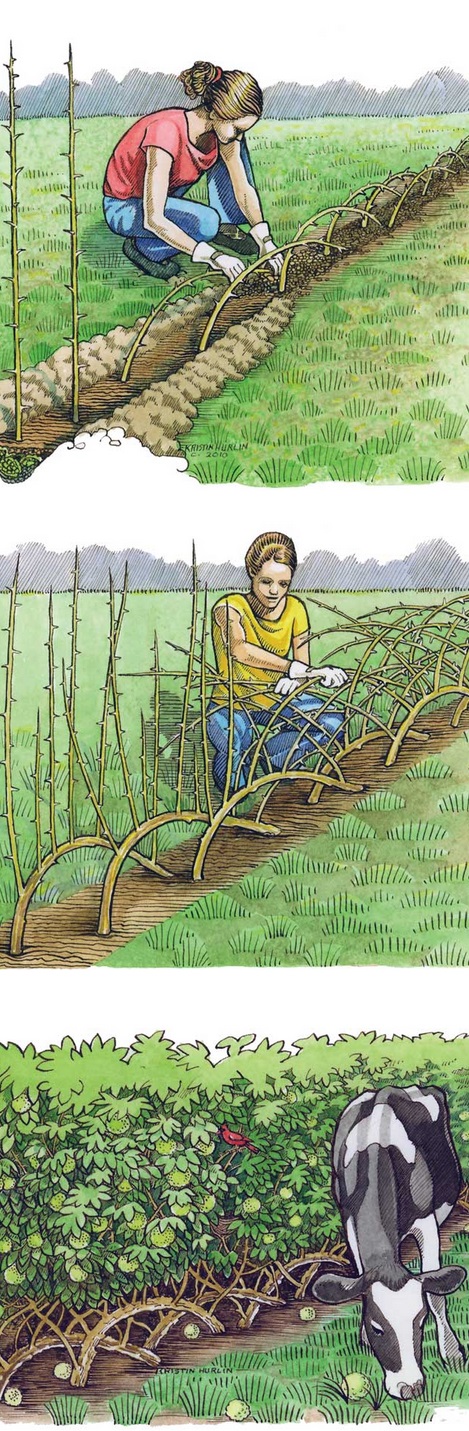
This is historically inaccurate, insanely time consuming, probably won’t work and will cause a lot of bloodshed.


HOW TO DO IT
Osage propagation:
From seed
: Fruits should be gathered in the latter half of September. It should then be cleaned and stored in equal parts sand in a cool spot. A quart of sand/seed will usually produce around 5000 plants. Rather than seeding in place in the field, it is recommended that this seed go into a nursery for a year.

From root: Select root pieces that are the thickness of your pinky finger and cut them to be 3-4 inches long, with the top end being a flush cut and the bottom end being a diagonal cut (so you can tell the top from the bottom). Plant these cuttings in your nursery for another year so they turn into seedling trees. Plant the cuttings with the diagonal side down so the flush cut is just below the soil’s surface. These will push out vigorous shoots once the soil warms up enough. It’s easiest to take root cuttings off of new plants that were seeded in the nursery the year before. The root trimmings of 100 new plants in the nursery should produce 1000 root cuttings to plant out into the field.

Prep and Planting Out:
Site prep- In the South, this was usually done in the fall. The final width of this hedge should be 4 feet, so I would first take a subsoiler/single shank and rip your line down to 18 inches if you can. Then go over 6 inches or so and do it again. Then I would cultivate a 4′ swath, with your two ripped lines being in the center, with whatever you might have to break up the soil- tiller, spader- etc and cover crop it. In late winter/early spring (in the South), till the cover crop in again and dig your plants out of the nursery.

Spacing- For the first row, you’ll want to space each plant 1 foot apart within the row. For the second row, offset by 6 inches and then begin planting your trees a foot apart so it looks like this:

Immediately after you plant, while your plants are still dormant, you’re going to cut each plant down to 1 inch (or less) above the soil surface. This is to encourage multiple shoots of regrowth and lots of vigor once the trees break dormancy. You’ll also want to keep this as weed free as you can for the next 2 years in order to target as much vegetative growth as possible. This can be done in a variety of ways, from mulching to herbicide to cultivating.

Pruning Schedule:
One Year after Planting- While still dormant, cut the whole hedge down to 6 inches
Two Years after Planting- While still dormant, cut the regrowth of the hedge down to 18 inches in height (so keep the initial 6 inches from the previous year’s cut, and then cut everything above 1 foot of the most recent year’s growth, leaving 18 inches of total hedge height).
Three Years after Planting- While still dormant, calculate 1 foot of growth from the most recent year and cut everything above it. This will make your hedge a total of 2.5 feet tall, or 30 inches tall.

Repeat cutting 1 foot off the most recent years growth in pruning season until you’ve reached 5 feet in height (should be 5 years after planting). The base of the hedge should now be around 3′ wide and absolutely impenetrable, and the hedge’s width will taper as the height increases. This is where most people stop for cattle, however you can go higher for additional shelter or protection. Some people went as high as 10-12 feet.

When the hedge has achieved its final height and width, you’ll need to shape it 2 times a year with hedge trimmers: Once in June, the second in late September.

Here’s a GIF I made to explain it in picture form:

So did I implement this for the client? The answer is no, unfortunately. A hedge like this, whether in a pasture or elsewhere, needs protection from livestock and deer until the top is above the browse line. So in order to build a hedge like this, you’d need to protect it in the first 6 years with a fence on either side. This could potentially happen more affordably with with electric fencing on either side, but ultimately the deer pressure is so high here that electric fencing may not have worked. Osage orange is in the mulberry family and one of the favorite leaves of deer as is. However, one day I hope to do a small version of these hedges at my house. Can you imagine a 12′ osage orange wall/ deer fence? That’s the dream.

How to Make Bradford/Callery Pear Less Invasive.

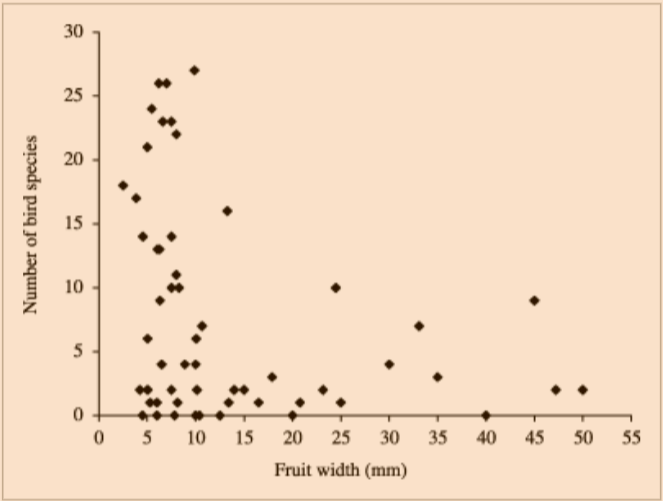
Bird predation given fruit width.png

In my last essay, In Defense of Bradford Pear, I showed the above chart from Australia that correlated fruit size with bird species. Similar charts or descriptions have been found in publications from New Zealand, Spain, Japan and in the US, as well. Based on the correlation of fruit consumption with fruit size, I’ve decided to elaborate on the last essay in order to practically address Callery/Bradford pear invasiveness in the US in the best way I can.

Cedar Waxwing eating Pyrus calleryana in winter. Photo from Pilot Online

Due to Callery’s fruit size attracting our native songbirds, like American robins, cedar waxwings and gray catbirds, we can’t stop them from eating the little pears and pooping in marginalized areas like fencelines and worn out pastures. To think we can kill enough Callery pear to make a difference is a lesson in futility because 1.) We live in the United States and you can’t go kill a neighbor’s tree in the name of INVASIVES if they don’t want you to and 2.) Each tree produces thousands of fruits. So, with that said, here are my top solutions to sustainably make Callery pear less invasive and more useful.

1.) Citizen Breeding. What makes Callery pear invasive is its ability to produce copious amounts of small fruits, which birds then eat and distribute all over the place. It seems logical, then, to want to try and breed larger fruits into our populations of Callery in order to stop the spread by birds. In order to reduce invasiveness by around 80%, all it takes is getting progeny from the Callery/Bradford trees to produce fruits that are around an inch (25mm) in diameter. How do we do that? Allow them to hybridize with larger fruiting pears so the seeds dispersed by birds will have a higher likelihood of growing larger fruits…thus halting the invasion cycle.

What is needed to hybridize these pears and get them larger? For starters, you’re going to need a collection of pears that bloom at the same time as Callery, which is quite early. Russian/Cold Climate and early Asian pears are likely your best bet for this, so I went through the GRIN database (taxpayer funded genetic repositories) and have made a starter-list (there are a bunch more):

PI 541904- Seuri Li
PI 45845- Yaguang Li
PI 437051- Jubilee (cold hardy)
PI 541925- Kor 2
PI 267863- Pingo Li
PI 134606- Tioma (cold hardy)
PI 278727- La Providence
PI 278731- Sivaganga Estate
PI 307497- Seu Ri
PI 292377- Ranniaia Mleevskaia (cold hardy)
PI 541760- Chieh li x Japanese Golden Russet
PI 278729- Samy’s Estate
PI 541761- Chieh Li x Japanese Golden Russet 2
PI 541905- Szumi
PI 127715- Krylov (cold hardy)
PI 541326- Angelica Di Saonara
PI 324028- B-52 (cold hardy)
PI 541290- Mag 1 (cold hardy)
PI 132103- Shu Li
PI 312509- Tse Li

Appreciate this list? Help fund this type of work and more by purchasing charcuterie from www.hogtree.com.

You can request free scions online from September 1 to February 1 of every year from GRIN. You can also probably buy many of these cultivars online. From there, I highly recommend you share scions of these for free every winter, as I plan to do, in order to help infuse larger fruiting genetics into Calleryana.

You might notice there are a bunch of Asian pears in that list and you might think: Eliza, those pears are super fireblight susceptible! And you are right, of course, but think of it this way: MANY trees that are listed as fireblight susceptible are actually quite tolerant to FB once they are established and reaching sexual maturity. With Callery being an amazingly fireblight tolerant rootstock, this should help to get your topworked trees past the first 2 years of heightened susceptibility so they can start to fruit. Once these Asian pears intermingle with Callery, there are two possible outcomes:

1.) The hybrid offspring are more fireblight tolerant than the grafted Asian pearent’s tolerance

2.) The hybrid offspring is less tolerant to fireblight than the grafted Asian parent’s tolerance and will probably succumb to the disease and die on its own.

Either are a win-win, really.

Next, you’re gonna need to go into your pear thicket and do some cutting and grafting. There are two scenarios I see often:

1.) Field full of Callery: If you have a thick field of calleryana, I would recommend getting a forestry mulcher in and cut/mulch rows into the existing Callery stand. Then, run the mulcher to cut out trees within the rows left standing so the remaining are at 15 foot spacings. Top the trees you’ve left behind above deer browse ( throw into the alley and run over those, too, with the mulcher) and graft on the early blooming large fruited cultivars.

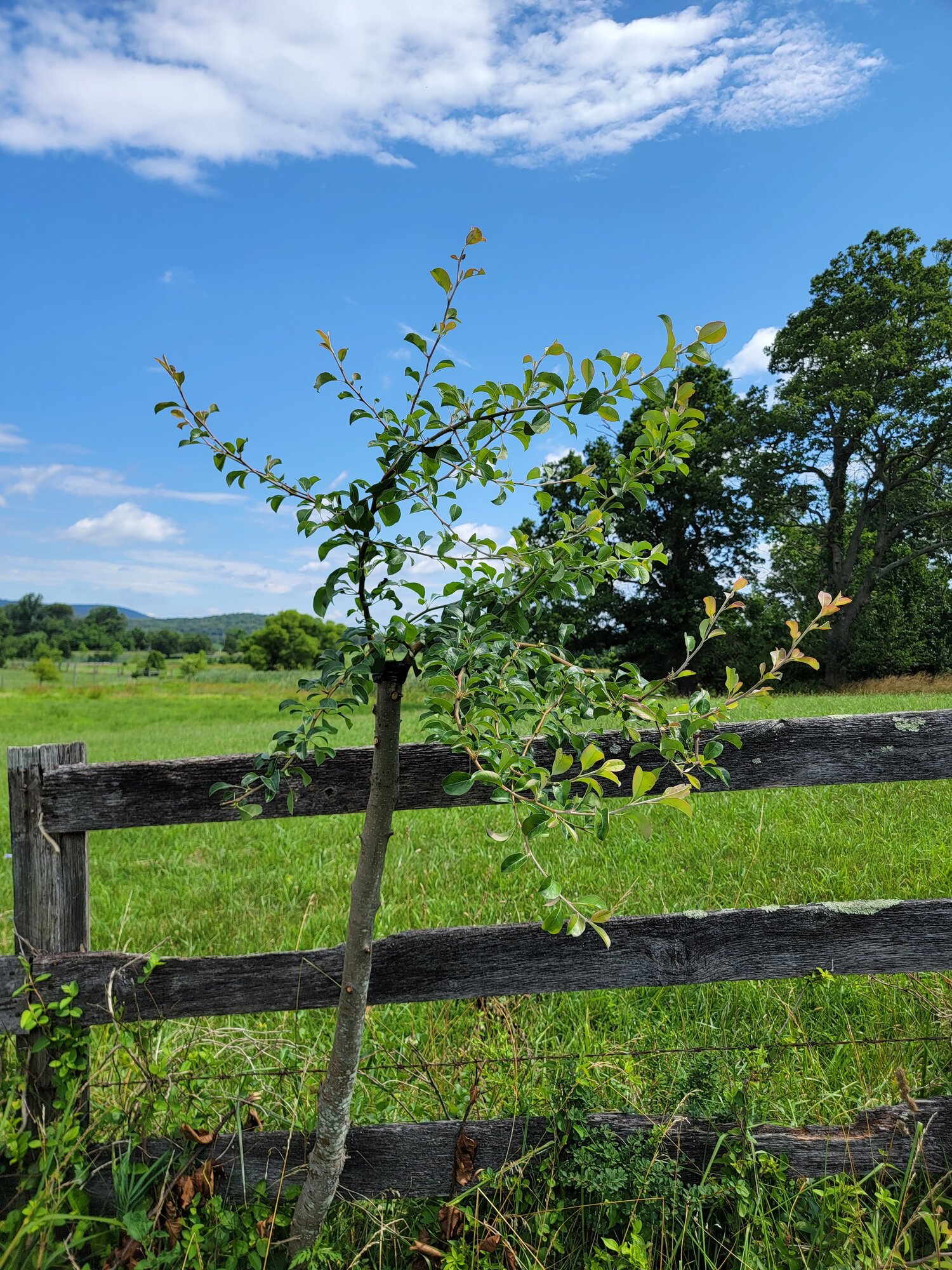
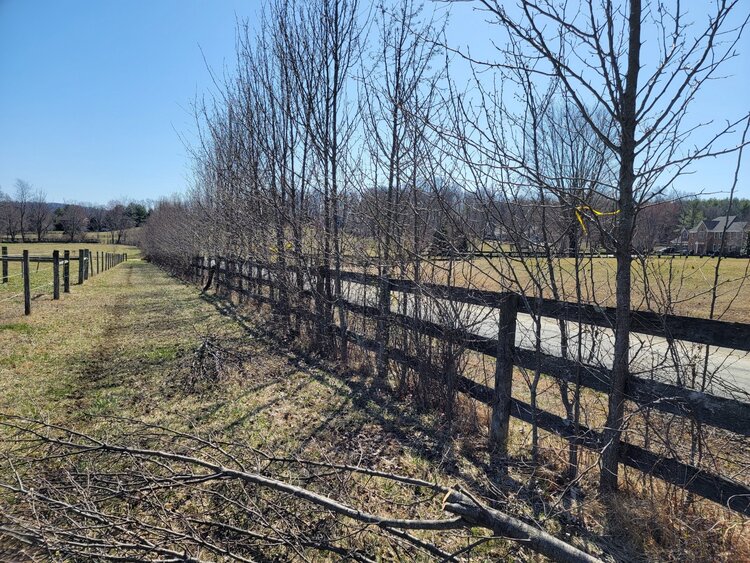
2.) Fenceline/Border with Callery: This is the scenario We’ve been dealing with over the past few years along the farm fenceline. First thing I do is flag the trees I want to keep, which are at 15 foot spacings along the fence. Then we cut out and chip all the non-flagged callery trees using my neighbor’s chipper (I mulch my orchard with callery pear wood chips). While we are cutting out the non-flagged trees, I go ahead and also cut the tops out of the flagged trees. I pick a height that is above deer browse height and also has a lot of clear wood without branches, because that helps with grafting. In April (I’m in zone 7a), I make fresh cuts on the remaining pear trees and topwork all of them to fruiting cultivars. We’ve been doing this for 3 years and 2018’s topworked pears will be producing fruit this year.

Topworked fenceline callery pear to a local french heirloom cultivar. This was grafted in April of 2021
Topworked fenceline callery pear to a local french heirloom cultivar. This was grafted in April of 2021. This is a smaller tree. I’ve topworked 7″ trees as well with amazing take.

This is totally doable and the result? An orchard of pears! You’d have to cut the tree down anyway if you were going to spray it, so why not turn it into a producing pear tree of value? My neighbors even pitched in to help us cut and chip in the name of supporting my vision and also getting rid of the fruiting portion of the Callery trees.

In two years, your top-worked pears will be flowering and the bees will mingle between surrounding landscape Callery/Bradford pears that weren’t able to be cut down and the large-fruited cultivars you have grafted. With callery pears being pollinated with the list of pears above, your chances of getting larger fruit to come up from the fertilized seed will exponentially increase, limiting its invasiveness if the fruit is an inch or larger in diameter.

2.) Use them as rootstocks! Every Callery pear growing is automatically the best pear rootstock around. For all of you people out there who are inundated with deer pressure, graft to the Callery pears to any pear you’d like (or Winter Banana apple) above the deer browse line. Sure, you’ll get lots of leafy re-growth off the trunk for a few years (which the deer or other livestock eat as tender shoots), but its also really easy to remove new growth with your hands or slightly older growth with pruners, and new shoots don’t have thorns. You’ll start to get fruit in 2-3 years.

One of the main reasons why Callery didn’t catch on as a rootstock, aside from root propagation failures and hardiness, is that they don’t produce dessert fruit (fruit meant for out of hand eating). This is the same reason why we’ve lost SO MANY fruit cultivars in the last 100 years. If you weren’t a dessert cultivar chosen by the cooperative extension to be grown in the early 20th century, you were phased out. However, in today’s markets, I believe large fruited Callery pear hybrids really have a chance in fermentation, specifically cider blends and perry (cider made from pears). They are high in sugar (over 16% brix on average for the 200 or so hybridized trees I’ve evaluated), and run the gamut in acidity, tannins, aromatics and unusual characteristics. Since these trees are so disease and pest tolerant, which allows them to grow and produce copious amounts of fruit without the hand of humans or chemicals, they stand to produce the most sustainable fruits and alcohol in humid temperate climates. We need more people working with them in order to make this happen because they aren’t apples and they need their own methods.

If you’d like to see more essays in general (I literally have 75 in draft form and many more in my brain), my time will need to be supported. You can do this through the donate button above or buy my company’s charcuterie from HogTree

The last essay left me with a bunch of hate mail and loads of baseless claims. In future essays, I’ll be debunking many of these claims in order to try and bring about a full picture. With that said, please send your strong opinions to fruitandfodder@gmail.com

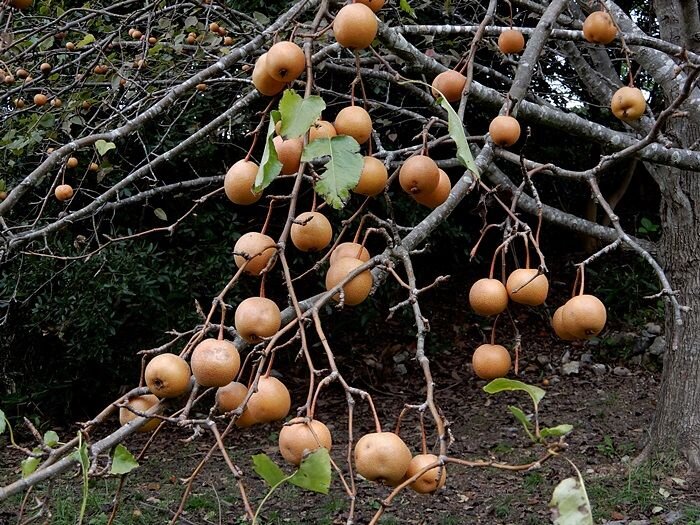
Of Note: throughout the South and Southern New England, I have been noticing spontaneous hybridization in the “wild” between P. calleryana with P. communis (French) and/or P. pyrifolia (Asian). These trees have much larger fruits, usually golfball sized or larger, and are often loaded with fruits dripping from the trees because Callery genetics are heavy lateral bearers (perhaps an indicator phenotype for these hybrids). No research that I can find has evaluated the genetics of these larger fruited callery-like pears to see what exactly they are crossed with, but I’m happy to help supply specimens if anyone out there takes an interest.

In Defense of Bradford Pear

I wrote this article for TheFruitExplorers.com and decided to cross post it here.

Every year, around this time, social media begins to rumble in uproar over Bradford Pear (Pyrus calleryana). With headlines like “The Curse of the Bradford Pear,” “Bradford pear tree: How the trees can hurt people, then environment,” and finally “I Just Hate Bradford Pear,” it’s no wonder people have it out for them. The trees have NO GOOD PRESS and, unfortunately, it’s much easier for hoards of people to fall in line with anti-invasive rhetoric than to understand who or what they are trying to demonize. In light of this, the time has come to take a stand for this poorly misunderstood tree.

Bradford pear belongs to the species Pyrus calleryana, which is why it is sometimes called “Callery.” This species of pear is native to China, where the range goes from sea-level to 5000 feet in elevation, spanning a thousand miles inland as the crow flies. Cousins of callery pear are also in Northern Korea and Japan, showing an immense climate and site adaptability for the species.

Pyrus calleryana in Japan

How did it get to the US?:

In the early 20th century, the Pacific Northwest contained many orchards of Pyrus communis, or French pears. These pears were being ravaged by fireblight (Erwinia amylovora), a native bacterial disease, and professor Frank Reimer was pulling his hair out over the potential loss of the West Coast commercial pear industry if a control for fireblight wasn’t found soon. Researchers have long known that Asia’s gene pool for fruit and nuts is much older than European or American genetics, and likely hold resistances or much improved tolerances to pest and disease due to the long and slow co-evolution over time. Reimer knew, from his research, that Pyrus calleryana and Pyrus ussuriensis were inherently resistant, so he put out an SOS to obtain pear seed from Asian regions in order to hopefully find resistance.

Professor Frank Reimer, left

Harvard’s Arnold Arboretum in Massachusetts answered his call in 1908, sending plant explorer EH Wilson (aka “Chinese” Wilson) to China to see what he could find. Once there, he collected P. calleryana seeds from 4,000-5,000 feet in elevation and sent them to be grown out in Boston. Many of these proved to be hardy for Massachusetts and many people, including professor Frank Reimer, got excited. Given the potential for Pyrus callerana to save the commercial pear industry in the PNW, the USDA decided to add callery pear to their fruit’s explorer’s collection list.

At the time, the USDA had been going through a period of glitz and glam concerning their plant exploration program. The golden child at the center of this hubub was the darling plant explorer David Fairchild, the person responsible for bringing over German hops, the avocado, and kale (among many, many other things). With his notoriety and prestige, he married into the fabulously wealthy family of Alexander Graham Bell, and was feeling the need to step down from his travels abroad in order to start a family. Instead of Fairchild himself going on the pear mission, he delegated the job to one of the toughest mofos alive: Frank Meyer. Dutch born, Meyer was known for his ability to walk 30+ miles a day, everyday, forever.

Frank Meyer in Turkestan

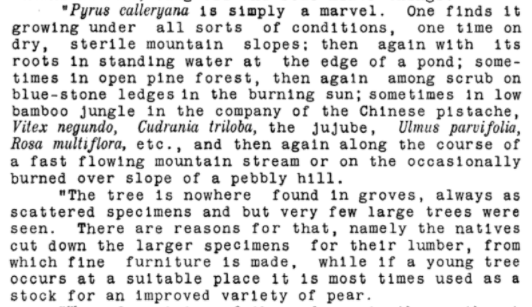
This would be no small job, either. According to Arnold Arboretum, 25 pounds of seed would require picking seeds out of 5000 pounds of fruit. That’s the equivalent of 125 bushels of tiny (8.5mm on average) callery pear fruits, which would be maddening to collect by hand. This wasn’t a problem for Meyer, though, as he probably preferred tiny pear seeds to interacting with people. With his marching orders, he set out on this pear mission, writing the following to his boss, David Fairchild:

A letter to David Fairchild from Frank Meyer April 16, 1917

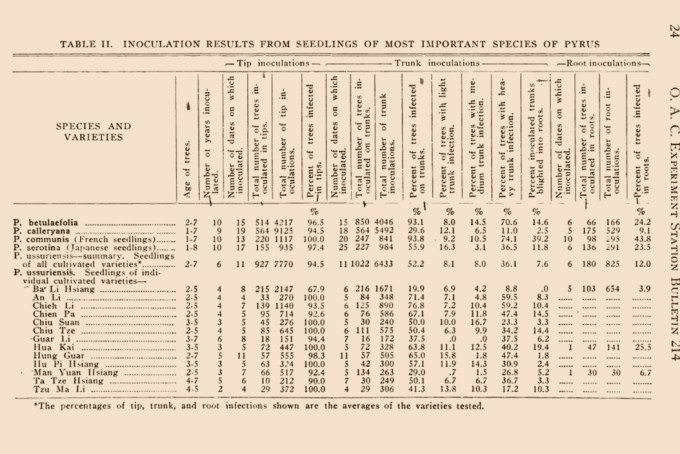
Once the first batches of seeds were back in the States, they went under commercial pear rootstock monitoring for fireblight resistance. These pear seeds produced vigorous, uniform trees that, when inoculated with fireblight, proved to be the most resistant of any pear tree they had evaluated, by a landslide (double the resistance of Pyrus ussurriensis and far more vigorous). The chart below reveals the results of this trial:

Fireblight Results Callery Pear Innoculation.png

In later studies, Reimer reported that 11% of P. calleryana trunk inoculations showed a severe fireblight infection. Which, by the way, is pretty amazing. When I innoculated my apple seedlings with fireblight ooze, 95% of them showed severe infection or died.

In addition to having stellar fireblight resistance, Callery pears were tested on a variety of sites and were found to thrive in nearly all soil and moisture scenarios, from coarse sand underlain by granite to heavy clay. They also found Callery pears to have a lower chilling requirement than P. communis (French pear rootstock) (source), allowing for it to be grown in more erratic seasonal conditions (which might not have been a big deal then but MAN is that a big deal now). This pear species was seen as the most bomb-proof, resilient rootstock around on which to grow our favorite eating pears, and even produced yields 32% above the same cultivars grafted to P. communis (Source: Westwood, Pear Rootstocks for the Northwest. NAFEX POMONA Vol 3, Number 2, 1970). With the excitement and growing popularity of using callery pear as rootstock, the US continued with seed gathering trips to China for decades.

From Amazing to Pariah, what happened?

First of all, most of what you read about the introduction of Bradford pear (P. calleryana) to America is incorrect, as I’ve just given you the real history above. Outlets like The Grumpy Gardner, a now-retired columnist for all things horticulture at Southern Living Magazine, have done a lot of damage spewing emotion-based information to people who don’t know any better.  With little challenge to any of the points ever made, he and others managed to create a culture of emotional reaction surrounding P. calleryana, rather than a much needed practical one. For the record, the chances of you being allergic to Bradford Pears are slim to none because they aren’t wind pollinated. Bullied, bruised, blamed and constantly soaked in toxic agri-chemicals to try and kill it, the Callery pear is one of the most shamed species in the US. If you don’t believe me, look no further than the hundreds of online articles that alone focus on how the blooms smells like male ejaculate (that’s spermadine and putresine you’re smelling and it’s in a lot more plants than you think, including the beloved American chestnut).

Why didn’t Callery become the main rootstock of all pear production in the US? According to Reimer, on average, the tree isn’t very hardy (doesn’t like to grow colder than 7a, or below -10 fahrenheit), it doesn’t propagate all that well from stooling beds (primary means of producing rootstocks in the nursery industry), and has poor fruit qualilty. Why fruit quality matters for a rootstock is beyond me, but it was listed as a reason. In regions 7a and hotter, though, Callery pear is the best rootstock onto which one could graft European and Asian pear cultivars, but the research conducted on these pears was West coast centric and never really made it over to the East, even after Callery became a dreaded invasive.

Root Stock to Ornamental to Monster:

The Glenn Dale Maryland USDA research site had planted many P. calleryana seeds from Frank Meyer’s collection and by 1950, there were still a few P. calleryana trees remaining at the location. In 1952, researchers took notice of one particular thornless (many wild apples and pears have thorns) tree with an amazing white bloom (Callery produces fruit on lateral branches, on the previous year’s wood and on spurs of older wood. According to Reimer, It probably produces more blossoms than any other species of Pyrus). Thinking this could be of ornamental quality, cuttings were taken from this tree, grafted onto a seedling Callery pear rootstock, and planted in a subdivision nearby for testing. These trees were pruned/maintained, and after 8 years of oohs and ahhhs, they named the cultivar ‘Bradford,’ in honor of the horticulturalist who recognized its potential as an ornamental tree.  By 1962, the Bradford Pear was available commercially and it became one of the most widely planted suburban trees in the US.

Around this time, other research stations and arboretums were noticing the ornamental value of the seeds planted from Meyer’s explorations. The National Arboretum produced, from a seedling selection, a cultivar called “White House,” and a seedling now known as “Autumn Blaze” was selected from the Horticultural Farm in Corvalis, Oregon.

The late 1960’s welcomed a gold-rush era of Callery pears, with many nurseries planting out seedlings from the original collections of Frank Meyer in order to find the next Bradford. This, friends, is where we start to transition from Amazing Rootstock to Amazing Ornamental Street Tree to “The Curse of the Bradford Pear.”

Pyrus calleryana is amazing for all of the reasons I listed above (insect and disease resistance, able to grow in a variety of soils and climates), but did you know it is also largely resistant to pest like deer, Japanese beetles, and wood boring beetles? The tree is precocious (often 3 years to fruit), the first to leaf out in the spring and the last to drop its leaves in the fall/winter. All of these qualities are noteworthy, yet have gone largely unnoticed due to one thing: The original ‘Bradford’ tree was self sterile.

When a tree is self-sterile, it cannot reproduce with itself in order to create progeny (fruit with viable seed). This wasn’t a problem when Bradford clones were planted out in the DC suburbs, because they were all genetically identical. When the bees would visit the flowers of one tree, and then the next, the pollen was sterile and did nothing to further fruit development.  However, that was just one cultivar’s genes.

Remember when I said that Meyer walked 30+ miles a day? He covered so much ground while in China that he sent seed from Callery pear populations hundreds of miles apart. As it turns out, these populations produce genetically distinct cultivars under the species, and are totally able to cross with one another. Which they did once all those populations were brought together to intermingle in the US.

When the other ornamental selections like “White House” and “Autumn Blaze” showed up on the streets, the self-sterile Bradford pears soon became promiscuous in the neighborhood. By 1980, 300,000 Callery pear trees had been planted as street trees, producing huge amounts of small fruit with viable seed. From there, seedlings spread far and wide via birds and raccoons.

Today, in certain areas of the US, Callery pear seedlings can be found inhabiting fence-lines and ecologically stressed out pastures/roadsides, causing everyone to scream INVASIVE! THEY’RE INVASIVE! OMG KILL THEM. I CAN’T EVEN THINK STRAIGHT RIGHT NOW. EWWWW. IS THAT SPERM I SMELL? KILL.

But let’s take it out of all caps for a moment and go a bit deeper, because they deserve a chance.

Why is it so successful in the landscape?

Look, when you get into research about exotic plant species in the US, a huge majority of papers are biased in their research scope to focus on their invasiveness rather than what they offer. For instance, this paper (and there are many like this) decided to go ahead and only name one bird, the invasive European Starling, as being responsible for spreading callery pear in the landscape.

Screen Shot 2021-03-29 at 10.51.48 AM.png

This is a type of fear mongering that I find over and over again. Rather than list the native birds that actually feed on Callery pear (there are MANY), research tends to dwell on the negative ones in order to further demonize this tree. I’ve been writing this paper for nearly 3 years (because 2 editions of this have been deleted on accident) and the only research I have been able to find listing native birds comes out of non-profit research and a masters thesis from Michigan, both BURIED in google. Over time and with much frustration given the extreme biases of US research, I decided to broaden my search for Callery pear dispersal in other countries, and the following is what I found out of Australia:

Size of fruit matters given the diversity of birds.

As you can see from the diagram above, the size of fruit directly corresponds with the number of frugivorous bird species that eat them. Like most ornamental fruit trees, Callery pear’s small fruit (8.5mm on average) is relished by birds, especially since they often have a tendency to hang on the tree well into winter- providing some much needed winter food for the birds that stick around.

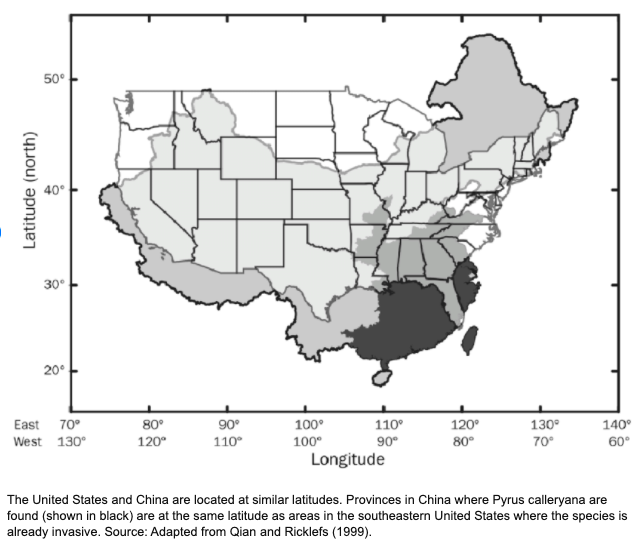
Ok, so lets briefly put this all together: Ornamental= small fruit= bird food= birds poop= up comes Callery pear= produces thorns so not browsed= very tolerant of all the diseases= very tolerant of any soil type= it grows and thrives. But also, the Southeast is seriously just like China’s native range for Callery Pear (dark grey)…

https://www.researchgate.net/publication/232682928_The_Beginning_of_a_New_Invasive_Plant_A_History_of_the_Ornamental_Callery_Pear_in_the_United_States

I have two trains of thought that I’d like to go down: Fruit size and human impact on the land

1.) Fruit size: The average untamed fenceline in my climate contains autumn olive, barberry, multiflora rose, Callery pear, oriental bittersweet, honeysuckle, greenbriar, flowering dogwood, privet, american holly, hackberry, black cherry and a growing number of ailanthus. With exception to Ailanthus (which has a winged seed), what do all of these species have in common? They all produce fruits less than 15mm in size. Whenever there is a perch, such as a fenceline or a powerline, you’ll often see these species because they have small fruits that birds eat. The reason why we see so many Callery pear along these areas as well as in old fields and the built environment leads me towards the second thought…

2.) Human impact on land. Unlike many of the other species I mentioned in the paragraph above, Callery pear can thrive in compacted, low nutrient, poor draining soil with blazing sun and oppressive humidity. The reason why we see so much of it is because it thrives where humans have arrived and destroyed. Places like old fields, for example, which are are nutrient poor and compacted due to the robber-farmer that took more than the field could supply. Often in my area, those fields once supported tobacco and now are hayed by good-ole boy farmers in the area to keep the property in ag taxation for the owner, but no one ever puts any love/nutrition back into the land. What will grow in this scenario? Callery.

Support my writings and more through the purchase of charcuterie at www.hogtree.com

HogTree Logo

How can we make these pears less invasive?

Due to Callery’s fruit size attracting a high diversity of fruit eating birds, we can’t stop birds from eating the little pears and pooping in marginalized areas like fencelines and worn out pastures. To think we can kill enough Callery pear to make a difference is a lesson in futility because 1.) We live in the United States and you can’t go kill a neighbor’s tree in the name of INVASIVES if they don’t want you to and 2.) Each tree produces thousands of fruits. So, with that said, here are my top solutions to sustainably make Callery pear less invasive and more useful.

1.) Citizen Breeding. What makes Callery pear invasive is its ability to produce copious amounts of small fruits, which birds then eat and distribute all over the place. It seems logical, then, to want to try and breed larger fruits into our populations of Callery in order to stop the spread by birds. In order to reduce invasiveness by around 80%, all it takes is getting these trees to produce fruits that are around an inch (25mm) in diameter. Throughout the South and Southern New England, this is happening already in the “wild.” I’ve noticed trees that strongly look to be be hybrids of P. calleryana with P. communis (French) and/or P. pyrifolia (Asian). These trees have much larger fruits, usually golfball sized or larger and are often loaded with fruits dripping from the trees due to callery’s lateral bearing genetics (a possible phenotype identifier for callery hybrids). No research that I can find has evaluated the genetics of these larger fruited callery-like pears to see what exactly they are hybridized with, but I’m happy to help supply specimens if anyone out there takes an interest.

What is needed to hybridize these pears and get them larger? For starters, you’re going to need a collection of pears that bloom at the same time as Callery, which is quite early. Russian/Cold Climate and early Asian pears are likely your best bet for this, so I went through the GRIN database and have made a starter-list (there are a bunch more):

PI 541904- Seuri Li
PI 45845- Yaguang Li
PI 437051- Jubilee (cold hardy)
PI 541925- Kor 2
PI 267863- Pingo Li
PI 134606- Tioma (cold hardy)
PI 278727- La Providence
PI 278731- Sivaganga Estate
PI 307497- Seu Ri
PI 292377- Ranniaia Mleevskaia (cold hardy)
PI 541760- Chieh li x Japanese Golden Russet
PI 278729- Samy’s Estate
PI 541761- Chieh Li x Japanese Golden Russet 2
PI 541905- Szumi
PI 127715- Krylov (cold hardy)
PI 541326- Angelica Di Saonara
PI 324028- B-52 (cold hardy)
PI 541290- Mag 1 (cold hardy)
PI 132103- Shu Li
PI 312509- Tse Li

Appreciate this list? Help fund this type of work and more by purchasing charcuterie from www.hogtree.com.

You can request scions online from September 1 to February 1, of every year from GRIN. You can also probably buy many of these cultivars online. From there, I highly recommend you share scions of these for free every winter, as I plan to do, in order to help infuse larger fruiting genetics into Calleryana.

You might notice there are a bunch of Asian pears in that list and you might think: Eliza, those pears are super fireblight susceptible! And you are right, of course, but think of it this way: MANY trees that are listed as fireblight susceptible are actually quite tolerant to FB once they are established and reaching sexual maturity. With Callery being an amazingly fireblight tolerant rootstock, this should help to get your topworked trees past the first 2 years of heightened susceptibility so they can start to fruit. Once these Asian pears intermingle with Callery, there are two possible outcomes:

1.) The hybrid offspring are more fireblight tolerant than the grafted Asian pearent’s tolerance

2.) The hybrid offspring is less tolerant to fireblight than the grafted Asian parent’s tolerance and will probably succumb to the disease and die on its own.

Either are a win-win, really.

Next, you’re gonna need to go into your pear thicket and do some cutting and grafting. There are two scenarios I see often:

1.) Field full of Callery: If you have a thick field of calleryana, I would recommend getting a forestry mulcher in and cut/mulch rows into the existing Callery stand. Then, run the mulcher to cut out trees within the rows left standing so the remaining are at 15 foot spacings. Top the trees you’ve left behind above deer browse ( throw into the alley and run over those, too, with the mulcher) and graft on the early blooming large fruited cultivars.

2.) Fenceline/Border with Callery: This is the scenario We’ve been dealing with over the past few years along the farm fenceline. First thing I do is flag the trees I want to keep, which are at 15 foot spacings along the fence. Then we cut out and chip all the non-flagged callery trees using my neighbor’s chipper (I mulch my orchard with callery pear wood chips). While we are cutting out the non-flagged trees, I go ahead and also cut the tops out of the flagged trees. I pick a height that is above deer browse height and also has a lot of clear wood without branches, because that helps with grafting. In April (I’m in zone 7a), I make fresh cuts on the remaining pear trees and topwork all of them to fruiting cultivars. We’ve been doing this for 3 years and 2018’s topworked pears will be producing fruit this year.

Topworked fenceline callery pear to a local french heirloom cultivar. This was grafted in April of 2021

This is totally doable and the result? An orchard of pears! You’d have to cut the tree down anyway if you were going to spray it, so why not turn it into a producing pear tree of value? My neighbors even pitched in to help us cut and chip in the name of supporting my vision and also getting rid of the fruiting portion of the Callery trees.

In 2-3 years, your top-worked pears will be flowering and that’s all part of your plan, as bees will mingle between surrounding Callery and the large-fruited cultivars you grafted. All of a sudden, your chances of getting larger fruit to come up from that fertilized seed will exponentially increase. And did I mention that you’ve also made yourself an orchard?

2.) Use them as rootstocks! Every Callery pear growing is automatically the best pear rootstock around. For all of you people out there who are inundated with deer pressure, graft to the Callery pears to any pear you’d like (or Winter Banana apple). Sure, you’ll get lots of leafy re-growth off the trunk for a couple years (which the deer or other livestock eat as tender shoots), but its also really easy to remove new growth with your hands (they pop off) or slightly older growth with pruners, and brand new shoots don’t have thorns. You’ll start to get fruit in 2-3 years.

One of the main reasons why Callery didn’t catch on as a rootstock, aside from root propagation failures and hardiness, is that they don’t produce dessert fruit (fruit meant for out of hand eating). This is the same reason why we’ve lost SO MANY fruit cultivars in the last 100 years. If you weren’t a dessert cultivar chosen by the cooperative extension to be grown in the early 20th century, you were phased out. However, in today’s markets, large fruited Callery pear hybrids really have a chance in fermentation, specifically cider blends and perry (cider made from pears). They are high in sugar (over 16% brix on average for the 200 or so hybridized trees I’ve evaluated), and run the gamut in acidity, tannins, aromatics and unusual characteristics. Since these trees are so disease and pest tolerant, which allows them to grow and produce copious amounts of fruit without the hand of humans or chemicals, they stand to produce the most sustainable fruits and alcohol in the South. We need more people working with them in order to make this happen because they aren’t apples and they need their own methods.

Resized_Resized_20210320_121413.jpeg
Resized_Resized_20210327_104037(1).jpeg

Cider And Heirloom Apple Vigor: An Hypothesis

Recently, I was on the phone with a mentor and we were discussing hedgerows (my new pet project, aside from brewing all sorts of alcohol). With some of the species I mentioned, I was told that livestock would eat them down to nothing and render the hedgerow useless. After having a few tree species rejected, I frustratingly asked: “What if I planted my hedgerows with invasives like multi-flora rose, then?!”

Without any hesitation, my mentor said: “Invasives like multi-flora rose are very delicious to many animals, like my goats.  You might be suggesting invasive plants for your hedgerow because they are vigorous and seem to outcompete everything else, but try to think about vigor from another perspective. If plants with high vigor are also the most sought after by animals, don’t you think that vigor might be an evolutionary trait to survive browse?”

This is the first time I’ve heard this perspective on invasives and I’ve really enjoyed thinking about it. After some minimal research, I found out that the subject is still debated today by ecologists as the “plant vigor hypothesis.” Generally speaking, vigorous plants have higher nutrient densities than non-vigorous plants, so herbivores are more prone to eat them. However! If the very vigorous cultivars are able to put on a bunch of girth, many herbivores aren’t able to eat the whole thing because of their jaw size.

This, of course, has got me thinking about apples. Here’s why.

In many essays on this blog, I’ve talked about how I consider many cider and heirloom cultivars to be very vigorous as compared to most of the grocery store cultivars. Vigorous cultivars are harder to prune, occupy more space (so less trees per acre), have issues with vegetative vs fruit bud proportions, etc. In general, they are harder to grow.  After reading more about this “plant vigor hypothesis,” I wonder if there is a connection between vigor and nutrient density in apples cultivars?

imageedit_20_9184260796

From an evolutionary standpoint, a correlation between vigor and nutrient density makes sense to me. Many wild crab apples in the US have much higher tannins (aka polyphenols, which =nutrition density) than cultivated varieties. This is from the many lifetimes spent co-evolving with insects and herbivores who are trying to eat them. From observing crabapples in the “wild” and planted in landscapes, it seems as if many trees have low vigor and perhaps this is because they have evolved to have an unpalatable deterrence for animals and humans alike?

In hard cider, many of the wild crabs are too much for our palates to handle and though very nutritious, they will cause a harsh and likely negative consumer experience. So what have we done? Over time, cider drinkers/makers/apple growers have selected cultivars to grow which are palatable to the consumer, but also contain enough tannins (or polyphenols, or natural defense) to give the cider some substance.  Could it be that in selecting not-so-astringent apple cultivars for eating/drinking, we’re unknowingly selecting for more tree vigor? If the apple cultivar hasn’t evolved enough to deter herbivores through astringent taste, then do genetics dictate that it must rely on vigor to survive? 

These sorts of questions make me excited and I’ll keep learning about these processes in order to try and uncover different management ideas that don’t involve regulating vigor through the use of dwarfing rootstocks, black magic hormonal potions like Apogee (which converts vegetative buds into fruiting buds), and planting in light soils. All of those management aspects, I suspect, are making the vigorous cultivars less vigorous/more fibrous/less nutrient dense.

Thoughts to be continued, but in the meantime here are a few off the top of my head:

Thought 1: Pruning extremely vigorous varieties like an herbivore in order to get faster fruit set?

Thought 2: Continuing to fruit explore to find mixes of wild x cultivated which hit high nutrient densities, palatability, and lower vigor.  (I’m writing a fruit exploring book about how to do this at the moment)

Thought 3: Making crabapples a significant part of my home breeding program.


Where Are The Tree Fruit Growers?

Back in August I attended USApple’s Outlook event, a gathering of apple industry executives from around the world to talk about the US apple crop forecast (mostly red delicious). I have almost nothing in common with the average attendee of a USApple event (female, heirloom grower, low-input centered, no access to workers with visas), so I spent my free time reading articles from industry fruit magazines in order to ask questions and talk shop with other attendees. After a few articles, I stumbled on one I felt qualified to address in August’s Good Fruit Grower magazine titled “Developing Tomorrow’s Workforce.”

“Washington State University is teaming up with Washington tree fruit producers to convince young people that there are worthwhile careers in the tree fruit industry, and there’s much more to it than just picking apples.”

and later on in the article…

“Everyone says the same thing: We can’t find people. We’re looking for the best we can. A lot of times we’re retraining someone that maybe isn’t really qualified for some of the jobs we’re asking them to do.”

The more I am exposed to the apple world, the more I hear and see this on all levels. In the month of August alone, I received the plea of “Eliza, can you put us in contact with someone who might want to run our orchard?” three times. In July, I heard it twice. Commercial or more-than-a-hobby people with orchards are looking for help and having one hell of a time finding it. Why is that? Well, aside from a growing number of orchards getting planted by retirees, Dr. Kimberlee Kidwell says that agriculture has an image problem that deters students from considering careers in that sector. She gives the following reason for the image problem:

“People think they’re going to be involved in the harvest piece only, that they’re going to be doing hands-on labor that’s difficult and even not desirable.”

In my short few years as an advocate of young people growing fruit trees, I have yet to hear the reason of “hands-on labor” as a detractor from the job. Usually, having a hands-on job is desirable to the young folk. It’s exercise, fresh air, a lifestyle change…its all very romantic, which makes me think there is a cultural difference between East and West coast tree crops growing. Perhaps she is talking about the sons and daughters of migrant workers, whose parents only do hands-on work without any hope of something else? They know what physical labor looks and feels like day after day, for years on end, and probably don’t want a single thing to do with it. Or perhaps its also an issue of scale. Regardless, I have spent a lot of time over the last few years trying to figure out why horticulture is such an unappealing or difficult field for young people to enter and I agree… Agriculture has an image problem. This blog post is why I think conventional perennial ag is going to continue to have a hard time attracting young people. For all other start up orchardists: access to land, access to capitol, and the ability to wait for your crop to come in are major factors. But, as I said, this is just addressing conventional perennial ag.   

1.) The Generational Gap: My parent’s generation and sometimes their parent’s generation is largely missing from US agriculture as a whole. They are the generations who left the farm, which has interrupted the transfusion of agricultural knowledge from one generation to the next. Many of my friends who try to make farming a lifestyle have to literally start from scratch in knowledge acquisition, land acquisition, soil acquisition, etc.

Why not bridge the gap ourselves and go to the generation who has this agricultural knowledge? It might not be as easy as it sounds. From Kindergarten to 12th grade, Millennials have used a computer for all of it. By high school for me, the internet and cell phones were here to stay and changed communication forever (or until teleporting is a real thing). Texts, emails and various social media platforms are the primary form of communication for us. This is in contrast to the anti-computer generation of my grandparents and many of the apple growers still alive. Communication is almost incompatible, and there’s no age buffer between the two to help out. So, these older apple growers are simply having a harder time finding young people wanting to learn, and visa-versa.

And what if you find an old apple person to take you under their wing? Well, sometimes (from personal experience) they are burned out and will repeatedly try to push you out of the nest with sayings like: “There’s no money in apples.,” and “I think its best you become a nurse.”   As a white entitled millennial from a middle-class background, you also might not see eye to eye with them on their management practices, which are built upon the green revolution…

2.) Ecological/Consumer Ethics: The Millennial generation is one that has a social and environmental conscience. We get our news through the lens of social media, which often casts a dark light on GMOs, cancer causing agents sprayed on crops, inhumane working conditions, etc when the local news does not. As a generation, we’re largely not ok with implementing these practices unless we learned them before we had access to the outside channels. 

We believe that we can make a difference in this world we’ve grown up to view through social media, and this is reflected in our life choices and buying habits. Market trends are showing enormous growth in the organic, ethical and anti-antibiotic foods sector, with no signs of slowing down. We millennials are bringing about social and environmental change through our wallets as consumers; and if we can’t afford it, we do it as farmers. That’s why I became a farmer (for the most part). But you will no longer catch me working on a conventional apple farm that has no plans for rethinking the system. 

3. Access to Training:The Maine Organic Farmers and Gardeners Association (MOFGA) is an extraordinary organization in Maine which offers workshops, classes, programs and a phenomenal fair (Common Ground Fair) to encourage and educate people on how to live life in a more ecologically friendly way. In addressing the need to connect older farmers with young people, they created an apprenticeship program for inexperienced (and often young) people so they could get a sense of what the farming lifestyle is like. Support for young farmers, combined with affordable land prices and amazing product distribution has made Maine the most vibrant young farmer scene in the country. Young people flock to the state to grow in an alternative way to what we find in the grocery store; one that nourishes communities, the land, and consumers. However, there is a problem with all of this in relation to this blog post: It’s all about annuals and livestock. 

If you are looking for an opportunity to learn from orchardists who align with your values, you’ll spend a lot of time looking. Even in Maine, where I finished the MOFGA Apprenticeship program and entered into their Journeyperson program, I had one hell of a time finding someone who was willing to teach me the ways of growing a commercial organic apple crop. I ended up working for a season at a conventional orchard and after leaving that situation, joined forces with a talented homesteader to learn how I could take her methods and expand them to a larger scale. Annuals and animals are sexy right now and perennials are the red headed step child of the ag world. Stone Barns, NOFA, MOFGA, MOSES, SSAWG you name it… annual agriculture dominates the workshops and conferences, often without any mention of perennials. Yet growing perennials requires a completely different skill set from annuals and young people trained in annuals don’t necessarily have what it takes. They also don’t have access to free information about growing perennials outside of a conventional context (attn: land grant universities, extension agents). This is a problem!

The newest class of farmers are also conscious consumers. The idea of getting a millennial to work in a greedy good-ole-boy agricultural system which challenges their ethics as consumers and humans is almost laughable (in my opinion). Companies like Google and Apple are changing their work environments to attract and hold millennials; When will the time come that ag is forced to do the same? I guess one of the first steps in the apple industry is to stop growing red delicious apples. Millennials need to be able to stand behind a product they believe in. That product is not a red delicious apple. Want to know how to convince young people that there are worthwhile careers in the tree fruit industry? First, think growing ethics: You won’t convince me that spraying a fungicide is healthy for the environment, so stop trying to cite “science.” It’s not that I don’t use science in my decision making on a daily basis (I do), I just don’t trust your biased researchers whose salaries are coming from chemical companies. We live in a culture of bought journalism and I am paranoid. Second, think outreach: How will you reach a generation who lives on the computer? Through the internet! Bring out a campaign that will entice us.  Third, think incentives for these people to stay: Off the top of my head: end of the season profit sharing, student loan forgiveness (I’m sure the lobbying power of big apple can do something about this), freedom to experiment in the name of innovation (through SARE grant applications, etc), continuing education (conferences are a good start), healthcare, etc.

I’m not hopeful you can do it, Big Apple. My dream is that small farmers will be able to do it, though. It will take some long-term access to land, new perennial skill sets penetrating the established ag scene, access to capital, the right genetics for planting based on location, positive and informative advertising for consumers, networking with one another to create a new agricultural status quo, and #eatuglyapples.

Fruit Exploring: Hunting the Vermont Beauty

Today I ate 6 pears, 11 apples. I tasted 14 pears, 24 apples. I managed to drop off apples at my rendezvous point on time for the delivery guy, and all else after that meeting at noon went down hill. Tis the season to be perpetually late to appointments/meetings due to the abundance of fruit on the roadside.  Also: Tis the season for elevated fiber consumption and trying to deal with it.

I’ve wanted to write a blog post about fruit exploring for ages now, as it is an exciting and integral part of my fruit life. Today’s essay will only be a brief glimpse, as I am writing a book on the subject at the moment. But I wanted to take a moment to tell you about my Tuesday.

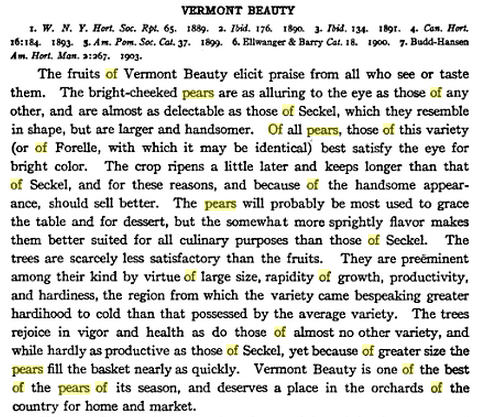
Earlier this year, I was putting away the “Pears of New York” book by U.P Hedrick and had this impulse to open it and look at one of the colored plates. When I opened it, the pear I landed on was called “Vermont Beauty.” I’m right across the lake from Vermont and one of the orchards I work with is in Vermont, so I decided to read on…

Screen Shot 2015-09-24 at 10.06.31 PM

From this book, I learned that this pear was a seedling planted out by Benjamin Macomber of Grand Isle, VT…an island in Lake Champlain. I currently live across the street from Lake Champlain! So, I got to hunting. The first step in fruit exploring is research, which occupied an entire Sunday. After having an idea of where to look for this pear, I called my good Vermont friend Meg Giroux and we went fruit exploring for this pear over Memorial Day Weekend.

Fruit exploring involves a lot of cold-knocking. “Hi. My name is Eliza; I’m a fruit preservationist and I have a story to tell you [insert story for specific fruit]…. Do you know if you have any fruit trees on your property?” That is the usual gist of my approach, full of smiling and excitement. Only once, in Georgia, have I been turned away…

We were looking for the remnants of an old 40-acre orchard we discovered through a local Georgia historian who knew a lot about peaches, brandy and a particular Southern family’s plantation drama/legacy. Thanks to his directions, we were right in the epicenter of where the orchard once was and we decided to go door to door knocking, seeking permission to check out the apple trees possibly growing on their property. We knocked on one door and the people were obviously home, just not answering. I left a message on their car about why we were there, how we’d love to look at their orchard (which is the only remnant we could find of the once 40 acre orchard), and my contact information. I got a call later that day: “Hai, I’m lookin’ for Elyyyzuh. My husban’ tol me to call yew and tell yew that yew are not welcome on our properteee.” After I tried to tell her that we were only interested in their apple trees, she kept interpreting/spitting condemning words for her husband, who I could hear in the background.

Upset and saddened by their isolationist/paranoid ways, I wrote the pastor of their church (because we previously talked with the home owner’s mother who told us they belonged to the church on the hill) and asked the pastor to preach a lesson on “Do not neglect to show hospitality to strangers, for thereby some have entertained angels unawares.” (Hebrews 13:2). And then proceeded to tattle on the couple, because if anyone knows me well, you know that I have band of “angels unawares” by my side.

Anyways, back to Vermont. After knocking on every single door we thought might have a property with fruit trees attached to it, we were given wide-spread permission to look around. We found an old, old pear. An old old apple. Another old property with an old pear and apple, etc. And after finding a map from the 1800s, we found an old, old apple orchard. Excited, I promised myself to go back in the fall when they had fruit. AND BOY DO THEY HAVE FRUIT.

This story will be about the first pear tree we found, which I checked first with fingers crossed in hopes that the fruit wasn’t an early season ripener. Luckily, it wasn’t and the tree was loaded with fruit which had just decided to start dropping (!).

Screen Shot 2015-09-24 at 10.46.28 PM

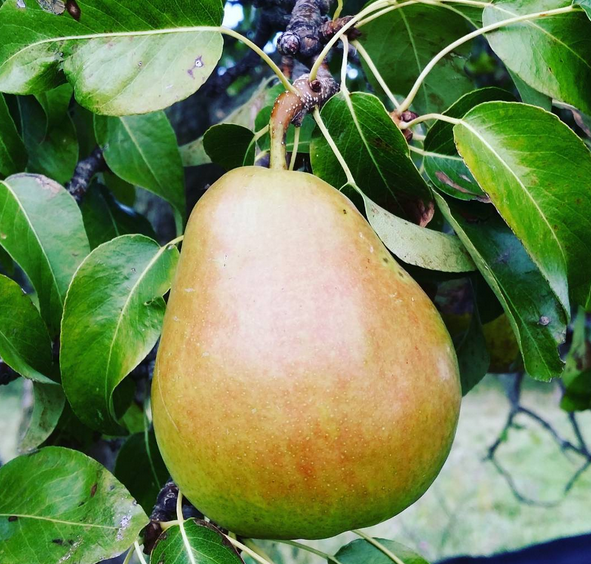
I had every hope back on Memorial Day that this might be the Vermont Beauty. And, well, it may be. An extension agent recently told me that cooler temperatures instigate better color in fruit. With the downright hot fall we’ve had up until a few days ago, that could be a reason for the lack of color on this pear. Otherwise, it seems to match up decently well with the description found in “Pears of New York.” The flavor is sweet, very fine grained, has potential to be buttery-melty in the mouth once it has been given a chance to fully ripen off the tree.  I might be overly hopeful, but…

I stopped at three other properties on Tuesday, each one tied for having the oldest pear trees I’ve ever seen. Here’s one of the trunks (shoe for scale, it was completely hollowed out and probably close to 4 feet in diameter)…

Screen Shot 2015-09-24 at 10.49.17 PM

And you know what? ALL OF THE PEARS ARE THE SAME KIND!!!  They all taste the same (minus some minor soil differences); They all have that light blush on them; They all have the same shape.

I’ve since done some background research of these properties and they line up with my research as having a connection with Benjamin Macomber, the cultivator of the “Vermont Beauty.” I can’t reveal this connection just yet because it’s a chapter in my book, but just trust me for the time being that they are all connected. The rest is left to old books with descriptions so I can try to key this pear out. The trouble is finding an adequate description of it!  If in fact this is the “Vermont Beauty,” I have just found a lost variety. In order to save it, no matter what it is, all property owners have given me permission to take cuttings this winter from their trees. We might never know the name, but it has proven itself to be resilient for at least 100 years (I think closer to 200), and that is worth saving and propagating.

I hope to graft this tree this year. Some of you might ask for scionwood, which is quite alright with me, but my team and I have been trying to come up with a way to both spread the goods and retain some funding for our future fruit exploring missions.  With that said, the proceeds of this scionwood and future tree sales will go into #thefruitexplorers research fund. We poor-yet-passionate heirloom/resilient fruit nerds will ask that every propagation of this pear (or anything else we find) will spur an on-your-honor royalty donation on our soon-to-be website…and that it’s story be passed on to the new owner (who, if they decide to propagate, will carry on with the royalty donation).

Stay tuned, we have found some amazing specimens this year and there are more to come (we have loads of self-funded research that, of course, costs money). Already, we’ve found a Southern bittersweet crabapple out of Alabama which I think could be the next great Southern cider apple, showing awesome pest and disease resistance. Pending is to see if it has an annual bearing tendency.  Another is a gorgeous, insect and disease resistant (from what I can tell) “sweet” apple that lacks acidity, which Benjamin Watson touts as a great ingredient to blend with high acidity/sugar American heirlooms. Many more…we just need to get our acts together, which is a winter task.

Thoughts? Would love to hear.

The Unexpected Effect of Pigs

I have a lot to say about having pigs in the orchard and have been compiling my notes all summer long for a later, longer essay. Today, however, I want to talk about an unexpected happening of the pigs.

A couple weeks ago, I made the decision to move the pigs out of the orchard and into a new series of paddocks behind the one-day-soon Greenhorns headquarters. This decision came because the timing of harvest was getting difficult with pig rotation, so I figured it would be best to remove them from the orchard for a few weeks. Luckily, the Greenhorns HQ is only a pasture and a backyard away from the orchard so the move was about an eighth of a mile away.

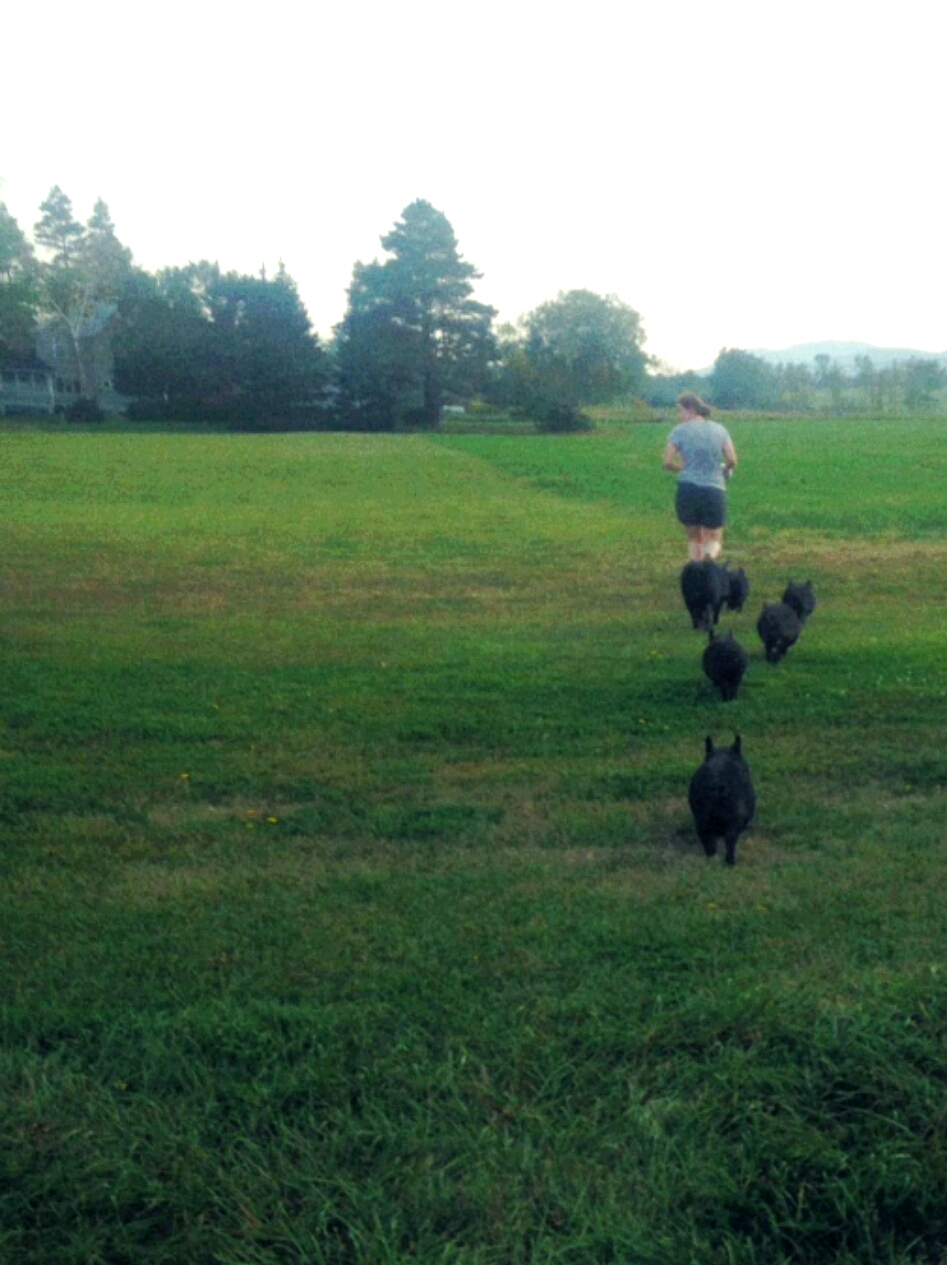
Armed in running clothes with a quart Ball jar full of grain (for noise making), I had Shizue (the newest hire of Greenhorns!) lift up the gate of their old pen and I started to jog across the pasture. As expected, the pigs followed me and eventually fell into a hilarious single file line with Mortimer, the 8 month-old boar, leading the group. If ever I have felt like the pied piper, that was the day.

Before reaching the new paddocks, we ran through Doug and Yvonne Sears’ backyard, where they were standing on the back porch whooping with laughter and clapping as we passed. I guess its not everyday you see a line of little pigs run through your backyard.

eliza herding pigs

Over the course of this summer, I’ve gotten to know Doug (turns 90 this November) and Yvonne (age undisclosed) and they have been wonderful neighbors. They have been married for 65 years and are still so very in love that it makes my face melt to witness it. Ginger, my large French Mastiff, broke the ice with them early on by walking into their house uninvited and asking for a dog bone in her sad faced “I’m going to sit and shake my paw for you” manner. Ever since, Doug and Yvonne have welcomed me and the dog and whomever is accompanying me over for dinner, conversation, a vodka-tonic, or just a quick catch up on the day’s events. It has been really nice to become friends with them.

Doug, a faithful cutter of grass on his riding lawnmower, cuts our headquarters front lawn without asking because he wants to keep us out of the “You redneck; your grass is too long” judgement zone from passerby’s (a zone I really don’t care about, but that doesn’t matter). With that same riding lawnmower, Doug has also helped me to cut paddock lines to place my electric fence, saving me at least an hour of labor. I’m grateful for Doug.

Now to the unexpected outcome of the pigs…

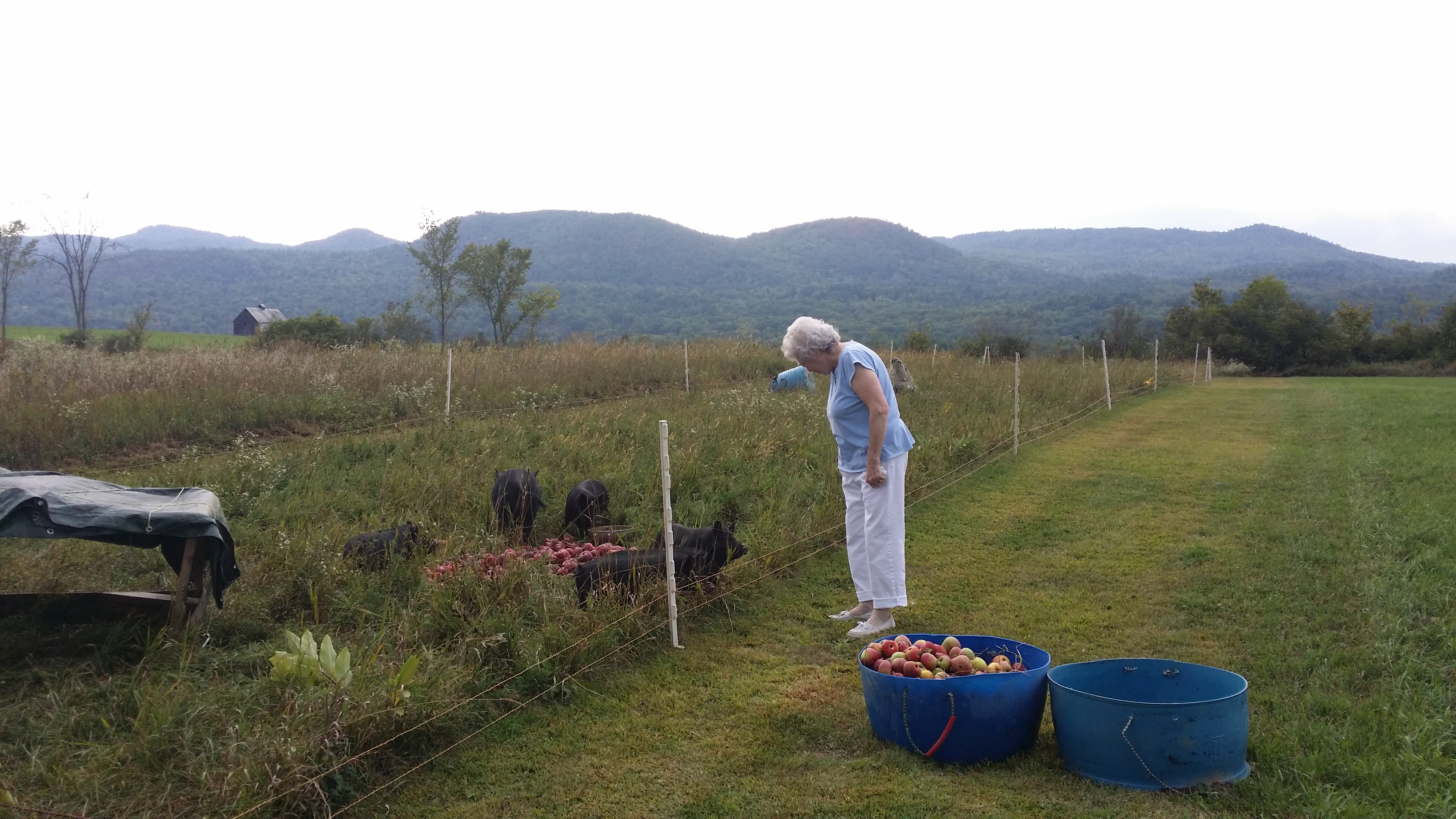
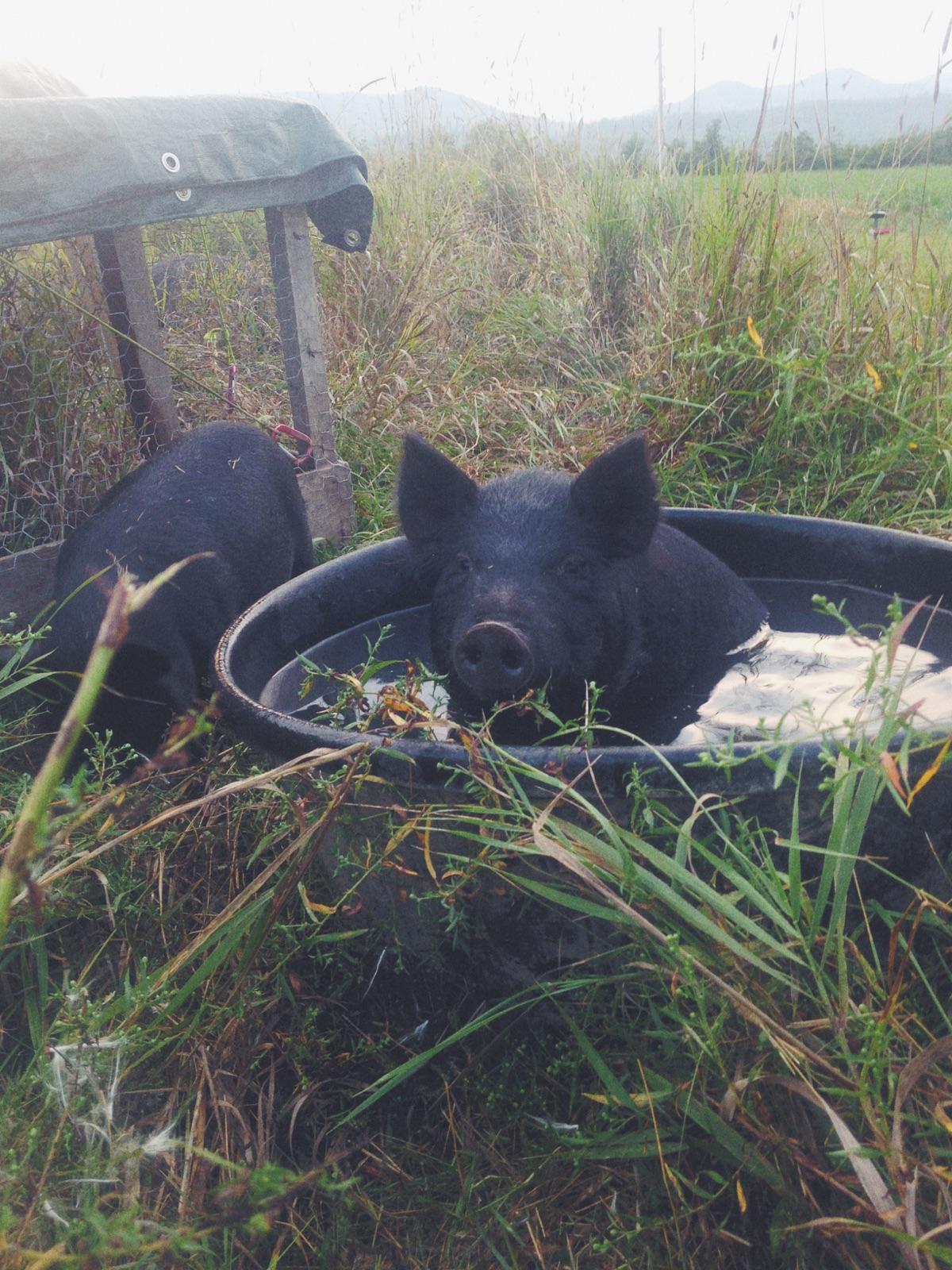
After witnessing the pigs run through their backyard, Yvonne developed a burning interest in them. She told me a couple weeks ago that as soon as it’s light enough to go outside, she goes and says hello to them. She returns throughout the day, often with leftovers from breakfast, lunch or dinner to give them. The pigs, who I believe to be the happiest animals on earth, come bounding from wherever they are to tell Yvonne hello! and that SHE IS THE BEST THING EVER.

Yvonne adores those pigs. Yesterday she confided in me that she has had a bad back over the past year and with the rain and the cold weather that dominates this climate, she has not been able to do the walking necessary to heal. (She also confided in me that her lack of activity is built on excuses). Ever since I moved the pigs out of the orchard and to a place that is easily accessible for her to walk, she’s been walking more than ever and enjoying every minute of it because it involves seeing the pigs.

yvonne with pigs

Her back is feeling better. Doug says she spends more time with the pigs than she does with him.  And today she informed me that the pigs love radishes, lettuce, turnips, and mashed potatoes.

photo courtesy of Shizue!

I’m often guilty of getting wrapped up in the management aspects of farming. How can X benefit Y and Y benefit X without costing me more money? What are the yields? Etc. Today was a reminder that small scale farming can and should hold more than that. It can unexpectedly bring happiness and joy to those surrounding us and even give someone a reason to put on their shoes, grab their cane, and go for a walk as soon as the sun comes up.

Stress: The New Bittersweet? (A Radical Orchardist Part 2)

It seems like it has rained every day for the past month in the Champlain Valley of New York and Vermont. Combined with 70-80 degree temperatures, the fungal population couldn’t be happier. It’s like one continual fungal feast over here, and I couldn’t be more psyched. Why? Because I’m absolutely infatuated with the idea of stress in an orchard.

Screen Shot 2015-06-30 at 4.43.12 PM

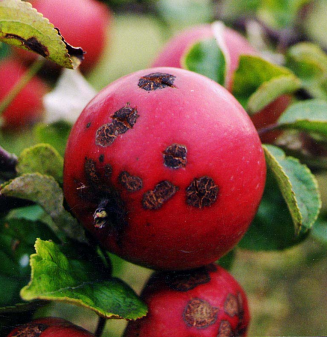
In A Radical Orchardist: Part One (which I encourage the reader to read before pursuing this essay), I re-introduced my thoughts about how apple scab, a fungal disease, increases the brix (sugar content) of the apple, which translates into a higher alcohol content once fermented. For hard cider purposes, I thought, perhaps we shouldn’t be spraying-late season fungicides for cosmetic fungal diseases like apple scab, since lingering fungicide residue has been known to kill the ferment (the yeasts) in the wine and cider realms. I also re-introduced the idea of managing apple scab as a value-added disease for cider apples, a thought that is about as radical as it gets these days in the apple world. A thought that I’m still excited to explore and understand in order to embrace it or dismiss it.

This year, I’ve been actively looking for scientific research on the effects scab has on apples, from a nutritional standpoint. I want to know how the apple reacts to scab; What does that fight look like? Does a stressing agent like apple scab bring about super fruits? This research is slow, mostly due to the fact that I don’t have access to any scientific journals, but it’s progressing and has me optimistic. The following is a report on my findings and thoughts.

Stress: The New Bittersweet?

My journey started when I found a paper about the effects of apple scab on the peel of an apple. The article, which can be found here and simply broken down here, stated that a peel covered with scab lesions is higher in polyphenols than one not covered in scab. What’s the big deal? Quite a bit, actually. This is a big deal. Screen Shot 2015-07-01 at 3.27.42 PMScreen Shot 2015-07-01 at 3.28.21 PM

Screen Shot 2015-07-01 at 3.28.12 PM

Phenols, such as chlorogenic acid (as seen in the top graph), are classified as antioxidants, meaning  that they tend to prevent or neutralize the damaging effects of free radicals in the body. Free radicals are chemicals that have the potential to cause damage to cells and tissues in the body.  Many of the phenols mentioned in the paper above are related to resveratrol (the polyphenol found in red wine which got a lot of news a while back for making wine drinking a life-saving activity). When researched in the skin of non-scabby red apples (aka: what you see in a grocery store), they were found to contain powerful antioxidant capacities, along with anti-cancer, anti-inflammatory, and cardio-protective properties.

Now, take those phenolic values from the skin of the non-scabby red apple and multiply them by at least 3+ times. That new value is one coming from an apple with scab infection. To further push this point, this article suggests :

The way in which orchards are managed can influence the amount of phenolics, as shown by Veberic et al. (2005), who reported that organically grown apples had somewhat higher amounts of phenolics as compared with traditionally grown apples. These authors concluded that this is probably because organically grown apples face more stressing conditions, for synthetic fertilizers and pesticides are not used.

Folks, this is superfood status and at the very least, people should try to source ugly organic apples and eat the peels. Research says that doing so might save your life someday.

Now, to project these findings onto cider…

What makes a cider apple a cider apple? The quick universal answer most people know is that it’s in the tannin. Tannin is a collection of phenols such as chlorogenic acid, phloridzin, epicatechin and the procyanidins (source). Only the procyanidins are considered “true tannins” because they have the ability to tan things like animal hides and give the drying sensation we recognize as astringency (aka: the sensation you get when you stick an acorn in your mouth). For the most part, bittersweet apples have the most tannins, or phenolics, and dessert apples have the least.

https-::books.google.com:books?id=jZvqBwAAQBAJ&lpg=PA622&dq=plant%20polyphenols&pg=PA829#v=onepage&q=apple&f=false

https-::books.google.com:books?id=jZvqBwAAQBAJ&lpg=PA622&dq=plant%20polyphenols&pg=PA829#v=onepage&q=apple&f=false

A bittersweet apple, taken from this Serious Eats article, is described below:

If there is one style of apple prized above all others by American cider makers, it’s the bittersweet apple. Affectionately referred to as a “spitter,” these apples are low in acid, high in tannin, and impart the classic flavor of finer French and English ciders. At first bite, most would consider bittersweet fruit inedible. But what is ill suited for the fruit bowl is ideal for the cider press.

For the most part, America’s high acid, high sugar apple crop provides all the fuel for fermentation and puckering power necessary for a great cider. But what that fruit lacks is tannin—the molecules that impart astringency and provide a cider’s texture—and bittersweet apples fill this void.

https-::books.google.com:books?id=lATkBwAAQBAJ&lpg=PA106&ots=76WFijiMHz&dq=%22tetrameric%20procyanidin%22%20apple&pg=PA105#v=onepage&q=%22tetrameric%20procyanidin%22&f=false(image)

Ignore the yellow highlighting, and the column about gelatin

I hope your wheels are turning like mine were, but in case not, let me break it all down for you.

Cider apple varieties are known for their higher levels of phenolics, because those phenolics (aka tannin) distinguish them from dessert fruit. Those phenolics involved in making a cider apple a cider apple are also the same phenolics that increase in concentration when the apple is stressed with apple scab. If you refer to Figure 1 above, you’ll also see that in addition to high levels of polyphenols, a bittersweet apple is one with a higher brix. Let me remind this audience that this whole Radical Orchardist series started with the deletion of an article I wrote about how apple scab increases the brix in apples.

I’m no chemist, but it seems to me that stress has the potential to send some dessert varieties into the realm of a bittersweet. Now, how about stressing a cider apple? Is the increase in phenols due to stress worth it to the cider maker and the consumer? This study says that phenols in hard cider are absorbed, metabolized, and excreted by humans. Meaning, we’re getting the nutrients.

Screen Shot 2015-06-29 at 10.51.33 PM

phenolic content of apple leaves, healthy vs infected with scab. http://www.sipav.org/main/jpp/volumes/0108/010807.pdf

It makes sense to me. When stress occurs, the apple’s response is to pump the site of infection/attack full of phenolics (see graph to the right) . Look no further than your forest’s edge to find wild, highly evolved, inedible tannic crabapples that serve my point. The crabapples have evolved to contain these phenolics without provocation. The lesser-evolved dessert varieties, however, may need to be provoked through varying degrees of stress in order to produce a more nutrient-dense product, or one that more resembles a bittersweet cider apple.

What does this mean for management? Back in the first A Radical Orchardist essay, I irritated a few folks with the question:

What is a cider apple? Sure, you can have all the old French and English varieties like Dabinett, Frequin Rouge, Tremletts Bitter, Norfolk Beefing, etc, but if they are managed the same as dessert apples…are they really cider apples? I don’t think so.

And I still don’t think so. I believe that growing cider apples requires a completely different mindset than growing dessert fruit in order to make high quality, nutrient-dense, healthy organic hard cider. To me, a part of being a cider orchardist involves learning how to balance stress within the orchard through organic means. What do I need to give the tree in order to replenish the expense of fighting off an infection? What is the tipping point of too much stress? I whole-heartedly believe that these, plus many more, are the questions we should be asking. Imagine a world where the value of an apple comes not from its looks, but from its nutrient content. That’s what I’m aiming for with stress, and I believe there is value in that.

Please, those of you who are researchers…prove me wrong. I have admitted to the fact that I’m no chemist, and without academic ties, its completely reasonable that my understanding is flawed from the free book snippets and articles I find online. Send me a response with accessible PDFs, I’ll make sure to post it in a follow-up essay with reasons why I agree or disagree. Hopefully some great questions will come out of it and some university or private foundation somewhere will want to investigate.

In the meantime, the take home message is to #eatuglyapples and #drinkuglyapples. Embrace the scab, avoid the rot and challenge the status quo.

Postscript: Earlier in this essay, I included the following phenolics to define tannin. They were chlorogenic acid, phloridzin, epicatechin and the procyanidins. From this article, it states that apples infected with scab had:

  • 6.5 times more phloridzin than a healthy apple.
  • chlorogenic acid can be found in the first graph of this essay
  • epicatechin levels are in the following graph:
  •  Screen Shot 2015-07-01 at 7.26.50 PM
  • procyanidans are flavanols, which are widely cited by research papers to be the reason why some apple varieties are resistant to scab.


Pigs, Plum Curculio and Organic Standard

Next month, I’m getting five American Guinea Hog piglets (2 females, 3 males) from my amazing mentor, Shana, who lives up in Maine. For people who knew me when I lived in Poquoson, VA, the idea of me getting pigs probably doesn’t come as a surprise. When I was in the 8th grade, I negotiated with my parents to get a potbellied pig…as a pet. I read everything I could get my hands on about pigs, from veterinarian books to encyclopedias to library books (the internet wasn’t really a thing back then) and at one point, I vehemently gave up eating pork products and started putting up pig facts on the bathroom mirror every morning for my Mother to read. Eventually, they caved in and I called her Oprah, short for Ophelia.  I became an easy person to shop for because everyone got me pig things. Paper, plastic, metal, glass, aluminum, steel…you name it, I received it in a pig-shaped form. For all of high school, Oprah served as a backdrop for every single school project I ever had to present. She was a double helix for genetics class, she was Piggy in my Lord of the Flies book report presentation (Me: “Sucks to your as-mar, Piggy” Oprah: “Oink”). At 17 years old, she’s still alive (and lives with my sister).

This time around, 17 years later, I’m getting pigs for another reason… Apples!

Borrowed from grassfood.wordpress.com

The American Guinea Hog is a small heritage breed which is known for it’s foraging ability. These pigs love to eat grass, clover, dandelions, etc and are able to supply most of their diet from a good pasture mix. Because of their ingrained foraging skills, they don’t root as much as the other pigs…which is a characteristic I’m looking to select for in an orchard setting because I can’t have trees toppling over due to a pig being on a rooting binge. So, why am I getting pigs?

First of all, let’s talk about the foreign language spoken in the apple-growing realm this time of year. No matter if you’re hanging with an organic or a conventional orchardist, we all speak the same apple language to communicate how far along our apples are out of dormancy and that begins with the poster above. Sometimes we refer to these stages with excitement (“Hooray! Winter is over! I’m at half-inch green and it’s May 5th!”), while other times we speak this language with utter disgust (“I’m at pink and it’s supposed to go down to 24 degrees tonight. Efff.”). When trying to pre-treat your trees for an insect (like aphids) or disease (like apple scab) attack, there are sprays for all of the nine stages above. For the pig purposes of this entry, however, I’m going to skip to steps 7-9: Bloom to fruit set, which is happening right now by the millions as I type from the Champlain Valley.

As the apple blossoms give way to little apple fruitlets containing tiny seeds, insects are reacting. Particularly, the dreaded plum curculio! These little weevils fly in from their overwintering condos in the woods/brush piles/trashy fields/hedgerows, land on the little apple fruitlets, and insert their eggs. You know they’ve successfully done this because they leave a crescent scar as evidence (middle photo). If the egg is a dud or the apple is able to grow fast and crush the egg, it often heals over with an ugly scar, but it’s still edible (side note: this is what google gave me when I google image searched “disfigured but loveable”). If the apple isn’t able to grow fast and heal over, the egg will eventually (in a matter of days) hatch and the larvae make their way to the core of the apple to hollow out a nice space for itself. You see, this is all part of it’s grand and evil plan, because it knows that once the tree finds out about the little fruitlet not being able to reproduce, it will cut it loose. The plum curculio larvae then falls to the ground safely in it’s padded apple lounge and after two weeks hanging out and getting fat in the fallen fruitlet, it emerges and heads into the soil. A week or so later, it bursts from the soil as an adult.

Plum curculio is a major pest in fruit orchards and management usually involves a spray of some sort. The organic folk will cover the fruitlets with a kaolin clay called “Surround,” which irritates the insects and causes them to fly away in frustration without depositing its eggs (or taking a bite). The problem with this method is the amount of times you have to spray surround and the fact that it gunks up the sprayer and leaves a white film on everything.  The conventional guys will often spray Imidan or pyrethroids around petal fall (stage 8 in the photo), which are insecticides that you have to time according to Plum Curculio’s flight in order to kill the devils. The problems with insecticides have to do with them being “broad spectrum,” so you’re killing other insects in the area that do some good, like pollinators (bees!) and predatory mites. But what if you don’t want to or can’t spray?

This is where the pigs come in. The piglets I’m receiving next month will be 8 weeks old and their arrival will correlate perfectly with “June Drop,” the time when the apple trees let go of their infertile fruitlets containing plum curculio. In a study by Michigan State, they found that each tree, on average, releases around 120 fruitlets during June drop and with using 8 week old pigs as little apple eaters, they got all but two per tree. The results later that summer: the plot that did not have pigs had 5 times more plum curculio feeding injury than the plot with pigs. That’s great!

But here are the problems with pigs:

1.) This study said it took 27 pigs per acre two to three days to clean up the June drop. I cannot handle 27 piglets at this moment in time (I’m an apple grower and farmer activist, not a hog farmer…just yet) and I’m also only getting 5 piglets next month. I’ll put them to work in a smaller orchard in NY. Every bit will help, right?.

2.) Organic certification gets complicated with pigs cleaning up June drop. Rule 7 CFR Part 205.203 of the USDA Organic Standards states that raw manure (like poo from a pig) cannot be applied if there are fewer than 90 days until harvest (120 days if harvesting off the ground). What does this mean, exactly?

Besides the fact that 90 days is ridiculous for tree crops if I plan to pick the apples (I’ve heard rumors that the fear comes from poo on our shoes contaminating the ladder rungs which we have to climb to pick the fruit. I call BS on that one…especially with these high density dwarfing systems), it means that we have to get innovative in what apples we plant in the future. Say June drop happens on June 15th. 90 days from June 5th is September 13, 2015. So! We need blocks which will ripen after that date in order to have the piglets pick up the plum curculio infected fruitlets. Luckily, there are many apples that qualify. However! If you’re thinking “Oh, I’ll just forgo organic certification,” there’s something you all should know….

The Food Safety Modernization Act in it’s first write-up required 9 months of wait time after applying raw manure to the orchard. After much complaining (this is why every farmer and farm sympathizer should voice their opinion or the opinion of their trusted farmer), they have removed the 9 month clause in favor of further investigation.  This could be serious, folks. If your farm makes more than 25k in a year in produce sales and you are in the US, you’ll have to eventually comply.  One day, I’ll write a terrifying blog post about the Food Safety Modernization Act (FSMA) and how everything the permaculturalist/ low-input orchardists/silvopasture/agroforestry folks want to do with selling fruit from their landscape will likely become illegal unless you start making relationships now. Combine with a trade organization that has lots of money who can advocate for your cause, go talk to your Congressman, write influential people in your area. It can work. For example, take a look at the pecan industry, who successfully got a congressman to change the FSMA to exempt tree nuts from the raw manure clause, since cattle are often run through pecan orchards pre-harvest. These guys likely aren’t organic but it doesn’t matter…you have something in common with them on this one. Relationships matter, even if you don’t see eye to eye with other farmers or share their same agricultural ethics.

Back to pigs…

I’m also planning to have the pigs go in and clean up the orchard after harvest. Having them eat the apples that weren’t marketable enough to make it out of the orchard as cider is great because they might have a disease on them which may overwinter. If they root a little, that’s fine too…because they’ll help to break down the leaves and disrupt the homes of any overwintering larvae. And, everyone loves apple finished pork!