Recent essay about my trip to the national future farmers of america convention

A Report on the FFA 

by Eliza Greenman

Greenhorns, in partnership with Organic Consumers Association were in attendance last week at the national gathering of the FFA. The FFA National Convention in Louisville, Kentucky, saw a sea of 60,000 students representing every nook and cranny of America (and its territories) gathered together for fellowship, belonging, education and scholarly competition. Between the ages of 13 and 18, many of these students are next-in-line to the family farm and occupy a strategically powerful position in the future of American Agriculture; they are kids with land. With a self-confidence rarely seen in teenagers and impeccable public speaking skills, these students in their blue corduroy jackets cut quite the impressive figure, particularly in a stadium context.

They are team-spirited, motivated and articulate, and most of them credit these qualities to the organization that brought them together, the FFA. The FFA is turning these next-in-line farmers, agriscientists, ag teachers and farm sympathizers into successful leaders, fierce entrepreneurs, and good Samaritans…for Big Ag.

 This polished youth constituency at the FFA sing the praises, almost exclusively, of Big Ag. How did this happen? Lets start with the obvious place, and let’s follow the money.
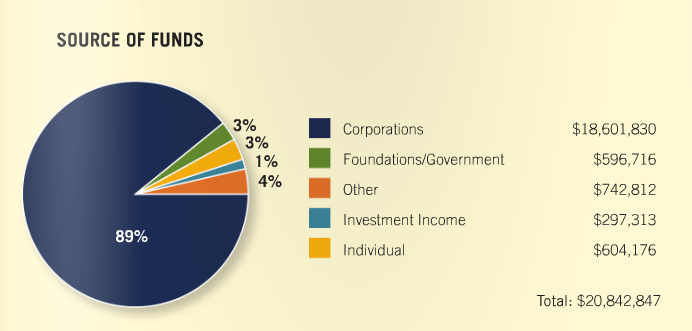
Based on the funding sources published in the 2012 National FFA Annual Report, corporate sponsorship represented 89% of total funding for the organization, or 18.6 million dollars (see page 17). This funding came from companies like:

  • Zoetis- World’s largest producer of medicine and vaccinations for pets and livestock under Pfizer

  • Cargill- Distributor of agricultural commodities such as the raising of livestock and production of feed

  • Monsanto- Leading producer of genetically engineered seed (GMO) and herbicides (Roundup)

  • Dow- 2nd largest chemical producer in the world

  • Syngenta– Biotechnology and genomic research, distribution of seeds

  • Elanco– Global animal pharmaceutical branch under Eli Lilly and Company

The corporate influence of the companies above and others were widely detected by all of the Greenhorns, as well as many of the parents and guardians in attendance at the convention. Throughout the expo, flashy, digital, draconian and utterly Orwellian interactive displays and mountains of corporate schwag beckoned students to answer the question: “Who will feed the world when it reaches 9 billion people by 2050?”

The “feed the world” sloganeering has been carefully crafted by “Big Ag” to make organic agriculture seem inadequate or even dangerous to the health of the world. The energy from the main stage resembled an arena playing Jock Jams more than an address by a CEO. Full of college football jeering, promises for thousands of future scholarships, and cheering for money (“Scream if you think money is neat-o”), students were all riled up. Tyson Foods, Elanco and Monsanto executives coached the students, with polished evangelical speeches, about the “grave risk” we face if we can’t use “technologies we have (including drought resistant seeds) to feed the world.”  Afterwards, FFA students approached the Greenhorns booth to [politely] ask us why biotechnology isn’t currently accepted by our organization. We were accused of not knowing the facts and dabbling in unethical, fear-mongering tactics (in league with Chipotle) giving consumers false and condemning information. Sweet, clean, well-meaning students explained to us why organic agriculture just isn’t realistically able to feed the world. It’s not innovative and technologically advanced enough, they said.

 Our retort: Without a return to restorative organic agriculture, our legacy won’t have a world to feed. But that’s almost besides the point. The goal is not for ‘we biotech’ to feed the world, but for the world to feed itself with foods appropriate to the culture and landscape – empowerment of communities with food sovereignty and seed sovereignty. The goal is to grow food in a way that respects the land and soil while building a biodiverse and environmentally resilient landscape that can provide us a well balanced diet, not just corn and its myriad of products. “Who will Feed the world in 2050” is a marketing tactic for big businesses that realize the destruction they are causing now, to our diets and our soil health, but don’t want to lose any market share. They don’t want to talk about feeding the world today.

To help transform the public conversation from questioning our diets and soil health towards being concerned with the future of feeding two-billion more people, companies like Monsanto are smartly investing their money to indoctrinate the FFA’s 610,000+ student member base, the next generation of agricultural leaders, their own young farmer lobby. For example, funding is being poured into extensive public speaking training for these students so their voices will stand out, even in the sensory-overloaded social-media generation. Just watch the extemporaneous public speaking finals from this year for proof of success, their stage presence is impressive to say the least.

It’s all about diversion. The keynote address from the CEO of Tyson Foods was delivered after first telling the young audience it was okay not to pay attention: don’t put your phones away, was the first thing Donnie Smith said, as he took a ‘selfie’ on stage. Instead, he ordered the young audience: “GET YOUR PHONES OUT! Let me see your phones, Louisville! Let me see them all! Light it up!” His main point, and the point of the phone gimmick was to ask the crowd to use social media to “take back” the “story of agriculture:” “These people are hijacking your story and you need to take it back!” Within hours of delivering this message with the hashtag of #myagstory, Donnie Smith’s message trended #1 on Twitter.

But, for those of us who were listening instead of tweeting, we want to know: take back the story of agriculture from whom?? Tyson Foods and others indict the organic industry, corporations like Chipotle, “basement dwelling loser bloggers,” presumably even our very own young farmers movement, have stolen the story of agriculture and distorted it with fear-mongering. These students are taught that the organic movement has co-opted the “story of agriculture” because we want to vilify and condemn America’s farmers. How unreasonable to question the farming practices of the most patriotic and hardworking of Americans. Watch these Amazing videos and see for yourself, learn the facts and know the issues, help us defend our work, help us insist on the truth.

Videos to watch from the 2014 National FFA Convention:

Tyson CEO Donnie Smith Delivers Keynote to 2014 FFA Conference

Monsanto President Brett Begemann speaks to 2014 FFA Conference

FFA introduction for Brett Begemann, Monsanto President

Extemporaneous Public Speaking Finals

 So why is Big Ag investing like this in the youth? These corporations are working towards rewriting America’s rural identity into one where hard work ethic, ingenuity, entrepreneurial spirit and family values are based, not on real relationships with the soil, land and local communities, but on the use of high-cost and high-input biotechnological innovation. Students at FFA have bought into the fairytale of Big Ag: that the best way to farm is with bigger-better-newer equipment, leasing or buying ever-larger parcels, and cultivating with high-tech seed and synthetic chemicals to ensure high yields. As one student said: “Why should I farm 600 acres organically when I can farm 6000 acres with GM products? It just makes more business sense and the world’s gotta eat.”

These bright and charming kids are getting hooked on a narrative that undermines their autonomy as business people, and gives them a shortsighted picture of farmland and soil stewardship. It is no secret that chemical inputs for monoculture crops cause serious, long-term soil degradation. It is no secret that farmers, especially those under contract with Tyson Foods and Tyson’s subsidiaries, have little control over the fates of their small businesses, where they get big or are squeezed out with crushing debt. (Read: The Meat Racket).

Given the current political and economic landscape, it would appear to make a lot of sense for young entrepreneurial-minded rural farmers to grow crops like corn because the market is demanding it (ethanol, livestock feed and export) and tax payers are subsidizing it. As farmers and advocates of diversified and specialty crops, a monoculture largely supported by American tax dollars seems to have a precarious future, yet these FFA students don’t see it that way. One feisty young man swore on his family’s farm that if subsidies were taken away, his family’s corn and soybean business would still prosper like it has been, even with the recent purchase of a $380,000 harvester. This may or may not be the case for this young man, but according to David Griswold of the CATO institute in a 2007 debate with the Farm Bureau: “Subsidized farmers are selling out their future competitiveness in the market for the sake of federal handouts.” From 1980 to 2005, cash receipts for subsidy supported crops like corn, soybeans, wheat, sugar beets, etc rose 14 percent while cash receipts for non-supported crops like fruits, vegetables, and nuts, soared by 186 percent.

We have reached a moment where the mainstream American public has begun to question the contents, supply chain, ethics and health of their food supply, and wants it labelled. Big Ag is getting worried. Last fall the “Farmers and Ranchers Alliance” paid for and distributed a ‘documentary film about young farmers in America,’ called Farmland. This film was distributed to Farm Bureaus across America in order to hit their target audience of sons and daughters born into conventional agricultural families who feel squeezed and misunderstood by mass media depictions. Outside of the Farmers and Ranchers Alliance’s reach, this film was dismissed as an elaborate high-cost puff-piece (“more like a feature-length advertisement than like a documentary”). Many students we talked with asked if we had seen this film, which they felt was a fair portrayal of their lifestyle.

Through millions of dollars in donations, corporations have created a heroic strawman, an all-American, football loving narrative painting themselves as saviors of global hunger and harbingers of sustainable agriculture. This heroism gets piped into rural schools right alongside the pledge of allegiance, beckoning student farmers to join them in their effort to intensify production in order to meet growing food demands. The rewards are big and the conventional way of farming is seen as a sure thing for right now.

The national FFA conference was best summed up by Greenhorns teammate Katie Murray: “These corporations and FFA mindsets are in-put, output driven. These students aren’t being taught to think of the long-term effects. They are a rising generation of agricultural thinkers and actors who aren’t considering the whole system.” Feeding the growing population, 9 billion by 2050, is just a piece of the whole-system puzzle, including our diets and soil health today, in 2014. The FFA is built on camaraderie and relationship building, yet it seems to fall short when considering the ecological relationships needed to sustain this earth for centuries to come. This is a disservice to the members of the Future Farmers of America, who deserve to learn and be exposed to more than what the current educational constraints dictate.

Can we feed 9 billion using organic techniques? This UN report says its the only way forward. In order to further this train of thought and practice, we’re going to have to invest in relationships with the incoming generation. The FFA students are smart, friendly, respectful, hard-working, down to earth, and completely insulated by the FFA curriculum. It’s our job to help them to make more connections with a more diverse nature and expose them to the way of life we believe in. Reach out to your local FFA chapter and see what you can do to help. Volunteer, offer guided tours, be a guest speaker and get to know these students clad in blue corduroy jackets. They are good kids, and we’ll need them on the team.

In the words of William C. Gehrke, who as farmer-teacher-advocate in 1936 wrote a letter published in The Kansas Union Farmer about “a better way to get farmers to realize social problems“: If the common people would awaken, especially your farmers, shake off the shackles of ignorance and quit following blindly, you would become master of your own destinies. Let’s learn from this history and stop teaching ignorance.

(This essay has been taken out of the most recent Greenhorns Eblast, which can be found HERE)

This article was also helped and enhanced by the editing talents of Severine Von Tscharner Fleming, Ann Marie Rubin and Anna Isserow. . 
How in the heck can apples and black walnuts grow together? A thought

Last year I traveled to Central Asia to see and (briefly) study the native-wild apple forests  of Kyrgyzstan (article found HERE). Once there, I learned that the forest composition was primarily walnut-apple. This was a bit of a surprise for me to see, because everything I had learned in forestry school told me that walnuts produce a chemical called juglone, which creates a hostile environment for plants that come within contact of walnut roots (as in, it messes with their respiration). Seeing these apples growing happily and harmoniously next to these walnuts was a bit of a mind-blowing experience for me because a thriving apple-walnut ecosystem would have never occurred to me based what I had been told in school.

The walnuts in Kyrgyzstan are known as Carpathian walnuts, or English/Persian walnuts (Juglans regia). They are known to have a lesser amount of juglone than our native black walnut, so I just assumed this was how apples were able to grow in the company of walnuts in these forests. Either that, or the ancient apple genetics had co-evolved to tolerate juglone. Whatever the mechanism was that allowed for these trees to grow together, the results were stunning to me.

The apples in this forest were no-maintenance-flawless and I thought this might be due to a combination of three things: 1.)Excellent genetics (which had co-evolved for over millions of years to resist certain pests and diseases). 2.) The fact that I could smell the juglone chemical being released from the leafy walnut canopy (which acted as a pest deterrent). 3.) The presence of livestock in these forests, which helped keep pest pressure down through disrupting life cycles. After witnessing this, I thought: I have got to figure out how to mimic this apple-walnut ecosystem in the United States.

I decided to start down a path of finding walnut family members that produced a lesser amount of juglone than our black walnut, like hickories and pecans, which wouldn’t kill my apple trees but would still provide the benefits of deterring insects. Though I am still interested in further experimenting with this concept, I’m writing this blog to announce that I’ve discovered another possible pathway… SOIL BACTERIA.

This article has me really excited (warning: it is uber-nerdy): http://amo.colorado.edu/schmidt1988.pdf

Basically, it identifies a juglone-metabolizing soil bacteria which has been known to cancel out the allelopathic properties underneath black walnuts! This would explain some people’s claims that all sorts of plants are able to grow under their black walnuts while others have a barren landscape underneath. This could also explain the relationships in Kyrgyzstan…the native soil could be full of this bacteria and many others like it! All of a sudden, mimicking a wild walnut-apple ecosystem in the US might be made possible by identifying and then inoculating juglone-metabolizing soil bacteria into the orchard(!).

I need to do more research on this, but it would be fund to run a few experiments on identifying landscapes which can grow apples underneath/within the root zone of walnuts and taking a few scoops of soil, in which you then start a new black walnut seedling and transplant out near to an apple.  It’s kind of like fruit exploring, only soil bacteria-meets- fruit exploring.

Putting in my notice.

On my one year anniversary here, I put in my notice that I would be leaving by the end of the year.

It’s an exhilarating feeling to put in your notice, there’s a certain thrill when it comes to “what’s next.” At the same time, I’m in mourning. I had so much hope and energy to be here, had told myself that it was going to be a permanent move. I spent all of my savings on erecting a greenhouse and starting a nursery business, taking any security blanket away and throwing me into this crazy world. I have learned many things this year about myself, running a business and working with southern heirloom apple varieties. I had some really awesome days and some days where I felt so miserable that I wanted to just disappear. I have never been more stressed out, sleep deprived or lonely in my life, yet I still thought this was where I needed to be. I attribute this to my often ridiculous love for the trees, which blinds me at times.

When I worked with a very old man in Maine managing his 100 variety orchard, he had me spraying a fungicide on the trees with a wand sprayer as he drove the tractor up and down the rows. Having never sprayed this fungicide before, he assured me that wearing a rain coat was sufficient. I got so much of the fungicide on me that that my skin started to burn intensely and I felt physically ill (vomiting). I was confined to the bed for the remainder of the day and didn’t feel right until about a week later. The smell of this particular fungicide makes me ill to this day, much like certain hard alcohols make others feel after one bad night of overconsumption…you know, our body reminding us to stay the hell away.  I know that I was improperly clothed, but I vowed then and there never to be in a situation where I had to spray anything like that again. I also vowed to never be in a management position where I have someone spray those chemicals.

This is why I decided to head down the cider apple route. As an apple orchardist with an heirloom niche, it was a perfect transition for me to manage trees in a way that I thought would be more responsible for the farmer, the consumer, and the environment. It was a way to grow ugly apples and have them be valued for their flavors and nutritional content rather than their looks. Every tree is different and these old genetics have a thing or two to teach us, so I was excited to learn from the varietal collection here. Over the past year, I have learned a lot from the trees, some subtleties and some big picture items. Enough to have me convinced that I can grow within my own personal/environmental ideologies in order to produce a fantastic and all together healthy product if given the opportunity to keep working with the trees in what is nowadays seen as a careless, ignorant, and improper management approach.

At this time, “This is a business” is not a good enough excuse to get me to spray things I don’t believe are necessary given the goals and objectives. Especially when only 20% of apples in the cider are from the orchard (Aka: Why not use this opportunity to grow apples for cider, since the cider will still be made without them). I can’t concern myself with the now and turn a blind eye to what my impacts might be down the road on this landscape and other people.  That’s not responsible, I can’t let myself spray a tree with pesticides, fungicides, hormones and other chemicals without first knowing what the tree’s genetics and natural associations are capable of producing. Perhaps that is the definition of a radical these days.

Yesterday someone from a University came by the cider house and asked me what I had sprayed earlier that day. I hadn’t sprayed anything. She was smelling the residues left behind from the previous pressing of apples brought in from a conventional orchard. When I had walked past them last week, I could smell fungicide residue from 50 feet away.  Had there been any question, one could just go and look at the dusty film on the apples to confirm suspicions. Apparently this smell can linger 3 days in a parking lot, which is disturbing on a variety of levels.

I’ve been told that I should seek out this conventional dessert fruit orchardist’s advice, the one who delivered the above mentioned apples. I should have him look at my spray schedule in order to help me adjust it and make the right decisions, they said. Perhaps I’m just really naïve or ignorant, but it’s hard for me to believe that this person and I have anything in common other than the fact that we’re growing the same fruit that has more than 7000 known and genetically different varieties.

Eliza is very (might be tragically) wrong, but smart and innocent.”

That’s from an email haphazardly forwarded to me from a person concerned that I didn’t know what I was doing, so they sought out professional advice.

I will be the first person to tell you that I’ve only just begun to trust my gut when it says to go one way rather than another. This has no scientific backing without my ability to explain it in a scientific language, which I’ve only started to do.  I have an understanding of conventional horticulture, but I question many of the processes. I have no idea what is actually the right way to be doing things, given the broad scope of human-caused tragedies. But to be called “tragically wrong” when pushing the envelope… man, that makes me want to defend myself.

And I did. Without hesitation.  I called him up, read him what he wrote, and asked for him to please describe what he meant when he said those things. “You weren’t meant to read that,” he said. I grilled him on what he knew about the soils, the cultivars, the humid temperate rainforest climate in this area… “How could you say those things about me without walking in these shoes, knowing this soil, growing these cultivars? You have never experienced these conditions. In your statements, are you implying that all is universal?” He was upset that I was sent that email. He appeased me, but later called me disrespectful. Which I was, because I stooped to his level. I regret stooping to his level.

After having that confrontational conversation, I made the decision to accept those who will always criticize me and doom me to failure. Hell, in time, I might also find room to love these people because they don’t understand. Maybe they are right. Maybe my work will never amount to anything. But I’m not giving up because these people think this way and have these opinions about me and my work. I’ve only just started and this is my life’s fire.

Deep down inside of me, there is an unexplained energy that propels me forward with all of this and gives me a voice. It’s the same feeling I had 6 years ago when I was up in the tree, learning how to prune for the first time. It’s a purpose, as if every cell in my body thinks I should be doing this. I will keep learning from the landscapes and people around me. I’ll keep following my gut and trying to decipher why it steered me in that particular direction. I’ll do more fruit exploring in order to learn from the trees and the people who planted them 100+ years ago. I’m going to continue to ask hard questions, be insatiably curious, look beyond the orchards for solutions, and convince people to eat cosmetically blemished fruit (#eatuglyapples).

I’m prepared to fail terribly in pursuit of potentially valuable/viable horticulture gains.  With that, I put in my notice.  Lookout, world.

(we set a record this year for harvest, 7 tons per produceable acre. It was a good production year, but that number I just gave you, 7 tons per acre, was the amount we pressed. )

virgin birthing

In a recent article written by National Geographic, a female python in captivity, Thelma, gave virgin birth to 6 (half-clone!) baby snakes in 2012. Only recently has the DNA confirmed that no male has ever been present in the making of these hatchlings. This phenomenon of virgin birthing in nature is called “parthenogenesis,” which basically means that these creatures were able to self-fertilize or reproduce asexually. (Harry Potter fans out there, I can’t get “parthel tongue” out of my head. Which is totally what Thelma the snake speaks, with a lisp.)

My introduction to the concept of “parthenogenesis” happened over a decade ago when I was writing a paper for a biology class. I had grown tired of writing the same old standard science papers, so I decided to turn in a paper that was half science, half sultry romance. At the time, Jerry Springer was a big name on television and the concept of parthenogenesis fit in quite well into a “who’s the daddy” type of drama.  I remember being handed back the graded paper and written in giant red across the top, it said: “Ms. Greenman- See me after class!!!”

I walked into the office after class and was commanded to SIT DOWN. So I did, thinking that I might be receiving an F-. It took me a while to look into her eyes and when I did, I saw a face beaming with entertainment. She looked at me for a few seconds and with a laugh, got up with chalk in hand and made me sit through a lecture on the juicy particulars I had missed in the Jerry Springer scenario and then told me re-write the paper to include what I had just learned.

She sent me that national geographic article this morning with a note: “Perhaps this will help contribute ideas towards the nature novel you need to write.”

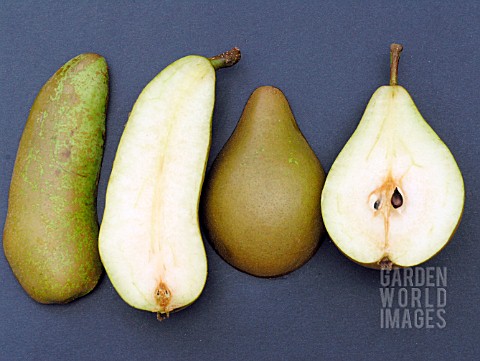
What does this have to do with apples? Well, let me try to tie this all together (since this is an apple blog, after all).  In the horticultural world, we have a similar term called “Parthenocarpy,” which literally means “virgin fruit,” and refers to fruit which is developed in absence of fertilization. These fruits are naturally seedless and, basically, they are freaks in nature. Just like Thelma the python.

Lee Calhoun writes about an apple called Bloomless, Seedless, Coreless in his book, Old Southern Apples, but it turns out not to be seedless, and actually has two cores.  Still, TIME magazine wrote an article in 1941 about a discovered coreless apple:

“The first coreless, seedless apples known to science were discovered only last year. Weighing a plump quarter-pound each, they grow on a freak tree in Mrs. Libbie Wilcox’s backyard in Huntington Park, Calif.

This week the Department of Agriculture is working with the tree in the hope of making seedless apples as commonplace as seedless oranges. Since there are no seeds to plant, the new fruit must be propagated by grafts on normal apple trees.”

To the extent of my knowledge, this project was not successful (or else they are being kept where the fertile mules live). It makes sense for these apples to be quite rare, because it’s the apple tree’s #1 job to disperse seed. If an insect gets into an apple, it’s often headed straight for the seeds. Once those seeds are eaten, the tree notices that the apple can no longer do it’s job in growing future apple trees and (literally) lets it go. Apple trees don’t like free loaders, either.

So there, I’ve brought it back to apples. I’d love to find that apple written about in TIME magazine, though. Would be nice to add to the collection.

Vigor on a landscape continued

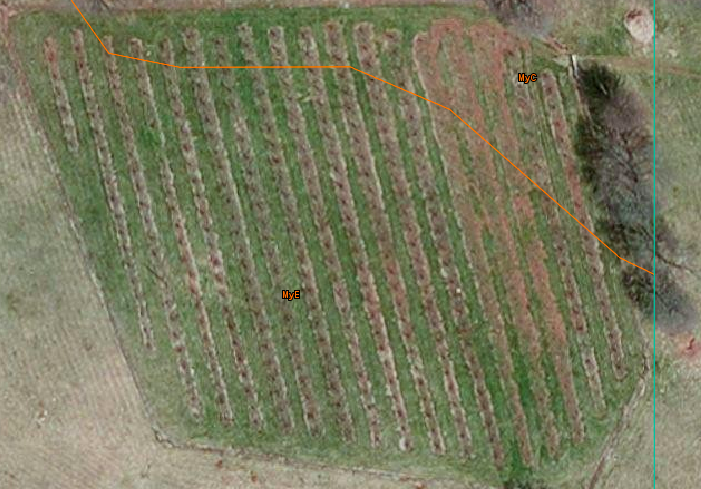
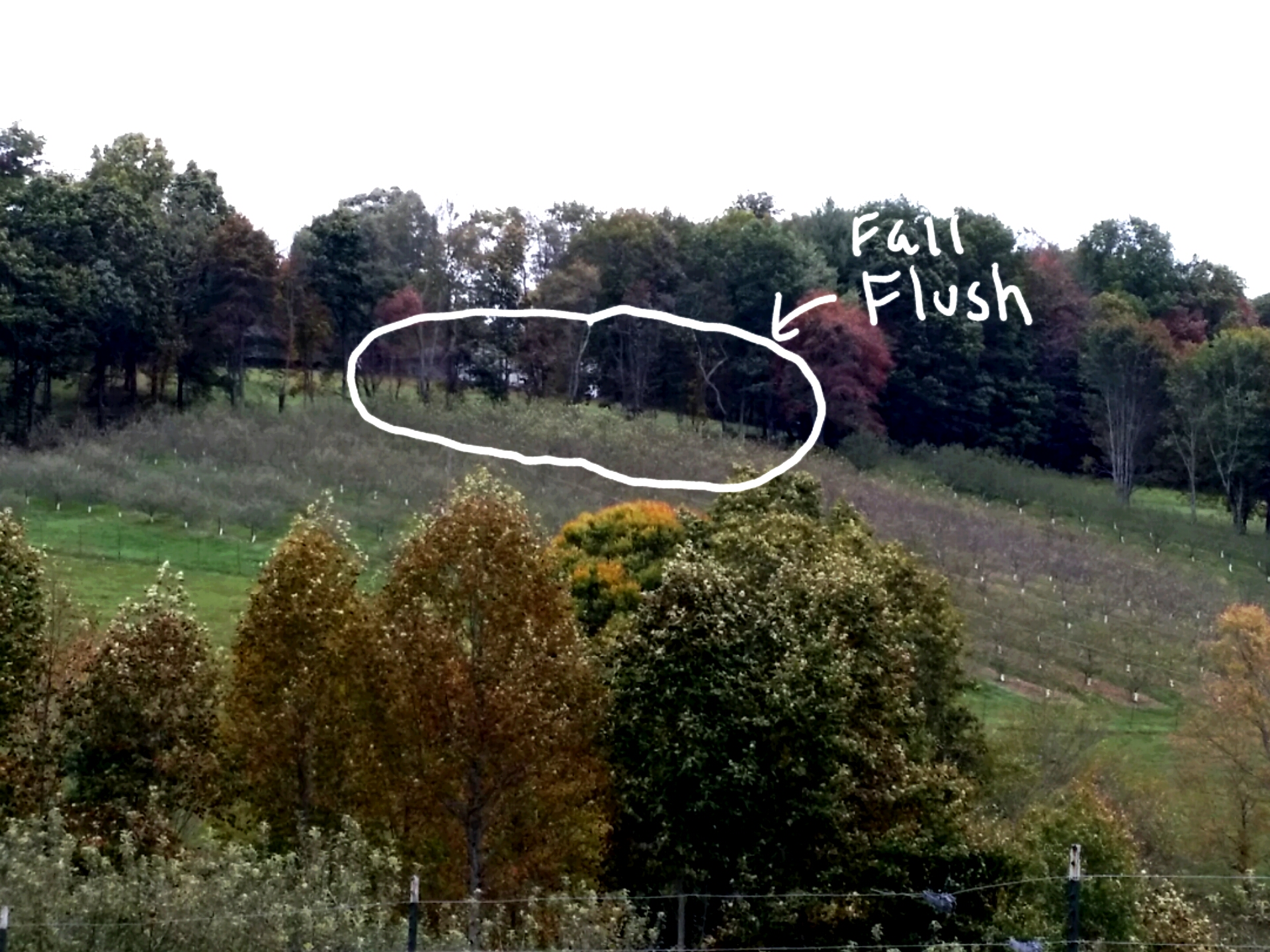
Ok, in this post which lists my incomplete and quick jumble of apple tree vigor thoughts, I introduced the photo below. It shows the fall flush of late season growth (bright green), which I’ve decided to use as a visual indicator for vigor.  Quickly, so you don’t have to go and read the last blog post, my theory is this: For a heavy soil that receives a lot of rain, slope matters when you’re planting very vigorous varieties (v^3) of apples. Vigor isn’t a good thing in my mind, at least not for apple production. The tremendous amount of vegetative growth this orchard gets makes the trees more susceptible to fireblight and reduces the fruiting potential. I want to learn how to better control vigor in order to more organically reduce pressure from fireblight and lack of fruit (there are antibiotics and black magic sprays that address these issues in a conventional orchard). Enter in this picture below: I know it’s a bad picture (I could really use a cool drone for this sort of thing), but you can see the green flush of the upper NE corner and how there is a lot more growth on those trees than the rest. I decided to look at the web soil survey (through NRCS) this morning to see if the soil map complements my theory that slope and aspect (but mostly slope) do have an important effect on tree vigor.  North Orchard Fall Flush

This is what I found!

North Orchard Soils

(Note: the rows were sprayed with roundup in this picture. I will one day talk about this, because it’s a real issue)

Soil types for North Orchard

You see! The difference between a “sloping” loam and a “steep loam” is totally corroborated in the picture that I took.

So what does this mean?

It seems like everyone in permaculture is on the “plant on contour,” “swale,” or “keyline” kick. I’m here to remind everyone that no site is the same. We have a rocky silty loam that is clay-rich after 7 inches down. We get a lot of rain. We have problems with too much vegetative growth and not enough fruit bud growth. Swaling, contour plantings and keyline are often seen as silver bullets for regenerative ag and in many circumstances, I agree. However, it’s time to think about the crops we want to grow and how to get fruit off of them. In Southwestern Virginia, trapping water would would cause INSANE vigor that would reduce our crop and increase susceptibility to disease.

Of course, rootstock and variety selections matter as well, and I’m mostly talking about heirloom varieties here which tend to be more vigorous anyway. If you live in an area that has heavy soils, a decent amount of rain, and want to plant fruit trees…give slope and aspect a thought in terms of vigor. Steep slopes where water isn’t given an opportunity to slowly seep into the soil…might be worth the thought.

One time, MC Hammer retweeted an article about me

Over labor day weekend, an article came out about me and apples on the epicurious blog titled:

Why We Should All Consider Eating Ugly Fruit <—click to read.

and then this happened on twitter…

MCHAMMER retweets article and picture of ElizaThis means that MC HAMMER read an article about me and apples and shared it with over 3 million people! How crazy is that?!  So, he’s performing at the South Carolina State Fair next weekend and I’m thinking about going with a large box of heirloom ugly apples in tow. Maybe he’ll be my rap ambassador for apples! That would be awesome! Perhaps a music video could be in the works…

#eatuglyapples

Some basic thoughts on apple tree vigor

I’ve learned a lot from the orchards this year surrounding vigor, and I feel like this course of study will be life-long. We get a lot of water here in southern Appalachia and while some apple varieties manage to sip this water, others gulp it and produce massive amounts of growth. You might be thinking: Growth! That’s wonderful! And it probably is if your tree is growing in a forest and needs to grow tall in order to reach the canopy and get some sun. But for an orchard, we have goals to harvest the crop and not the timber. When you are faced with a tree that has vigorous tendencies, the energy (sap) from the roots often rockets into growing new branches instead of growing new fruits.

These vigorous tendencies of many heirloom apple varieties are part of the reason why you don’t see them at the grocery store or in orchards today. Vigorous trees are expensive to prune, often more susceptible to fireblight (a bacterial disease), tend to produce less fruit, and can’t be spaced as closely together due to being bushy. Each of these varieties are totally different apples and requires different management techniques. The difference between a black limbertwig and a roxbury russet is the same as the difference between me and my best friend from high school. In the end, we both need food, water and shelter…but its how we use that food, water and shelter which ultimately dictates our health and quality of life. Like the black limbertwig, I seem to thrive in poorer environments. Natasha, my best friend who represents roxbury russet in this analogy, most certainly thrives in richer environments where there is abundance. (She’s going to kill me if she reads this).

This is the puzzle of heirlooms that I’m excited to spend my life trying to unlock. Where are these varieties happiest grown? What practical measures can I take to bring about more balance between vegetative and fruit growth?

Here are some brief thoughts (I could wax poetic about all of these bullets but I’m keeping it short in favor of readership):

Pruning: I have been a member of the EVERY WATER SPROUT MUST GO club before and now I’ve started to rethink this membership. For the vigorous trees, perhaps it’s not a bad idea to just trim these water sprouts rather than cutting them all out (water sprout= vigorous shoot of growth that is only 1 year old) so they can develop fruit buds and maybe start producing apples in another year. Fruit buds, by the way, are produced on second year growth. See diagram below (Cox is short for Cox’s Orange Pippin, a popular apple from the UK):

Site selection: You could argue the pros and cons for planting North, South, East or West until you are blue in the face. Rather than doing this in a blog, I’ll just tell you what I saw this year: South and Southwestern slopes are your poorest and driest sites due to the sun baking off water. At foggy ridge, we have a fairly steep south facing slope with rows of trees heading North-South. At the top of the hill where it is less sloped, vigor is higher than at the bottom of the orchard where the slope has steepened. This can sort-of be seen by a picture that I recently took of the trees with flushes of growth after a bunch of fall rain. The northeast corner, which is also the “flattest” land in the orchard, has tall shoots of recent growth, whereas the bottom southwest facing corner (that you can’t see) hardly has any flushed growth. Of course, these are different varieties and I’m just speculating here, but it’s a thought. fall flush with drawing

You might want to think through planting  apples on contour if you live in a wet area with heavy soils and don’t know how the varieties will respond. That is, if you are going for fruit production. In Kyrgyzstan, the wild apples were growing on depleted, dry soils. Contour will help you to harvest nutrients instead of them flowing down slope, but could also result in gigantic half-barren trees.

I won’t get into soil type, but that’s also important, if not the most important. Some apples want to be grown on sandy soils, others on clay soils. Some like wet roots while others like dry! The only way we’ll find out is if people start planting the same trees in different soil types.

Rootstock Selection: We have now have a not-so-secret weapon that all those men at the pomological society meetings didn’t have 100 years ago. Dwarfing rootstock! The size of the root ball basically dictates how much water and nutrients the tree will get. Think of it like arteries. If you have clogged arteries (dwarf rootstock), your activities are limited due to a reduced blood flow and oxygen uptake. If you have totally clear arteries (standard rootstock), you aren’t restricted by blood flow and you can go run a marathon if you want. Let it be known, dwarfing varieties die much more quickly than varieties grafted to larger rootstocks (much like blocked arteries cause heart attacks which kill at an earlier age…to stick with the analogy). So, the thought goes like this: If I graft a very vigorous variety (V^3) onto a rootstock with a tiny root system, the growth would have to be moderated because those roots can only take up so much!

Is this true? Well, partially. We’re learning, still. Thanks to the hard cider movement, people are actually grafting these V^3’s to dwarfing rootstock. Soon we shall see how varieties like harrison, a very popular cider apple (and the most vigorous variety I have EVER witnessed) grows for these people on a smattering of different soil types and rootstocks. I bet there will be a particular site somewhere in the US where Harrison can grow easily and without many inputs. It makes me excited to think about finding a true home for these varieties. To me, that’s the definition of terroir.

You see, this sort of thing used to happen all of the time! People (I assume old men) would attend pomological society meetings and discuss what is working for them and what is not. This information rarely was extended to other parts of the country due to the fact that news didn’t travel as efficiently as it does now. Nowadays, we have social media for instant dissemination of information. I just need to work on getting these people to talk, experiment, compare and contribute to documents like this for their area:

That’s where young people are really important. The average age of an orchardist is in the high 50’s, low 60’s but I seem to meet a whole of of them over the age of 70.  Many of these people (men) aren’t necessarily interested in trying new things, nor are they interested in using social media. These people will keep on doing what they’ve always done. It’s the next cohort that needs to be corralled into an arena of experimentation, information dissemination, excitement and camaraderie.

That’s part of why I’m here, I guess.


the over ambitious apple farmer: grafting

As greenhorns (beginning tradespeople), we often have no idea about what we are physically capable of getting done in an hour/day/week/month/season. If there’s a will, there’s a way….right? Let me talk about that for a bit.

I thought my business (Legacy Fruit Trees) would pre-sell 500 trees this year. I pre-sold 4000 instead. “Not a problem,” I told myself…”I’m capable and competent, I sooo have this covered. ”

And so I started grafting. Do you know how long it takes me to graft 250 trees? 8 hours. That’s almost 2 minutes per tree and what I consider to be fairly speedy rate. Here’s the process:

1.) Acquire rootstock (I bought rootstock from Treco, Cummins, Adams County and Cameron Nursery). Rootstock determines the size of your tree (in most cases) and how many years to fruiting. I accepted orders on everything from “standard” rootstock (30 foot tall tree taking 10 years to fruit) to “semi-dwarf” rootstock (down to 12 feet tall taking 2 years to fruit). In a later post, I’d like to review these companies and the quality of rootstock I received, but for now we’re sticking with the basics.

2.) Acquiring scionwood. Scionwood is the most recent year’s growth on an apple tree (any tree you find desireable, you can clone and it all starts with scionwood and rootstock). The time to collect it is in the late winter, when the tree has gone fully dormant (all the sap in the tree is now down in the roots).

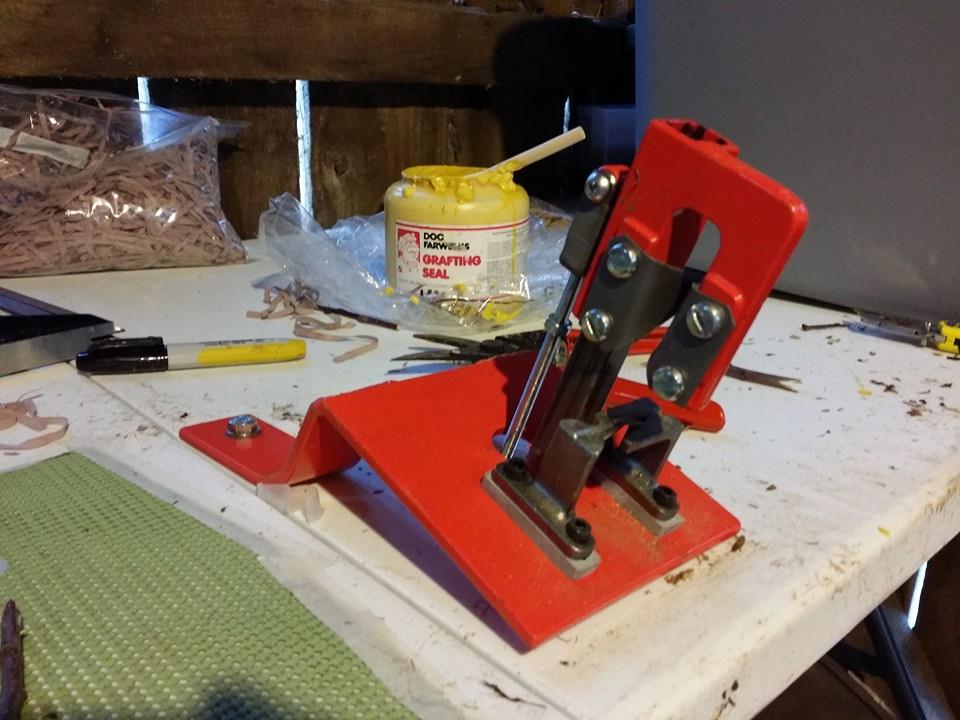
3.) Grafting tool. For me, I used the Graftech Manual Grafter by Ragget Industries (review to come later). In the past I just used a victorinox grafting knife, but since I prune for 2 months straight before grafting, I have to give my wrists and carpel tunnel a rest and went with the foot powered machine.

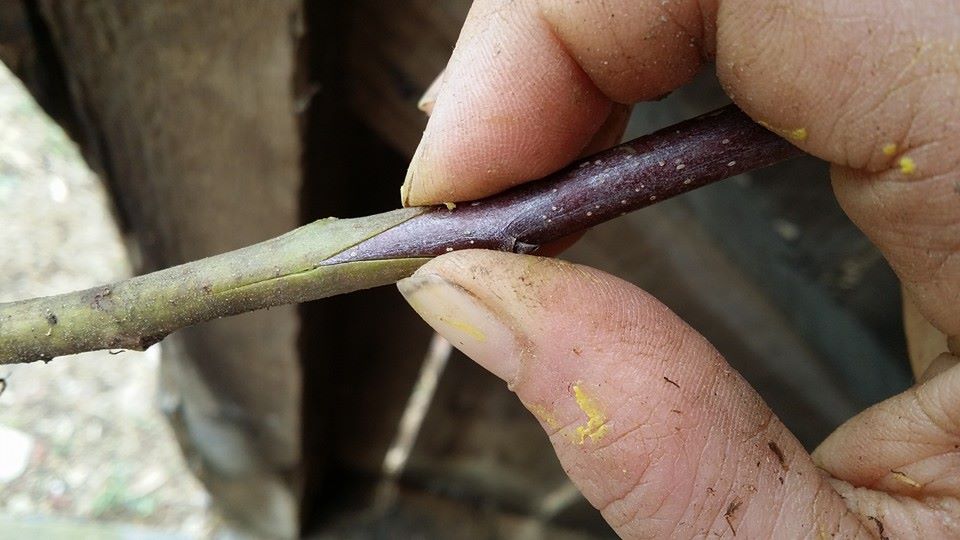
graftech manual grafter4.) Cut scionwood. Cut Rootstock. Stick them together so the vascular cambium  from each are making as much contact as physically possible.

Harrison graft5.) Wrap and seal. I wrapped with a rubber band and sealed everything up using Doc Farwell’s graft sealer. This is the most time consuming of the process and is also the most important. You don’t want your graft union to dry out. Many people used parafilm which will wrap and seal all in one, but it’s not tight enough for my needs with this grafting tool. It will work with other methods, though.

6.) Stick in moist sawdust/peat moss in a cool place and wait for bud swell.

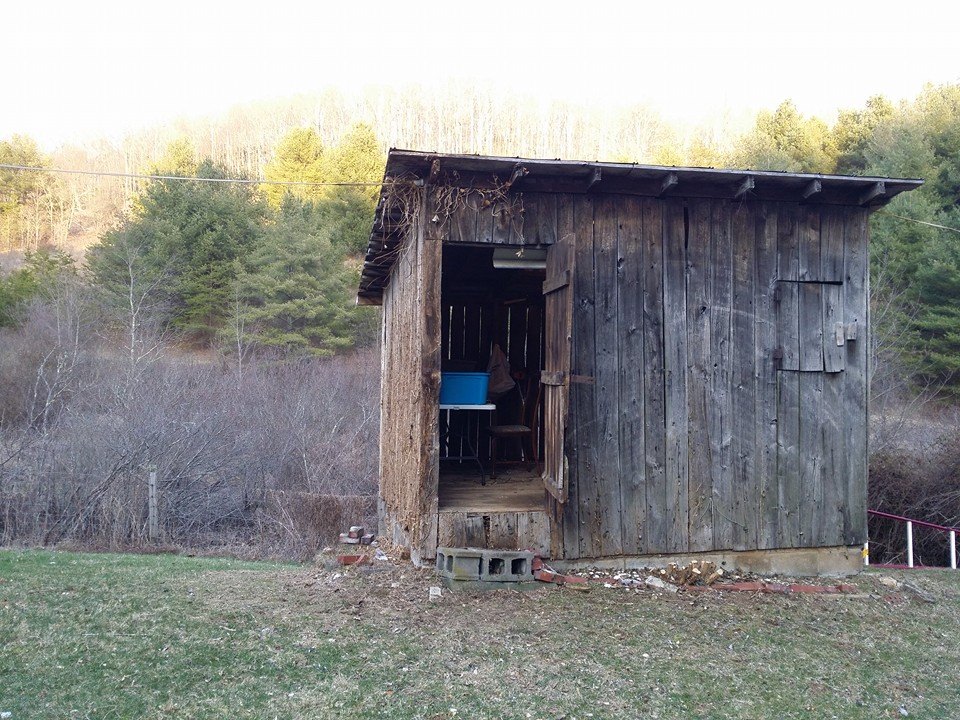
Ok, that’s the quick rundown. Now, 2 minutes per tree…4000 trees…that’s 8000 minutes! 8000 minutes of doing the exact same thing over and over and over again.  At first this was a  lot of fun because grafting is really cool. It’s like putting frankenstein together, only less scary and ultimately ending in delicious fruit. This fun didn’t last very long, though. I started day-drinking beer around the time when my cuticles started to bleed (probably day 6-or-2880 minutes).  It was also really cold and as you can see from the picture below, my grafting shed was (it’s now remodeled) a bit breezy.

Grafting ShedSo I hired someone to help me. The guy showed up and showed real promise and I made the rookie mistake of paying him after 2 day’s worth of help. He never came back.

Then I hired a 14 year old. To all of you out there: NEVER HIRE A 14 YEAR OLD! I had these aspirations of taking him on under my wing and turning him into an orchardist…until I had to re-graft every single one of his trees…which was about 500 of them. Really, if you are going to hire a 14 year old, you have to watch their every move and don’t trust that they understand anything. I wasn’t able to do this because I needed to graft alongside him (you know, to get more done).

A month passed and I hadn’t finished grafting. My fingers and wrists ached, all my clothes were covered in grafting sealer, and my loathing of the activity soared to new heights. This was compounded with the death of my 3 month-old puppy (FedEx ran her over while I was on my way out to the grafting shed) and I was absolutely miserable with 1500 trees to go.

I shared my drama with an apple mentor and he suggested that I stop grafting, plant the rootstocks, and do some bud grafting in the summer. Of course! There was a way out! Budding 1500 trees this summer is doable (I think). If it’s not- I’ve located a professional bud grafter who will come and do all of my trees for me. Yesssssss.

Lesson learned: Discovering (through experience) how long a task will actually take you is called “Wisdom.”

Lesson #2: No matter how passionate you are about an activity, you can burn out. I didn’t think it was possible….

Lesson #3: Teach a bunch of friends how to graft well before the time comes for you to actually start grafting your trees. Have them practice over and over again. Then, hire them. Make sure your friends are over the age of 14.


Some press from the NYFC (I’m featured on their blog)

Introducing Eliza Greenman, Owner/Operator of Legacy Fruit Trees in Virginia:

Eliza in winter attire

Up in the Blue Ridge Mountains of Southwestern Virginia, I am the owner of a small fruit tree company, Legacy Fruit Trees- where I specialize in custom grafting and growing hard cider apple varieties (for now). This year, my first year, I’ve pre-sold 4000 trees which I’ll graft, grow, dig and ship in the coming months. Two days a week, I manage Foggy Ridge Cider’s 18-year-old, 8 acre hard cider orchard which contains 40 varieties of apples noted by people like Thomas Jefferson for making the highest quality cider.

Every day of working in the orchards is a learning experience because each variety wants to grow differently. When I’m not grafting and growing trees for other people, I’m grafting and growing trees for my future fruit and nut orchards (4 acres this year, many acres to follow). I currently have a collection of 650 apple varieties and have plans to design and plant a commercial-scale fruit and nut forest using a diversity of apple genetics and native Appalachian species.

Last year I moved back to Virginia (my home state) to start my businesses and orchards after many years spent in Maine, where I developed my passion and purpose for growing fruit and nut trees. My interest started on a small apple-tree-covered island in Maine and expanded to include MOFGA’s Apprentice and Journeyperson programs, where I steeped myself in the culture of apples.

Foggy Ridge Orchards

After 6 years of immersion, incubation, management and experiments, I received an opportunity to move back to Virginia where I could pursue my life goals of unlocking the potential of old varieties and bringing heirloom fruits back to the general public.

Many of the fruits I associate myself with have genetic resistances and tolerances to diseases facing the East Coast (even the South) and they are also purposeful- contributing to the best fresh eating and value added products one could consume. Hard cider is a product I specialize in, but I can also recommend handfuls of varieties which will make the best apple pies, apple molasses, mince meat, apple sauce, dried apples, and many other products.

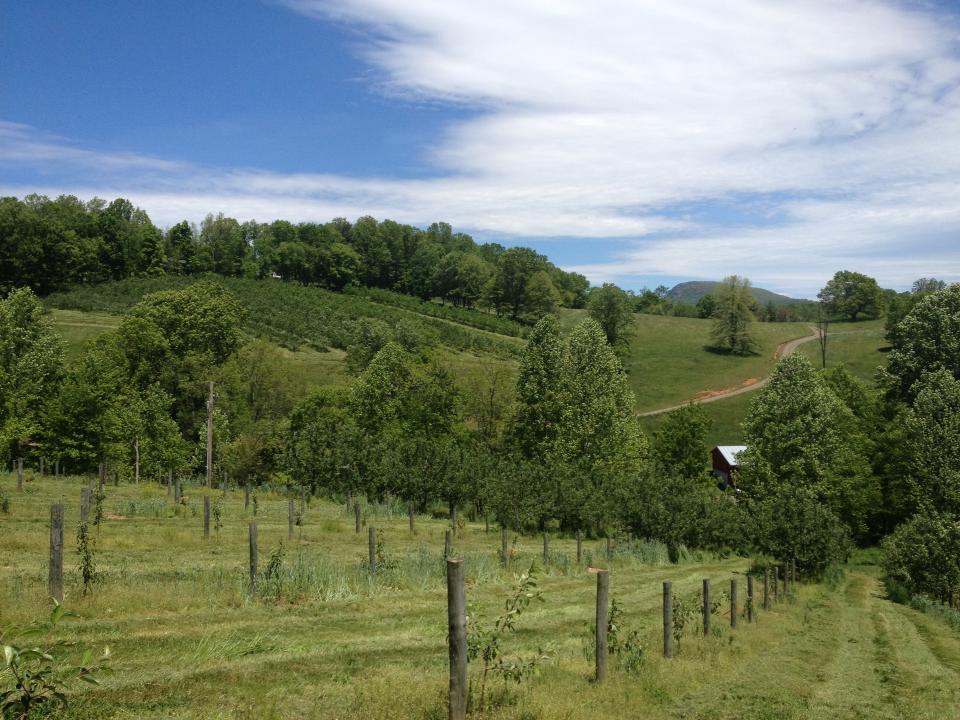
Future Orchard Site

In the next few years, my trees will start to produce and I look forward to having people try these exceptional varieties. Perhapsthey will like them so much that they will want a tree of that variety growing in their yard. And perhaps I can tell them how best that tree wants to be grown. Retelling history, preserving ancient genetics, producing high quality ingredients, and creating lasting relationships with our surroundings can all be brought about with an apple tree. And that’s why I love what I do.

via Introducing Eliza Greenman, Owner/Operator of Legacy Fruit Trees in Virginia : National Young Farmers Coalition.

how did this young apple farmer get “landed”

In my opinion, the single most important question a burgeoning young farmer should ask a “landed” farmer is: How are you on this piece of land? Of course, you could get a smattering of witty answers to this but what you should pursue is a conversation about money. How are these farmers affording the land? For how much? Dig deep and be ruthless in order to get these answers because they are important for you to know. Some farmers may own, others may have a lease or they might be in a creative arrangement. Regardless, this sort of thing is really important to know because it allows you, the prospective farmer, to find a model that makes farming feasible for you.

XXXXXXXXXXXX

As a perennial farmer, I searched high and low for a model which could work for me and I found nothing. The few young people with orchards of their own were either occupying family land or were given/loaned money from a family member to help buy their farm. There were no young perennial farmers leasing land and after looking into this myself, I began to learn why.

XXXXXX

Unlike annual farmers, perennial farmers have a long lasting (sometimes life-long) relationship with their crops. When I was looking to lease land, I needed a 10-year lease at the absolute minimum in order to plant my trees, grow them, and then get a few harvests. Now, let’s see a show of hands from people willing to give a 20-something a 10+ year lease. Not. Many.

xXXXXXXX

Alright, so maybe I found someone willing to enter into a 10+ year lease with me. What if the landowner decided not to renew my lease after those 10 years? I’d be out 10 years of investment, sweat equity and would be without my apple business. A solution to this, I felt, was to own all of the improvements that I made to land, whether that be a tree rooted in the ground or a building. I had decided the mature value of an orchard for the trees and the work I put in was $15,000 dollars an acre. My thinking was that if I was kicked off the land, the owner or the next occupant would need to purchase my orchards because they would basically be purchasing a business. Who was willing to do this? No one. I guess its not a big surprise that no one jumped on this leasing strategy, but it is all I could think of for finding a way to get on land without buying it.

XXXXXXXX

Enter the “creative arrangement.” For the perennial farmer, this land option is truly about who you know and involves some mutual exchange of needs and wants between the two parties. For me, it started when I apprenticed for Foggy Ridge Cider, where I got to know the owners and considered them friends. A couple of years later, after hearing about my sob stories of getting kicked off an orchard and breaking up with my boyfriend, the owners decided to let me know that I was welcome back at Foggy Ridge.

Eliza Greenman- Foggy Ridge Orchards


Foggy RIdge Orchards- Spring

A rising perennial farmer may look at this and say: This doesn’t help me! Where in the hell am I going to find an arrangement like this? Well, to be honest with you…I turned down several creative arrangements with other people before I took this one. When you are passionate about your profession and put yourself and your needs out there, people answer. Who you are connected with also matters. A colleague of my boss recently expressed that he wished he could have found me before she did. Another colleague expressed wishing he could find someone willing to enter into the same arrangement. I’ve also been offered a 50-50 partnership with a landowning couple wishing to transition their farm over to apples from livestock. Maybe it’s just apples, I don’t know…but there is a need out there for young people to get into this profession. Especially in the light of this ever-growing hard cider boom. There aren’t enough apples in North America to supply the future needs of the apple markets.

XXXXXXXXX

Young farmer organizations (aside from the Greenhorns, for whom I am a blogger), seem to gloss over the need for perennial farmers. I’d be willing to bet the average age of an apple farmer is far higher than the annual farmer. The need for us to enter into this realm is huge.

XXXXXXX

Interested in joining my network? Do you find your perennial self really needing to get on a piece of land? Please get in contact with me because I feel your pain and can maybe help you troubleshoot. Trees@foggyridgecider.com.