The Unexpected Effect of Pigs

I have a lot to say about having pigs in the orchard and have been compiling my notes all summer long for a later, longer essay. Today, however, I want to talk about an unexpected happening of the pigs.

A couple weeks ago, I made the decision to move the pigs out of the orchard and into a new series of paddocks behind the one-day-soon Greenhorns headquarters. This decision came because the timing of harvest was getting difficult with pig rotation, so I figured it would be best to remove them from the orchard for a few weeks. Luckily, the Greenhorns HQ is only a pasture and a backyard away from the orchard so the move was about an eighth of a mile away.

Armed in running clothes with a quart Ball jar full of grain (for noise making), I had Shizue (the newest hire of Greenhorns!) lift up the gate of their old pen and I started to jog across the pasture. As expected, the pigs followed me and eventually fell into a hilarious single file line with Mortimer, the 8 month-old boar, leading the group. If ever I have felt like the pied piper, that was the day.

Before reaching the new paddocks, we ran through Doug and Yvonne Sears’ backyard, where they were standing on the back porch whooping with laughter and clapping as we passed. I guess its not everyday you see a line of little pigs run through your backyard.

eliza herding pigs

Over the course of this summer, I’ve gotten to know Doug (turns 90 this November) and Yvonne (age undisclosed) and they have been wonderful neighbors. They have been married for 65 years and are still so very in love that it makes my face melt to witness it. Ginger, my large French Mastiff, broke the ice with them early on by walking into their house uninvited and asking for a dog bone in her sad faced “I’m going to sit and shake my paw for you” manner. Ever since, Doug and Yvonne have welcomed me and the dog and whomever is accompanying me over for dinner, conversation, a vodka-tonic, or just a quick catch up on the day’s events. It has been really nice to become friends with them.

Doug, a faithful cutter of grass on his riding lawnmower, cuts our headquarters front lawn without asking because he wants to keep us out of the “You redneck; your grass is too long” judgement zone from passerby’s (a zone I really don’t care about, but that doesn’t matter). With that same riding lawnmower, Doug has also helped me to cut paddock lines to place my electric fence, saving me at least an hour of labor. I’m grateful for Doug.

Now to the unexpected outcome of the pigs…

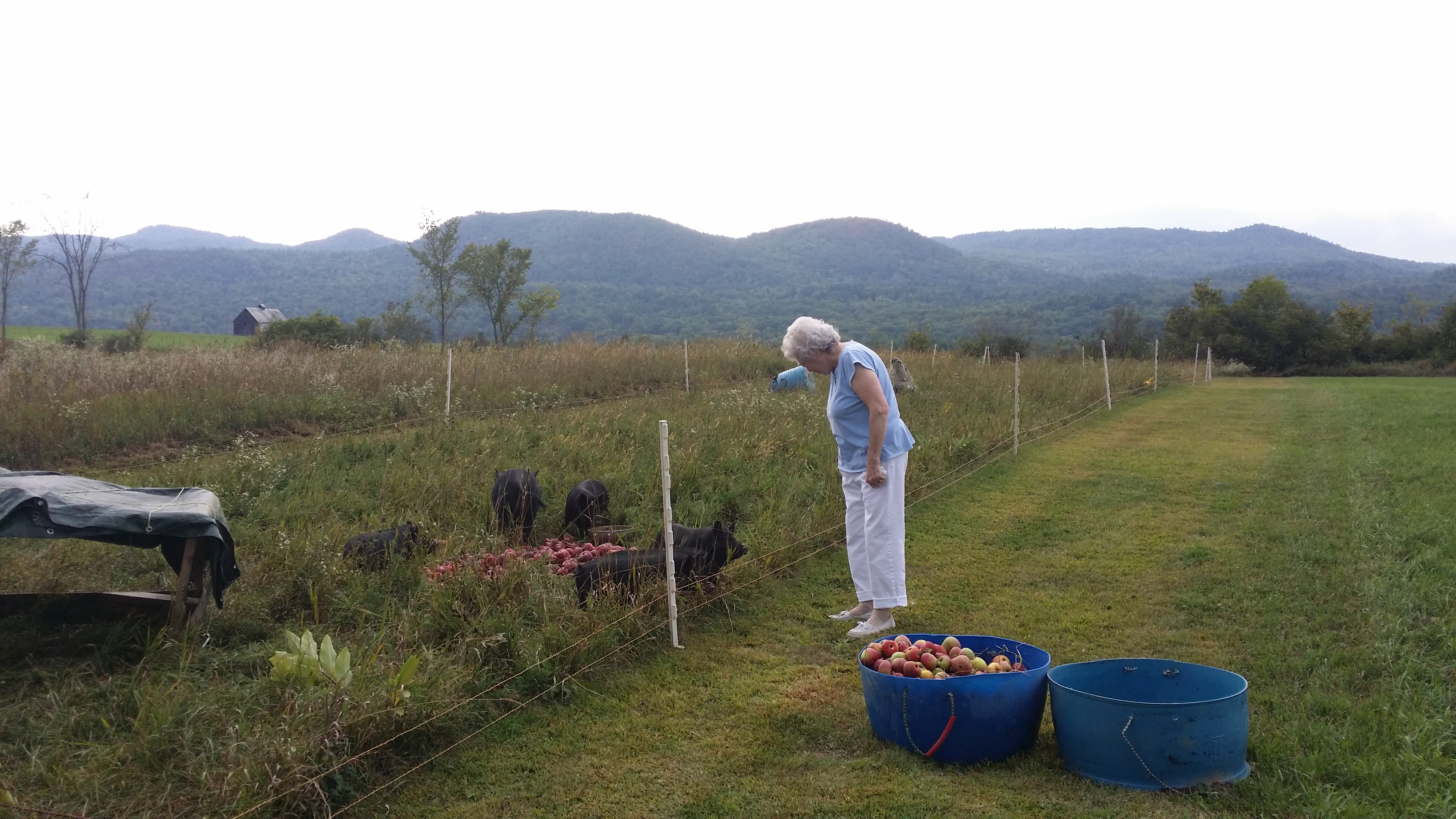
After witnessing the pigs run through their backyard, Yvonne developed a burning interest in them. She told me a couple weeks ago that as soon as it’s light enough to go outside, she goes and says hello to them. She returns throughout the day, often with leftovers from breakfast, lunch or dinner to give them. The pigs, who I believe to be the happiest animals on earth, come bounding from wherever they are to tell Yvonne hello! and that SHE IS THE BEST THING EVER.

Yvonne adores those pigs. Yesterday she confided in me that she has had a bad back over the past year and with the rain and the cold weather that dominates this climate, she has not been able to do the walking necessary to heal. (She also confided in me that her lack of activity is built on excuses). Ever since I moved the pigs out of the orchard and to a place that is easily accessible for her to walk, she’s been walking more than ever and enjoying every minute of it because it involves seeing the pigs.

yvonne with pigs

Her back is feeling better. Doug says she spends more time with the pigs than she does with him.  And today she informed me that the pigs love radishes, lettuce, turnips, and mashed potatoes.

photo courtesy of Shizue!

I’m often guilty of getting wrapped up in the management aspects of farming. How can X benefit Y and Y benefit X without costing me more money? What are the yields? Etc. Today was a reminder that small scale farming can and should hold more than that. It can unexpectedly bring happiness and joy to those surrounding us and even give someone a reason to put on their shoes, grab their cane, and go for a walk as soon as the sun comes up.

Attention Nutri-Grain Bar Eaters

I recently discovered that Nutri-Grain bars smell EXACTLY like Nutrena’s Grower/Finisher Pig Feed (conventional hog feed). This has been confirmed by 4 other people.

I’m not at all convinced that the outside coating of a Nutri-Grain bar isn’t the same as these pellets and it would be wonderful for someone to do some investigative journalism about this. Nutrena is a company of Cargill, one of the world’s largest producers of “food,” meaning anything that can be grown using biotechnology.  Nutri-Grain is a company of Kellogg, who must source their cereal grains from somewhere…

Moral of this story: If you don’t like the idea of eating hog feed designed to fatten hogs, in bar form, I’d give up nutri-grain until you are sure.

Work Update

I realize that it has been some time since I updated this blog to reflect my current life position, which I’ve been in since January. Here it goes…

After I left Foggy Ridge Cider, I was scooped up by Severine Von Tscharner Fleming of the Greenhorns, a young farmer activist organization. She offered me a place to stay in the Champlain Valley of New York and a full diet CSA share from Essex Farm if I came and worked with the Greenhorns on a part-time basis. I accepted and that’s where I’m typing from right now.

Last year around this time, I was sitting on a porch in Virginia venting about how unhappy I was with my social life, which eventually led to me being unhappy with my place-based work. Fed up with my sob story, one of the listeners asked: “Well, what is it that you want to do?” I thought about it for a moment and then replied: I want to cultivate a way of growing apples that is low-input, environmentally friendly, and within the confines of my personal ethics. His response: “You won’t make any money doing that anytime soon. You’ve got to do something in the meantime that will make money.”

Isn’t that the plight of the young agrarian these days? Finding a means to support yourself in order to get your ideal occupation off the ground and running? For some reason, there seems to be a stigma attached to supplementing your farm business with outside income in the agricultural realm, and that has to end. Times are different now. Land is expensive or hard to come by, markets need to be created, consumer education is imperative due to increasing disconnect, and the food system is broken. Just because someone’s income isn’t fully derived from the farm doesn’t mean they are any less of a farmer. These days, anyone trying to work the land in order to grow environmetnally friendly/ethical food should be heralded rather than deemed “hobby farmer” or something to that extent. They might be working towards it, for all we know.  Heck, I could grow way more trees if I was using round-up. I could sell more apples if I sprayed harsh chemicals to make them blemish free, the income of both these options could cover my “survival income.” But neither of those options meet the goals of what I want to do/who I want to be. So, I decided to take a part-time job that met my goals and would help me and others out in the future: Farmer Activist for the Greenhorns (AKA, Director of Biodiversity)

I’m an activist because I’m a farmer who is tired of the status quo in a world where change needs to happen. Gone are the days of sitting on the agricultural periphery, wishing I had something meaningful to contribute or a way to convey my thoughts. This year, I’ve developed the confidence to use my voice and cultivated the tools necessary to bring about awareness to Americans. Poor. Rich. Conservative. Liberal…we all [hopefully] know what an apple is and can talk about one.

Speaking of apples, I’m also working with them in the Champlain valley. I’m involved with a few orchards up here, do some orchard consulting (minimal, I really don’t enjoy consulting), teach workshops, and constantly scheme about how to better my practices for the future (hopefully in Virginia).

Life is crazily busy and I am in a downright struggle to manage it all. Balance is needed, as always, and I often fight work-a-holic tendencies. But, I love where my life is right now and I am excited for every new day. That’s my update for now.

Stress: The New Bittersweet? (A Radical Orchardist Part 2)

It seems like it has rained every day for the past month in the Champlain Valley of New York and Vermont. Combined with 70-80 degree temperatures, the fungal population couldn’t be happier. It’s like one continual fungal feast over here, and I couldn’t be more psyched. Why? Because I’m absolutely infatuated with the idea of stress in an orchard.

Screen Shot 2015-06-30 at 4.43.12 PM

In A Radical Orchardist: Part One (which I encourage the reader to read before pursuing this essay), I re-introduced my thoughts about how apple scab, a fungal disease, increases the brix (sugar content) of the apple, which translates into a higher alcohol content once fermented. For hard cider purposes, I thought, perhaps we shouldn’t be spraying-late season fungicides for cosmetic fungal diseases like apple scab, since lingering fungicide residue has been known to kill the ferment (the yeasts) in the wine and cider realms. I also re-introduced the idea of managing apple scab as a value-added disease for cider apples, a thought that is about as radical as it gets these days in the apple world. A thought that I’m still excited to explore and understand in order to embrace it or dismiss it.

This year, I’ve been actively looking for scientific research on the effects scab has on apples, from a nutritional standpoint. I want to know how the apple reacts to scab; What does that fight look like? Does a stressing agent like apple scab bring about super fruits? This research is slow, mostly due to the fact that I don’t have access to any scientific journals, but it’s progressing and has me optimistic. The following is a report on my findings and thoughts.

Stress: The New Bittersweet?

My journey started when I found a paper about the effects of apple scab on the peel of an apple. The article, which can be found here and simply broken down here, stated that a peel covered with scab lesions is higher in polyphenols than one not covered in scab. What’s the big deal? Quite a bit, actually. This is a big deal. Screen Shot 2015-07-01 at 3.27.42 PMScreen Shot 2015-07-01 at 3.28.21 PM

Screen Shot 2015-07-01 at 3.28.12 PM

Phenols, such as chlorogenic acid (as seen in the top graph), are classified as antioxidants, meaning  that they tend to prevent or neutralize the damaging effects of free radicals in the body. Free radicals are chemicals that have the potential to cause damage to cells and tissues in the body.  Many of the phenols mentioned in the paper above are related to resveratrol (the polyphenol found in red wine which got a lot of news a while back for making wine drinking a life-saving activity). When researched in the skin of non-scabby red apples (aka: what you see in a grocery store), they were found to contain powerful antioxidant capacities, along with anti-cancer, anti-inflammatory, and cardio-protective properties.

Now, take those phenolic values from the skin of the non-scabby red apple and multiply them by at least 3+ times. That new value is one coming from an apple with scab infection. To further push this point, this article suggests :

The way in which orchards are managed can influence the amount of phenolics, as shown by Veberic et al. (2005), who reported that organically grown apples had somewhat higher amounts of phenolics as compared with traditionally grown apples. These authors concluded that this is probably because organically grown apples face more stressing conditions, for synthetic fertilizers and pesticides are not used.

Folks, this is superfood status and at the very least, people should try to source ugly organic apples and eat the peels. Research says that doing so might save your life someday.

Now, to project these findings onto cider…

What makes a cider apple a cider apple? The quick universal answer most people know is that it’s in the tannin. Tannin is a collection of phenols such as chlorogenic acid, phloridzin, epicatechin and the procyanidins (source). Only the procyanidins are considered “true tannins” because they have the ability to tan things like animal hides and give the drying sensation we recognize as astringency (aka: the sensation you get when you stick an acorn in your mouth). For the most part, bittersweet apples have the most tannins, or phenolics, and dessert apples have the least.

https-::books.google.com:books?id=jZvqBwAAQBAJ&lpg=PA622&dq=plant%20polyphenols&pg=PA829#v=onepage&q=apple&f=false

https-::books.google.com:books?id=jZvqBwAAQBAJ&lpg=PA622&dq=plant%20polyphenols&pg=PA829#v=onepage&q=apple&f=false

A bittersweet apple, taken from this Serious Eats article, is described below:

If there is one style of apple prized above all others by American cider makers, it’s the bittersweet apple. Affectionately referred to as a “spitter,” these apples are low in acid, high in tannin, and impart the classic flavor of finer French and English ciders. At first bite, most would consider bittersweet fruit inedible. But what is ill suited for the fruit bowl is ideal for the cider press.

For the most part, America’s high acid, high sugar apple crop provides all the fuel for fermentation and puckering power necessary for a great cider. But what that fruit lacks is tannin—the molecules that impart astringency and provide a cider’s texture—and bittersweet apples fill this void.

https-::books.google.com:books?id=lATkBwAAQBAJ&lpg=PA106&ots=76WFijiMHz&dq=%22tetrameric%20procyanidin%22%20apple&pg=PA105#v=onepage&q=%22tetrameric%20procyanidin%22&f=false(image)

Ignore the yellow highlighting, and the column about gelatin

I hope your wheels are turning like mine were, but in case not, let me break it all down for you.

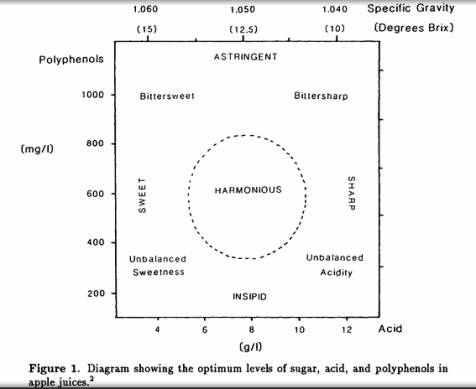
Cider apple varieties are known for their higher levels of phenolics, because those phenolics (aka tannin) distinguish them from dessert fruit. Those phenolics involved in making a cider apple a cider apple are also the same phenolics that increase in concentration when the apple is stressed with apple scab. If you refer to Figure 1 above, you’ll also see that in addition to high levels of polyphenols, a bittersweet apple is one with a higher brix. Let me remind this audience that this whole Radical Orchardist series started with the deletion of an article I wrote about how apple scab increases the brix in apples.

I’m no chemist, but it seems to me that stress has the potential to send some dessert varieties into the realm of a bittersweet. Now, how about stressing a cider apple? Is the increase in phenols due to stress worth it to the cider maker and the consumer? This study says that phenols in hard cider are absorbed, metabolized, and excreted by humans. Meaning, we’re getting the nutrients.

Screen Shot 2015-06-29 at 10.51.33 PM

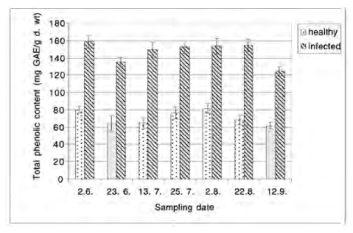
phenolic content of apple leaves, healthy vs infected with scab. http://www.sipav.org/main/jpp/volumes/0108/010807.pdf

It makes sense to me. When stress occurs, the apple’s response is to pump the site of infection/attack full of phenolics (see graph to the right) . Look no further than your forest’s edge to find wild, highly evolved, inedible tannic crabapples that serve my point. The crabapples have evolved to contain these phenolics without provocation. The lesser-evolved dessert varieties, however, may need to be provoked through varying degrees of stress in order to produce a more nutrient-dense product, or one that more resembles a bittersweet cider apple.

What does this mean for management? Back in the first A Radical Orchardist essay, I irritated a few folks with the question:

What is a cider apple? Sure, you can have all the old French and English varieties like Dabinett, Frequin Rouge, Tremletts Bitter, Norfolk Beefing, etc, but if they are managed the same as dessert apples…are they really cider apples? I don’t think so.

And I still don’t think so. I believe that growing cider apples requires a completely different mindset than growing dessert fruit in order to make high quality, nutrient-dense, healthy organic hard cider. To me, a part of being a cider orchardist involves learning how to balance stress within the orchard through organic means. What do I need to give the tree in order to replenish the expense of fighting off an infection? What is the tipping point of too much stress? I whole-heartedly believe that these, plus many more, are the questions we should be asking. Imagine a world where the value of an apple comes not from its looks, but from its nutrient content. That’s what I’m aiming for with stress, and I believe there is value in that.

Please, those of you who are researchers…prove me wrong. I have admitted to the fact that I’m no chemist, and without academic ties, its completely reasonable that my understanding is flawed from the free book snippets and articles I find online. Send me a response with accessible PDFs, I’ll make sure to post it in a follow-up essay with reasons why I agree or disagree. Hopefully some great questions will come out of it and some university or private foundation somewhere will want to investigate.

In the meantime, the take home message is to #eatuglyapples and #drinkuglyapples. Embrace the scab, avoid the rot and challenge the status quo.

Postscript: Earlier in this essay, I included the following phenolics to define tannin. They were chlorogenic acid, phloridzin, epicatechin and the procyanidins. From this article, it states that apples infected with scab had:

  • 6.5 times more phloridzin than a healthy apple.
  • chlorogenic acid can be found in the first graph of this essay
  • epicatechin levels are in the following graph:
  •  Screen Shot 2015-07-01 at 7.26.50 PM
  • procyanidans are flavanols, which are widely cited by research papers to be the reason why some apple varieties are resistant to scab.


Pigs, Plum Curculio and Organic Standard

Next month, I’m getting five American Guinea Hog piglets (2 females, 3 males) from my amazing mentor, Shana, who lives up in Maine. For people who knew me when I lived in Poquoson, VA, the idea of me getting pigs probably doesn’t come as a surprise. When I was in the 8th grade, I negotiated with my parents to get a potbellied pig…as a pet. I read everything I could get my hands on about pigs, from veterinarian books to encyclopedias to library books (the internet wasn’t really a thing back then) and at one point, I vehemently gave up eating pork products and started putting up pig facts on the bathroom mirror every morning for my Mother to read. Eventually, they caved in and I called her Oprah, short for Ophelia.  I became an easy person to shop for because everyone got me pig things. Paper, plastic, metal, glass, aluminum, steel…you name it, I received it in a pig-shaped form. For all of high school, Oprah served as a backdrop for every single school project I ever had to present. She was a double helix for genetics class, she was Piggy in my Lord of the Flies book report presentation (Me: “Sucks to your as-mar, Piggy” Oprah: “Oink”). At 17 years old, she’s still alive (and lives with my sister).

This time around, 17 years later, I’m getting pigs for another reason… Apples!

Borrowed from grassfood.wordpress.com

The American Guinea Hog is a small heritage breed which is known for it’s foraging ability. These pigs love to eat grass, clover, dandelions, etc and are able to supply most of their diet from a good pasture mix. Because of their ingrained foraging skills, they don’t root as much as the other pigs…which is a characteristic I’m looking to select for in an orchard setting because I can’t have trees toppling over due to a pig being on a rooting binge. So, why am I getting pigs?

First of all, let’s talk about the foreign language spoken in the apple-growing realm this time of year. No matter if you’re hanging with an organic or a conventional orchardist, we all speak the same apple language to communicate how far along our apples are out of dormancy and that begins with the poster above. Sometimes we refer to these stages with excitement (“Hooray! Winter is over! I’m at half-inch green and it’s May 5th!”), while other times we speak this language with utter disgust (“I’m at pink and it’s supposed to go down to 24 degrees tonight. Efff.”). When trying to pre-treat your trees for an insect (like aphids) or disease (like apple scab) attack, there are sprays for all of the nine stages above. For the pig purposes of this entry, however, I’m going to skip to steps 7-9: Bloom to fruit set, which is happening right now by the millions as I type from the Champlain Valley.

As the apple blossoms give way to little apple fruitlets containing tiny seeds, insects are reacting. Particularly, the dreaded plum curculio! These little weevils fly in from their overwintering condos in the woods/brush piles/trashy fields/hedgerows, land on the little apple fruitlets, and insert their eggs. You know they’ve successfully done this because they leave a crescent scar as evidence (middle photo). If the egg is a dud or the apple is able to grow fast and crush the egg, it often heals over with an ugly scar, but it’s still edible (side note: this is what google gave me when I google image searched “disfigured but loveable”). If the apple isn’t able to grow fast and heal over, the egg will eventually (in a matter of days) hatch and the larvae make their way to the core of the apple to hollow out a nice space for itself. You see, this is all part of it’s grand and evil plan, because it knows that once the tree finds out about the little fruitlet not being able to reproduce, it will cut it loose. The plum curculio larvae then falls to the ground safely in it’s padded apple lounge and after two weeks hanging out and getting fat in the fallen fruitlet, it emerges and heads into the soil. A week or so later, it bursts from the soil as an adult.

Plum curculio is a major pest in fruit orchards and management usually involves a spray of some sort. The organic folk will cover the fruitlets with a kaolin clay called “Surround,” which irritates the insects and causes them to fly away in frustration without depositing its eggs (or taking a bite). The problem with this method is the amount of times you have to spray surround and the fact that it gunks up the sprayer and leaves a white film on everything.  The conventional guys will often spray Imidan or pyrethroids around petal fall (stage 8 in the photo), which are insecticides that you have to time according to Plum Curculio’s flight in order to kill the devils. The problems with insecticides have to do with them being “broad spectrum,” so you’re killing other insects in the area that do some good, like pollinators (bees!) and predatory mites. But what if you don’t want to or can’t spray?

This is where the pigs come in. The piglets I’m receiving next month will be 8 weeks old and their arrival will correlate perfectly with “June Drop,” the time when the apple trees let go of their infertile fruitlets containing plum curculio. In a study by Michigan State, they found that each tree, on average, releases around 120 fruitlets during June drop and with using 8 week old pigs as little apple eaters, they got all but two per tree. The results later that summer: the plot that did not have pigs had 5 times more plum curculio feeding injury than the plot with pigs. That’s great!

But here are the problems with pigs:

1.) This study said it took 27 pigs per acre two to three days to clean up the June drop. I cannot handle 27 piglets at this moment in time (I’m an apple grower and farmer activist, not a hog farmer…just yet) and I’m also only getting 5 piglets next month. I’ll put them to work in a smaller orchard in NY. Every bit will help, right?.

2.) Organic certification gets complicated with pigs cleaning up June drop. Rule 7 CFR Part 205.203 of the USDA Organic Standards states that raw manure (like poo from a pig) cannot be applied if there are fewer than 90 days until harvest (120 days if harvesting off the ground). What does this mean, exactly?

Besides the fact that 90 days is ridiculous for tree crops if I plan to pick the apples (I’ve heard rumors that the fear comes from poo on our shoes contaminating the ladder rungs which we have to climb to pick the fruit. I call BS on that one…especially with these high density dwarfing systems), it means that we have to get innovative in what apples we plant in the future. Say June drop happens on June 15th. 90 days from June 5th is September 13, 2015. So! We need blocks which will ripen after that date in order to have the piglets pick up the plum curculio infected fruitlets. Luckily, there are many apples that qualify. However! If you’re thinking “Oh, I’ll just forgo organic certification,” there’s something you all should know….

The Food Safety Modernization Act in it’s first write-up required 9 months of wait time after applying raw manure to the orchard. After much complaining (this is why every farmer and farm sympathizer should voice their opinion or the opinion of their trusted farmer), they have removed the 9 month clause in favor of further investigation.  This could be serious, folks. If your farm makes more than 25k in a year in produce sales and you are in the US, you’ll have to eventually comply.  One day, I’ll write a terrifying blog post about the Food Safety Modernization Act (FSMA) and how everything the permaculturalist/ low-input orchardists/silvopasture/agroforestry folks want to do with selling fruit from their landscape will likely become illegal unless you start making relationships now. Combine with a trade organization that has lots of money who can advocate for your cause, go talk to your Congressman, write influential people in your area. It can work. For example, take a look at the pecan industry, who successfully got a congressman to change the FSMA to exempt tree nuts from the raw manure clause, since cattle are often run through pecan orchards pre-harvest. These guys likely aren’t organic but it doesn’t matter…you have something in common with them on this one. Relationships matter, even if you don’t see eye to eye with other farmers or share their same agricultural ethics.

Back to pigs…

I’m also planning to have the pigs go in and clean up the orchard after harvest. Having them eat the apples that weren’t marketable enough to make it out of the orchard as cider is great because they might have a disease on them which may overwinter. If they root a little, that’s fine too…because they’ll help to break down the leaves and disrupt the homes of any overwintering larvae. And, everyone loves apple finished pork!

Passing of Francis Fenton, the “Apple Man”

I have just received word that Francis Fenton, the “Apple Man” of Mercer, Maine, has died.

IMG_0105

I lived with Francis when he was 96/97 years old, helping him to manage his five acre orchard of standard apple trees. He once told me that his goal was to live to 100 years old and unfortunately, he was 2 months shy of obtaining that goal. He was an impressive man in his late 90s, tall in stature, clear of mind (for the most part) and a need to go out to work for hours at a time. He asked me to call him Frank once we got to know each other better, which I only remembered to call him half the time.  He was absolutely tone deaf and would keep me up at midnight practicing the saxophone. I can still hear him practicing “When You WIsh Upon A Star,” which I knew from Pinocchio and he knew from the 40s war era. He would say: “I love that song, Liza.”

We fought about chemical use in the orchard, his argument was that it made things easy and why would anyone ever want to go back to doing hard work? He lived in a time where he watched his father work himself to the bone because without technology, there was no other option. He would make a point to show me the chain which was once wrapped around a huge rock under the barn as a reminder that the team of horses (or oxen?) couldn’t pull that one out no matter how hard they tried. After our chemical discussions, he’d say: “Oh Liza, I love technology. I’m a technological guy! I’m open to new ideas.” And then he’d ask me why I didn’t become a nurse or work at Olive Garden…you know, to get a job with benefits. He couldn’t fathom any young person wanting to go into apples and continually tried to dissuade me.

As much as we riled each other up, we loved each other. When I would leave for my other job 4 days a week (I was managing his orchard for gas money to get there, a 50 mile drive, with hopes of sharing some of the profits that fall), he would always stand in his driveway and wave goodbye, telling me that he loved me. We shared the orchard, performing different tasks the two of us felt needed doing, and often not telling each other what we did (on purpose, I think). We went on sharing until one day when we were no longer allowed to share due to a bitter and nasty family intervention. Weeks shy of harvest, I was no longer allowed to contact Francis or be in the orchard, and I went into a deep and dark depression, one where I thought about giving all of this up. I haven’t talked with him since that day he told me: “Eliza, my daughter makes me cry, too, and I’ll cry many tears over this. I’m really sorry…but there can’t be two bosses.”

He was an original fruit explorer, exploring Western Maine for old apple varieties and bringing them back to his orchard. He had around 120 varieties and his favorite was the Wealthy, which he would eat as apple sauce with ice cream on top nearly every day. His wife, who died years ago, loved Mollie’s Delicious. He always told her the name of the apple was “Dollie’s Delicious” (he pronounced it “DollieLicious”)because her name was Dollie and it was close enough. She couldn’t eat acidic foods and that apple was alright for her, he said.

I have hundreds of stories about Francis and apples that I’ll forever cherish. I’m blessed to have had him in my life and I hope he’s somewhere eating an apple out of hand. He’d often complain to me about how his dentures wouldn’t allow for such activities.

Rest in Peace, Francis (Frank)

Edit: This is part of an email I wrote back in 2012 about my experience with Francis.

On the orchard, things are interesting. It’s actually a mixture of nightmare and fairy tale, if those two could ever be combined. The orchard is 5 acres, 120 varieties, and each variety is peppered throughout without any rhyme or reason. So, this means that I have to go out with a map every weekend, document the bloom time, and try to figure out spraying. Our first apple, the charette, bloomed 2 weeks ago while 15 varieties still haven’t shown any signs of flowering. Because we’re selling apples to the public, we have been spraying fungicide weekly to kill apple scab. It’s not what I want to do, but it’s Francis’ wish so we’re doing it. I’d much rather enter into a life-long battle of trying to change people’s apple shopping habits than spray.

The fairy-tale portion of this is actually working with Francis. While living with him, I’m learning a lot about a nearly lost way of life. Since 1770, 3 generations of Fentons have lived on the property, Francis is the 3rd generation. He knew his Grandfather, who fought in the civil war and he still has sleighs that the family used to get around in the winter time. When walking through the forest, there are huge wolf trees- evidence of once farmed fields. He knows every wild thing growing on the property and we often enjoy meals of seasonal wild edibles. The past 3 weeks have been fiddleheads, or juvenile ostrich fern. There’s also dandelion greens and a few trout lillies here and there (eat the small bulb, it tastes very much like a sweet cucumber). So, we’re a good duo these days. He’s really excited that a 28 year-old female is living in his house (EVERYONE knows who I am because he announced it at church) and I’m excited about getting to know him. Chemicals or not, I’m learning a lot on the management side of things when it comes to relatively unknown heirloom apple varieties.

Workshops in NY! Come one, come all (until spots fill up)

The Home Orchard: a series of workshops with Eliza Greenman

May 9th: Fruit Tree Topworking Workshop!

Imagine a single apple tree in the spring blooming with a bouquet of white, pink, red and purple flowers. Imagine that same singular tree with red, green, yellow and russeted apples in the fall. That tree is possible to obtain if you learn how to topwork. Come and learn the art and technique of adding different varieties to a tree. On Saturday, May 9th, heirloom and cider orchardist Eliza Greenman will walk you through the steps necessary to change an apple, pear, or hawthorne tree over to something you find more useful to your lifestyle. Whether you want to convert an abandoned orchard over to different varieties, or you are tight on space and want one of your trees to supply great pie apples for every month of the apple season…the learning starts with topworking.

When: May 9th, 3-5pm
Where: Greenhorns Headquarters: 5797 Rt. 22. Westport, NY
Cost: $15 per person. 15 slots available.
What to bring: Loppers or hand pruners, sharp knife (a single bevel grafting knife is strongly preferred), gloves
How to register: Email Eliza Greenman to reserve a spot: egreenman (at) gmail.com with “WORKSHOP” as the subject

June 6th: Growing Low-Input/Low-Spray Apples for Hard Cider

Cider apples are different from your normal grocery store apples. Not just in variety, but also in management technique. Come take a walk through the orchard with heirloom and cider orchardist Eliza Greenman to learn the basics of good and bad when it comes to growing apples for hard cider. We’ll identify and discuss beneficial insects and cosmetic diseases, concerns and triumphs in the orchard, and tips/tricks to deal with these concerns. The goal of this workshop is to have the participant leave with motivation to experiment, make observations, and join a network of people working to supple and make quality products which do not harm local ecology or the consumer.

When: June 6th: 9-12
Where: Greenhorns Headquarters: 5797 Rt. 22. Westport, NY
Cost: $15 per person. 20 slots available.
What to Bring: Notebook
How to register: Email Eliza Greenman to reserve a spot:egreenman (at) gmail.com with “WORKSHOP” as the subject

June 13th: Summer Pruning Workshop Summer

Pruning is a practice and art of addressing vigor in apple and pear trees. When practiced in combination with dormant winter pruning, a tree is able to produce more fruit and have less disease. Come learn the basics of tree vigor, how soils and winter pruning can interact with the vegetative growth of your apple trees, and how to bring the tree back into balance through summer pruning.
When: June 13th: 9-12
Where: Greenhorns Headquarters: 5797 Rt. 22. Westport, NY
Cost: $15 per person. 15 slots available.
What to Bring: Hand pruners, loppers, gloves
How to register: Email Eliza Greenman to reserve a spot:egreenman (at) gmail.com  with “WORKSHOP” as the subject

August 8th: Fruit Exploring and Summer Grafting

Learning from the landscape is one of our best tools in combating climate change and forming a more sustainable agricultural future. If you know where to look and what to look for, the landscape transforms itself into a realm of purposeful human legacies and thriving natural adaptations. Fruit Explorer/Orchardist Eliza Greenman will teach you how to track human legacy through trees, select for wild and thriving genetics, and how to propagate it all through summer bud grafting.
When: August 8th: 9-4
Where: Greenhorns Headquarters: 5797 Rt. 22. Westport, NY
Cost: $25 per person. 25 slots available.
What to Bring: Camera, notebook, single beveled knife (grafting knife preferred), footwear and clothing for walking outside, sun protection.
How to register: Email Eliza Greenman to reserve a spot:egreenman (at) gmail.com with “WORKSHOP” as the subject

September 19th: Hard Cider 101

This workshop will cover all the basics of making hard cider, from pressing to fermentation. Participants will take home a fermenting kit and a 5 gallon carboy of cider to ferment at home.
When: September 19th: 10-2
Where: Greenhorns Headquarters: 5797 Rt. 22. Westport, NY
Cost: $100 per person. 20 slots available.
What to Bring: Notebook.
How to register: Email Eliza Greenman to reserve a spot:egreenman (at) gmail.com with “WORKSHOP” as the subject

Visiting Jim Lawson, the Paul Bunyan of Bench Grafting

I have an apple bucket [bushel box?] list consisting of people and varieties to find before they disappear. Towards the top of my list of people to find has been Mr. Jim Lawson, an 89 year-old nurseryman from Ball Ground, Georgia. He has been credited for finding a slew of old southern apple varieties and his work has been mentioned in books, propagated by nurserymen/women across the South and planted in many, many yards. He has worked as a professional nurseryman and fruit explorer for much of his life and I just had to meet him.

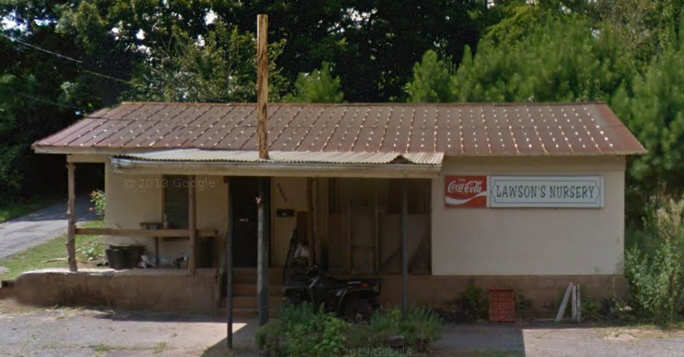
Last month, I tried to go and visit a *very* old man in Illinois to talk about the nut trees on his property and an hour before we were about to leave, I received a text from his daughter telling me that he had taken a turn for the worst and was going to die. Our trip was cancelled and we never had the chance to talk with him, collect his stories, and tell him how much we appreciated him. Still feeling the sting of that last experience, I decided to embark on an impulsive trip to North Georgia to find Jim Lawson because time is running out. I didn’t have his address and my one attempt at calling him produced no answer, so I reached out to my old college roommate (Cam), who lives a town over, and we tracked him down through the local connection. If I had tried, there’s a good chance we could have tracked him down on a basis of apple tree regularity. The closer we got to his place, the more apple trees we saw in the landscape. Pulling up to the front of his nursery building, there was someone looking at us through the window. It was Jim Lawson. We had found him!

Every now and then, I spontaneously show up at someone’s house and the person I’ve set out to talk with is rather skeptical. I’ve never been turned away, but sometimes I’ve had to really work to stay. This did not happen in the slightest with Jim. He was delighted and excited to meet us.

Screen Shot 2015-04-22 at 9.53.11 AM

About once a month I run across a person who radiates an inner light. These people can be in any walk of life. They seem deeply good. They listen well. They make you feel funny and valued. You often catch them looking after other people and as they do so their laugh is musical and their manner is infused with gratitude. They are not thinking about what wonderful work they are doing. They are not thinking about themselves at all.

When I meet such a person it brightens my whole day. But I confess I often have a sadder thought: It occurs to me that I’ve achieved a decent level of career success, but I have not achieved that. I have not achieved that generosity of spirit, or that depth of character. -David Brooks, The Moral Bucket List

I feel blessed beyond words (so much so that I had to take David Brook’s words) to run across people like this in my life. They are continual examples and guiding lights for the type of person I want to be. After only spending a few minutes with Jim Lawson, I knew I had added another mentor to my registry of “people I want to be like.” The thought also hit me that if he didn’t live in Georgia, there would be a real chance that sparks would fly with another life mentor of mine, Anna, who lives on an island in Maine. They would be so cute, just the thought makes my heart want to burst!

Throughout the day, people circulated through his nursery building and with each new addition, we would be introduced as his “apple friends.” Most would come in, sit, and listen to Jim tell us stories. Some would offer up a few words but many just sat, content, until the time came when they had to go. Jim was sad when these people got up to leave and made sure to send them along with a genuine expression of how much their visit meant to him and how he hoped to see them again soon.

Jim Lawson, in the overalls, holding Adele's Choice Hard Cider from Mercier's Orchard in GA

Jim Lawson, in the overalls, holding Adele’s Choice Hard Cider from Mercier’s Orchard in GA

We talked about many topics and I’ve decided to write out the highlights rather than type up the stories word for word (they are recorded).

1.) In his hay day, Jim could bench graft (whip and tongue) 1000 trees in a day. For those of you who aren’t versed in the grafting world, this is nothing short of a legendary feat. These days, he only grafts a few trees every now and then because his hands don’t allow him to do much more. I didn’t press him for a number because I fear it’s probably in the hundreds at a time (what I do).

2.) At 89 year old, he wants to learn how to graft walnuts. So much so, that he’s going to join the Northern Nut Growers Association this year to be a part of their network and hopefully learn more.

3.) He has the “Big O” crabapple, which he will let me come and take cuttings from this summer. He knows everyone in the southern apple world and whenever someone would find or breed an interesting variety, they would give him a call. This is how he got the “Big O.” It’s a great keeper (stores for quite a long time).

4.) In addition to the “Big O,” he thought I’d really like to try the Craven crabapple. The Craven was being grown by a man somewhere in the South (again, the exact story with details is voice recorded) and Jim Lawson received some scions of this tree in the mail. He then started to propagate this tree and spread it far and wide though his nursery. Years later, he received a disgruntled letter from the old man who said that he had plans to patent the craven variety and was upset that Lawson had propagated the tree without his permission. Lawson sent him two Craven trees along with an apology and he never heard anything from the man again. Rumor has it, the man’s original tree had died and if it wasn’t for Lawson propagating the tree, it would not currently exist.

Jim Lawson then got up and walked to a back room in his shop. When he emerged, he was holding two shrunken apples: craven. He gave them to me with exclamations of how well they keep and told me to plant out the seed. My old college roommate must have been rather confused to see me get so excited about receiving two in-edible apples. I can’t wait to plant out those seeds!

craven apple

5.) In order to find old varieties, he’d just ask people. If he was driving somewhere, he’d pull over when he saw an old apple tree and knock on the door. It didn’t matter if they had names or not, if the apple was something he had never seen and looked good, he’d take a cutting and name it after the household name or address. Many of these varieties today still don’t have a true name. Sometimes, people would contact him looking for a specific apple variety and he would help to track them down given his local connections. To this day, two varieties elude him (I’ll update later on the names of these). He’s optimistic that they’re still around.

6.) One time, a man bought two of every single tree he had and planted them on a hillside in North GA. These trees have grown seedlings and are now a thriving habitat for deer. He hears from many hunters about how wonderful and appreciative they are for that planting of apple trees.

7.) He prefers to pour apple brandy over his pound cake.

When we were leaving, we gave him a bottle of hard cider from Mercier Orchards. The type of cider was called “Adele’s Choice” and when he received it, he exclaimed “I knew Adele! She would be so happy to know that they put her on a bottle of hard cider. Oh, this just makes me so happy.”

There’s really something to staying put. However does someone with insatiable wanderlust do such a thing?! I guess the answer will one day be (when/if I settle down to a single area): those people with wanderlust will just have to come and find me!

WANTED: The “Big O” Crabapple

Malus coronaria

This apple (the variety is called “Big O”) was last seen in 2006 at the USDA/NRCS Jimmy Carter Plant Materials Center in Americus, Georgia. They distributed these trees to people who inquired and have since stopped distributing. The breeding program is over and the trees no longer exist in Americus (so I’ve been told).

Screen Shot 2015-04-07 at 11.40.15 AM

DESCRIPTION: ‘Big O’ is a small tree that grows 20-30 feet tall from a slender trunk. The blossom petals are pink/white fading to whitish and the normal blooming period in Americus is mid-late March. The mature fruit is 1 ½ inches in diameter, greenish yellow and ripens in November.

Why am I looking for this tree? It’s extremely disease resistant, blooms rather late for a deep southeastern apple, and the crop matures late. It grows true-ish from seed, and the fruit itself is a larger sized crabapple.

Get in contact with me if you find this apple or knows someone who might have this apple! Just leave a message on here or find me on Facebook.