The Gift of Columnar

I’ll begin this little essay about apples, but I’m going to end with oak trees. If you are interested in silvopasture, stick with me… 

Back in the 80’s, there was a sport (genetic mutation) which occurred on a single McIntosh apple tree in the UK. This branch was different from all the others in that it was virtually free of side branches and STILL produced an edible fruit. The apple people started calling this sport a columnar or fastigiate apple, and it looks like this:
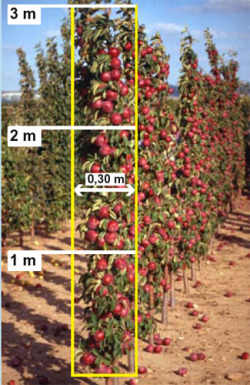
tumblr_nhzlbwrsl81t15h2ho4_250


I originally learned about this kind of apple tree from Nick Botner, an apple/grape/pear/cherry/peach/etc curator in Oregon, who showed me the growth habits of his columnar collection. Once he showed me the spacing one can achieve with these apples and the form they take on, my mind took off.

I go back and forth on planting high density orchards. The numbers work out economically to grow high density if you have the start-up capital, and the pruning and harvesting time involved is hard to beat. But my problem is in the trees themselves. Grafted onto dwarfing rootstock, their small root balls are unable to mine the soil like a larger tree does and as a result, they require irrigation, fertilization and weed free strips in order to keep them producing like they should. Not to mention, I’m suspicious that apples produced by dwarfing trees don’t taste as good or have the nutrient density of the deeper rooted ones.

My thoughts for a few years now have circulated around: How can I grow a high density orchard more sustainably with less inputs? This columnar apple is an idea which could potentially address these thoughts.  Theoretically, I could graft these trees to larger rootstocks (such as m111 or wild crab) and have them much closer together than otherwise possible in a regular orchard planting. On these larger rootstocks, they’d be able to fend for themselves and would require lower inputs. Right?

I’ve yet to try this due to funds, but I am actively seeking all columnar cultivars possible to try out in a nursery setting to see how they do…

Which leads me into how this blog article is going to transition into oaks. When google searching for columnar cultivars, I started including another search term which is used as a descriptor for upright growth: fastigiate. To my surprise, I learned of other fruit trees which possess a columnar nature; Peaches, pears, cherries… and even OAK TREES.

Before I launch into oak trees, let me be clear for a second and further spell out the meaning of a columnar tree because it matters. In the apple world with all of it’s new rootstock technology, it is known that more trees per acre produce more bushels of apples per acre…earlier (more precocious). This is why all sorts of orchards are converting over to high density plantings…because they are now able to maximize acre production. Now, why not apply this sort of orchard thinking to silvopasture?

Enter: Quercus robur ‘Fastigiata’ x Quercus bicolor(and other hybrids with ‘fastigiata’)

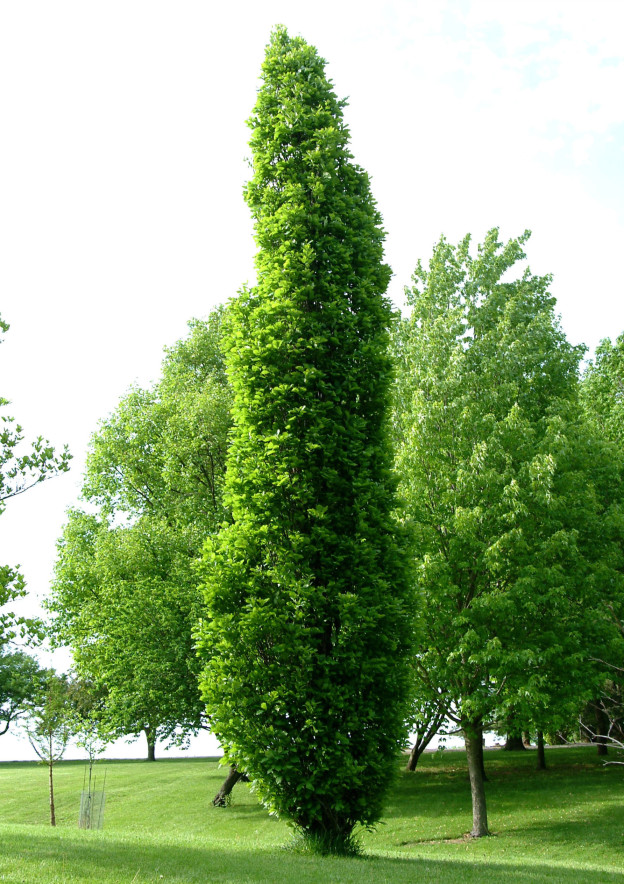
Once upon a time, an English Oak hybridized with a Swamp White Oak and produced this:
kindred_spiritc2ae-_hybrid_oak_tree_official_image-624x884

Do you know what this is?! THIS IS A 45 FOOT TALL TREE WITH A 15-20 FOOT SPREAD!!!

Do you know what this means? With this type of hybrid oak, there’s a real chance you could pack-in far more healthy oak trees than ever before onto an acre (or a hedge), all of which will produce acorns. Just like with apples, more trees pre acre likely means more bushels per acre.

In old (early 1900’s) articles I’ve read about oak cultivation, there were once oak trees called names like”Juicy Hog Biscuit” to indicate that these cultivars were grafted to pastures where hogs were fed from these trees. There were stories of oak trees which produced heavily and oak trees which produced annually*, and the TVA even started a project which ended up getting cancelled on oaks for livestock production. Yet, given the way of our agricultural history which has largely abandoned diversity, today we’re left trying to single out stellar cultivars and breed others.  With a lack of these Juicy Hog Biscuit genetics in today’s time, could a hybrid oak possibility like this be the new feed lot where you can finish your pigs on more bushels per acre of acorns than previously thought possible? I’d like to think so. I mean, if we’re doing it with apples, why not oaks?

I’m chomping at the bit to do something like this for my pigs in the near future. Whether a hedge or a flat out orchard planting, we’ll see.  Let’s put our heads together to see how we can better access these genetics and get moving on these trees. They are good in wet soils, dry soils, cold climates and warm climates. Please contact me with ideas and thoughts. Questions I have:

-What is the mast production like for these hybrids?

-Age to production?

-What happens if I top this tree? Will it still keep the columnar form?

This is also a reminder that further breeding needs to happen in order to make this form of agriculture competitive with corn. What if we crossed a specific white oak known for abundant acorn production with an English oak (var fastigiata), for example? We’re looking for the columnar shape which would likely make itself known early in the selection process. This is all very exciting to me and the potential is limitless.


*On a recent NNGA thread, Sandy Anagnostakis pointed out that many oaks could be annual bearers if the late frosts could be avoided.


Orchardist Seeks Land in Loudoun County, VA

Do you have 50+ acres of farmland you’re just dying to sell to the right person?

Does it have 30+ acres of pasture and a perennial source of water?

Is it within Loudoun County, Virginia?

location_of_loudoun_county_virginia

If so, let’s have a conversation. Here’s my abbreviated life story:

I am a Virginian, born and raised in Hampton Roads (the City of Poquoson). I had to get the hell out of there because it was becoming too big for its britches and I never quite felt like I belonged. So away I went to college and 6 years later, I found myself in Maine- struck with an unconditional love of apples. It’s genetic (from my great-great-great grandfather) and I had no say in the matter; it was 100% full blown passion from day one. That was in 2008 and ever since, I’ve been a devoted heirloom apple orchardist and advocate working with various people along the East Coast (read more of this blog for details).

The thing that separates me from other young orchardists (if you can find them) is that my training and interest is in the lesser-to-hardly-known cultivars rather than the mainstream. I have probably managed 250 cultivars of apples from Maine to Virginia and eaten far more than that, likely into the 1000 apple cultivar spectrum. In being exposed to these apples, one begins to realize that they are all different. Not just in taste, but in growing habit/personality. There is no one-size-fits-all management method to heirloom apples because they all have their different genetic quirks; and unlocking these secret quirks is part of the excitement I find as an orchardist. I believe the key to designing and managing an orchard in the most ethical, ecological and truly sustainable (read: low-input, recycling of nutrients,  regenerative long-term farming) way is to select the right combination of genetics for the right site (this is also called “terroir”). That’s where mainstream apple growing has gone awry, and the niche I hope to fill as Virginia’s only commercial organic apple grower (along with other fruit and nut trees).

What are the goals?

Grow organic apples (and other fruits like persimmons) for the process market (specifically for hard cider/spirits)

Develop a production arboretum which serves as a genetic repository for fruit and nut trees/shrubs which thrive in this Northern Virginia, Maryland, West Virginia region.

Incorporate livestock into the orchards/arboretum. Animals in orchards is an age-old thing and it makes total sense from a management perspective. Call it “silvopasture” if you’d like…

Offer a quarterly fruit school to those wanting to learn ways of cider and heirloom apple production on-farm. From graft to glass. Farm to bar.

Be a place where people can come and see, with 100% transparency and explanation, how we’re going about agriculture. “You can’t grow organic here” will NOT be our default response to those seeking organic fruit. Our response will likely be: “We have these cosmetically blemished organic apples and they taste awesome. You’re welcome to buy them. If you’re still uneasy, you’re welcome to eat or drink them sight-unseen at these locations…”

Why Loudoun County?

Grafted ChestnutThis place has been sending me signals for a while. It is rich with Quaker horticultural history, which my fruit exploring team and I are uncovering one grafted tree at a time. We have found more old grafted Chestnuts, Pecans, Walnuts, Hiccans, Honey Locusts, Persimmons, Pears and Apples here than anywhere else I’ve been, and to me that’s a sign. Many of these fruit and nut cultivars have lost their identity and purpose, and its up to us to figure out why our Friends of the past grafted them.

Loudoun is the fastest growing county in the state and the importance of finding these trees and saving them (through grafting) is of priority from a standpoint of genetic diversity, but also in preserving history. I can graft; I can grow trees;  I am a great story teller; I can spot an old graft from 100 yards away. All of those skills will be working on saving these grafted trees and bringing them to an AR-1 lot near you.

Access to markets is also an awesome attractor. If any market can tolerate organic ugly apples, I think it is this one. #eatuglyapples

Who is involved?

I have a partner and his name is Pete Walton. He’s a great guy who shares the same vision I do, only from a livestock-in-various-orchard-systems perspective (it makes so much sense to incorporate animals into the system). We work well together and it’s a healthy, well-balanced partnership.

There’s also the dog who is a committed member of this land search. An avid swimmer and in need of cooling down in 70 degree “heat,” she is the biggest advocate for having running water on the future property.

And then there are the pigs, who are currently being rotated throughout Loudoun County as garden tillers/preparers (if you need your garden tilled and fertilized by these rooting machines, get in touch). They are part of our work force and we’ll have more next year.

Pete and Domino Pigs

How am I going to afford property? Loudoun is EXPENSIVE!

Well first off, we’re looking for someone who isn’t wanting to sell their land to a residential developer. If you are that person looking to cash in, our thoughts on long-term land use are a bit different.

Secondly, I’m also a woman of many resources! Don’t read this and think… Oh, Eliza can’t afford MY land. You may be right (ex: $4,000,000 for 170 acres), but it might also work out by enlisting some help. I’m well connected and this work has attracted some backers, so just let me know if you have something, ok? We look forward to having a conversation!


20150910_193810

Ginger dog is sad here because we wouldn’t let her go swimming in the fetid pond next door.

Cider And Heirloom Apple Vigor: An Hypothesis

Recently, I was on the phone with a mentor and we were discussing hedgerows (my new pet project, aside from brewing all sorts of alcohol). With some of the species I mentioned, I was told that livestock would eat them down to nothing and render the hedgerow useless. After having a few tree species rejected, I frustratingly asked: “What if I planted my hedgerows with invasives like multi-flora rose, then?!”

Without any hesitation, my mentor said: “Invasives like multi-flora rose are very delicious to many animals, like my goats.  You might be suggesting invasive plants for your hedgerow because they are vigorous and seem to outcompete everything else, but try to think about vigor from another perspective. If plants with high vigor are also the most sought after by animals, don’t you think that vigor might be an evolutionary trait to survive browse?”

This is the first time I’ve heard this perspective on invasives and I’ve really enjoyed thinking about it. After some minimal research, I found out that the subject is still debated today by ecologists as the “plant vigor hypothesis.” Generally speaking, vigorous plants have higher nutrient densities than non-vigorous plants, so herbivores are more prone to eat them. However! If the very vigorous cultivars are able to put on a bunch of girth, many herbivores aren’t able to eat the whole thing because of their jaw size.

This, of course, has got me thinking about apples. Here’s why.

In many essays on this blog, I’ve talked about how I consider many cider and heirloom cultivars to be very vigorous as compared to most of the grocery store cultivars. Vigorous cultivars are harder to prune, occupy more space (so less trees per acre), have issues with vegetative vs fruit bud proportions, etc. In general, they are harder to grow.  After reading more about this “plant vigor hypothesis,” I wonder if there is a connection between vigor and nutrient density in apples cultivars?

imageedit_20_9184260796

From an evolutionary standpoint, a correlation between vigor and nutrient density makes sense to me. Many wild crab apples in the US have much higher tannins (aka polyphenols, which =nutrition density) than cultivated varieties. This is from the many lifetimes spent co-evolving with insects and herbivores who are trying to eat them. From observing crabapples in the “wild” and planted in landscapes, it seems as if many trees have low vigor and perhaps this is because they have evolved to have an unpalatable deterrence for animals and humans alike?

In hard cider, many of the wild crabs are too much for our palates to handle and though very nutritious, they will cause a harsh and likely negative consumer experience. So what have we done? Over time, cider drinkers/makers/apple growers have selected cultivars to grow which are palatable to the consumer, but also contain enough tannins (or polyphenols, or natural defense) to give the cider some substance.  Could it be that in selecting not-so-astringent apple cultivars for eating/drinking, we’re unknowingly selecting for more tree vigor? If the apple cultivar hasn’t evolved enough to deter herbivores through astringent taste, then do genetics dictate that it must rely on vigor to survive? 

These sorts of questions make me excited and I’ll keep learning about these processes in order to try and uncover different management ideas that don’t involve regulating vigor through the use of dwarfing rootstocks, black magic hormonal potions like Apogee (which converts vegetative buds into fruiting buds), and planting in light soils. All of those management aspects, I suspect, are making the vigorous cultivars less vigorous/more fibrous/less nutrient dense.

Thoughts to be continued, but in the meantime here are a few off the top of my head:

Thought 1: Pruning extremely vigorous varieties like an herbivore in order to get faster fruit set?

Thought 2: Continuing to fruit explore to find mixes of wild x cultivated which hit high nutrient densities, palatability, and lower vigor.  (I’m writing a fruit exploring book about how to do this at the moment)

Thought 3: Making crabapples a significant part of my home breeding program.


why I dislike the term “silvopasture”

(I was writing another essay today and found myself going off on a rant about the term “silvopasture.” I decided to remove it from my essay and make it a new post…so here you go). 

For close to a decade of my life, I was either a student of forestry or a forester throughout the US and Germany.  I studied and worked in a variety of forested environments, and eventually made the transition from forestry to horticulture. The two realms, forestry and horticulture, originally came together for me was when I started learning about the lesser-known tree and plant species which produce medicinals and food within the forest and forest edge. I became quite good at foraging for food and medicinals while on the job and the idea of managing a piece of property for fruits and nuts became much more exciting to me than managing for timber. The transition from forester to horticulturalist began when I started to transition from forager to farmer; from forest to orchard.

An orchard is an intentional planting of trees or shrubs that is maintained for food production. Orchards comprise fruit, vegetable, and nut-producing trees which are grown for commercial production. Orchards are also sometimes a feature of large gardens, where they serve an aesthetic as well as a productive purpose.

Now on to this term: Silvopasture

Silva in latin means forest or woods. Pasture comes from the latin Pastura, meaning feeding or grazing. Together, you get grazing/feeding in forest or woods.

When I first heard the term “Silvopasture,” I assumed it was the act of thinning or planting a forest for timber/firewood and beef/pork/mutton/poultry, etc production. And in some cases, it is. But I have to address the other cases where silvopasture has become a term for planting fruit and nut trees on a pasture for some form of commercial fruit and nut production and introducing animals to the scene.

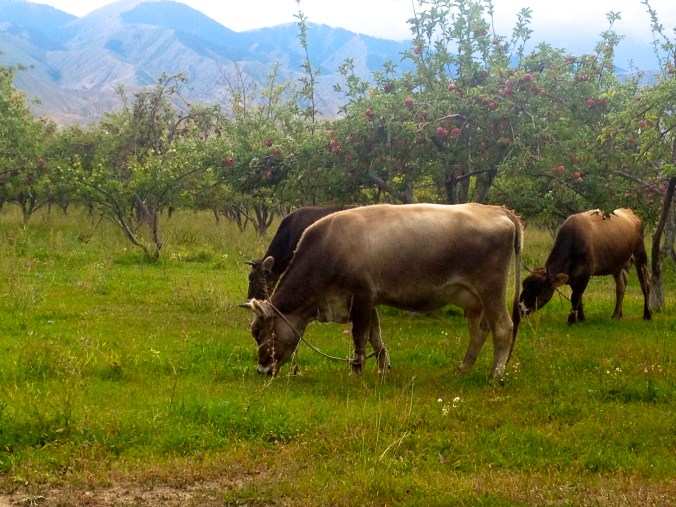
An intentional planting of fruit and nut trees is an orchard. For centuries, people have grazed their animals through their orchards because it makes complete and total sense on a practical level. Animals are an integral part of management in my opinion and weird health fears and scaling up are likely to blame for the elimination of grazing.  In the rest of the world, though, animals are still in orchards and it isn’t called silvopasture. Here’s a recent photo-example from Kyrgyzstan: A dwarf apple orchard with beasts in it.

IMG_0814

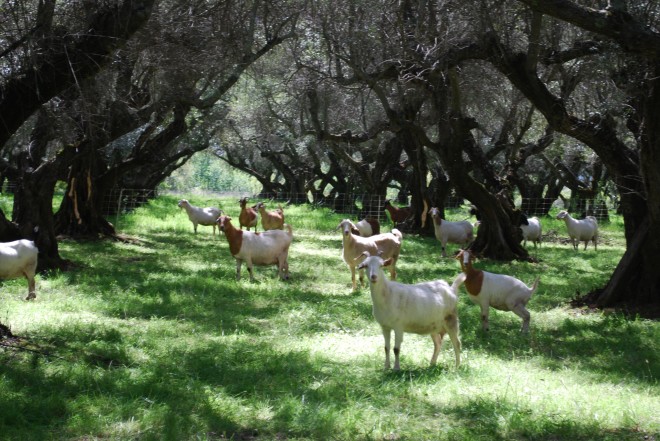
Or an olive orchard with goats in it in Northern Italy:

Both of these systems pictured manage for a tree crop and a meat crop (and grass crops). No timber will come out of these systems, and prunings take the place of coppice wood (which could be used as firewood). (Note to self: Pruning vs Coppicing is an interesting topic to revisit in a future essay).

How very American of us to first remove animals from orchards on account of scale and fear, and then put them back in and rename the system.  My dislike of the name silvopasture isn’t just in the semantics, though… This renaming thing we Americans do is directing people away from sources of valuable information. Information like how to grow these trees for tree crops on a moreso commercial scale is a practice studied in horticulture rather than in forestry. Though it’s nice to have feet planted in both realms, the difference is important! I know, because I’ve worked and studied in both.

If you want to pursue growing fruit and nut trees in a field/pasture for the commercial harvest of fruits and nuts while also incorporating animals into your management and income stream, try search terms like “orchard grazing” or “hogs in apple orchards” or “cows in cherry orchards,” etc.  With this knowledge, you’ll likely get a lot more out of your time spent on google, like THIS.

Sincerely,

Eliza the ORCHARDIST

However, I did see it worded in the UK as “Silvopastoral Orchard Agroforestry,” which is totally fine because all of the descriptors and origins are there.

[end rant]


From seed to fruit, islands good hosts to apples

best-appletree-water-MDI-nWeb

This is an essay written by my friend Barb Fernald for the Working Waterfront newspaper in Maine. She gives me a big mention! You can click to it here!

Fall has been a season of superlatives in the Cranberry Isles. Along with a November that might turn out to be the warmest on record, in Maine, the foliage has been the brightest we’ve seen in years. A simple walk or trip to the mainland begs one to pull out the camera time and again. Best of all, this has been an amazing fall for apples. All over the islands the trees have been loaded.

On a November Saturday, I caught up with my neighbor, Kaitlyn Duggan, and her two-year-old son, Bode, as they were going down the road by our house. They were each eating an apple from the tree in Mark and Vicky Fernald’s yard.

When I said I was going to write about apples Kaitlyn’s eyes lit up. “I love picking apples on the island. It’s one of my most favorite things to do! Getting outside in the fall sun, picking with a view of the water, it’s the best. And it’s free food!”

We commented on the tree filled with yellow apples by Jack and Ellie’s house on the edge of the Sand Beach.

“I’ve probably picked six grocery bags full from that tree this year,” she said. I and many others have been to the same tree several times, picking up drops and reaching the low branches to pick, with a view of the Islesford harbor.

Kaitlyn’s husband, Cory, has been making cider, experimenting with different blends of island apples. He figures he has pressed, pasteurized and preserved at least 40 gallons this year. Kaitlyn has made several batches of applesauce, adding flavor and color with rose hips from her own garden. I asked if she knew what kind of trees were around the island. She said, “You really should give Eliza a call.”

Continue reading

Apples With Special Needs

Albemarle Pippin (as we call it here in Virginia) is, in my opinion, one of the best crossover apples around. It’s great in cider, keeps well, is a wonderful fresh eating apple, and does well baked… win win win win. But its one of those apples that has special needs.

Actually, most apple cultivars have their own special needs! Yet, it seems as if these needs are only addressed in terms of hardiness (some Southern apple cultivars do not survive the cold areas of the North, for example). For this oversight, along with many other oversights I often complain about, I’m going to blame the cooperative extension service and the connected land grant university.

With the rise of land grant universities and the extension service  in the early 1900s, agriculture across the US started to become less diverse and more transportable/marketed. Extension agents, who even in 1914 were pawns of bankers, merchants, and railroad tycoons, started to spread the gospel of planting certain cultivars over others because they:

  1. Stored well (railroad tarrifs $$),
  2. Produced more annually than biennally (Merchants $$)
  3. Had less vigor
  4. Larger and more beautiful (red delicious was discovered in 1880)

Translate this into today’s time, and that’s why you have what I like to call “The Grocery Store 9”. Red Delicious, Golden Delicious, Granny Smith, Gala, Fuji, Honeycrisp, Pink Lady, Braeburn.

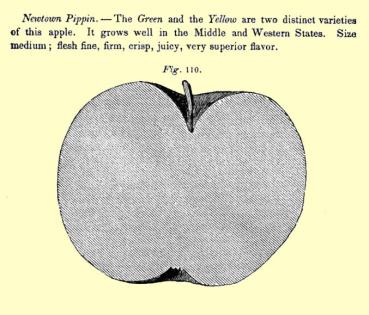
Ever since I started growing heirlooms, I noticed that some did well on certain sites while others didn’t do well at all. I noticed how in the shale dominated soils of Southwestern Virginia, the Newtown (Albemarle) Pippin didn’t do so well on its own (even on m111). After cataloging all of the Newrton Pippin diseases and doing a bit of study, I found a common denominator: there must not be enough calcium for this tree. 

If you were to take a soil test and send it off to the nearest lab with the apple box checked for analysis, they will send you something back that is meant for the grocery store 9. Not a calcium hungry-cultivar like Albemarle Pippin. If you follow their recommendations word-for-word and put down x tons of lime per acre, it probably won’t help you all that much.

This is for two reasons. 1.) The recommended amount is probably not enough calcium for this particular cultivar and 2.) The uptake of calcium by a tree doesn’t happen instantly. If you apply calcium to the soil, it will take years for the roots to get it to the fruit. If you apply calcium as a foliar spray, studies also show that it doesn’t do all that much good. So how do you get calcium into a needy tree? (Just to mention: I’m leaving out magnesium from this essay because I’m not going that in-depth tonight. Sorry, soil nerds.)

Some people recommend liming the hell out of a site before planting a tree. By the time your tree starts to hit productive maturity, the calcium will have finally made it high enough in order to be made available to the tree. Other people might still recommend the labor intensive (and often expensive) repeated applications of lime by foliar or soil (even though it doesn’t work all that well). Elaine Ingham has me thinking it could be a matter of soil microbiology, where the roots and the soil don’t have the right microbial/mycorrhizal cocktail needed for more effective uptake. (Also-the lack of soil microbiology could partially be attributed to the yearly herbicide applications to kill all grass under apple tree rows in conventional orchards). Or maybe it could be the different rootstocks? Lots of variables here to consider….and then I thought: MAYBE THIS TREE DOESN’T WANT TO GROW HERE.

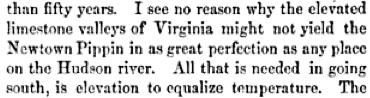
Today I found this from 1864:

Screen Shot 2015-11-28 at 6.46.54 PM

I stumbled across this article because #thefruitexplorers found one hell of an old grafted persimmon tree this month and I was looking into the history of the landowner. The landowner’s father, Yardley Taylor, was a well known horticulturalist in the area where I’m living and wrote lots of articles back in the 1800s, one specifically in answer to the complaint of: My Newtown Pippins don’t grow well here.

Yardley’s claims of “elevated limestone valleys” being the place for the Newtown Pippin makes sense. Limestone soils are rich in calcium. Where I was in SWVA, the bedrock material under the Albemarle Pippins was gneiss, schist and granite. No hint of limestone, less than ideal Albemarle Pippin quality.

There is so much knowledge left to uncover from people who once grew these cultivars in a less input-driven system. By input-driven, I mean the agriculture we know has been built on applications of outside products, often produced by large agribusiness (who funds land grant university research). What if we got back to growing cultivars that actually thrive in a specific place? I believe that’s called terroir, and it’s completely doable with apples. In order to do it, though, we may have to sacrifice low vigor, or annual bearing, or the ability to be shipped. But that’s ok… not all apples need to be for fresh eating. We’re in the grasps of a huge cider boom!  Lets keep uncovering these special needs, everyone! It’s up to us citizens to do it.

albemarle Pippin

Where Are The Tree Fruit Growers?

Back in August I attended USApple’s Outlook event, a gathering of apple industry executives from around the world to talk about the US apple crop forecast (mostly red delicious). I have almost nothing in common with the average attendee of a USApple event (female, heirloom grower, low-input centered, no access to workers with visas), so I spent my free time reading articles from industry fruit magazines in order to ask questions and talk shop with other attendees. After a few articles, I stumbled on one I felt qualified to address in August’s Good Fruit Grower magazine titled “Developing Tomorrow’s Workforce.”

“Washington State University is teaming up with Washington tree fruit producers to convince young people that there are worthwhile careers in the tree fruit industry, and there’s much more to it than just picking apples.”

and later on in the article…

“Everyone says the same thing: We can’t find people. We’re looking for the best we can. A lot of times we’re retraining someone that maybe isn’t really qualified for some of the jobs we’re asking them to do.”

The more I am exposed to the apple world, the more I hear and see this on all levels. In the month of August alone, I received the plea of “Eliza, can you put us in contact with someone who might want to run our orchard?” three times. In July, I heard it twice. Commercial or more-than-a-hobby people with orchards are looking for help and having one hell of a time finding it. Why is that? Well, aside from a growing number of orchards getting planted by retirees, Dr. Kimberlee Kidwell says that agriculture has an image problem that deters students from considering careers in that sector. She gives the following reason for the image problem:

“People think they’re going to be involved in the harvest piece only, that they’re going to be doing hands-on labor that’s difficult and even not desirable.”

In my short few years as an advocate of young people growing fruit trees, I have yet to hear the reason of “hands-on labor” as a detractor from the job. Usually, having a hands-on job is desirable to the young folk. It’s exercise, fresh air, a lifestyle change…its all very romantic, which makes me think there is a cultural difference between East and West coast tree crops growing. Perhaps she is talking about the sons and daughters of migrant workers, whose parents only do hands-on work without any hope of something else? They know what physical labor looks and feels like day after day, for years on end, and probably don’t want a single thing to do with it. Or perhaps its also an issue of scale. Regardless, I have spent a lot of time over the last few years trying to figure out why horticulture is such an unappealing or difficult field for young people to enter and I agree… Agriculture has an image problem. This blog post is why I think conventional perennial ag is going to continue to have a hard time attracting young people. For all other start up orchardists: access to land, access to capitol, and the ability to wait for your crop to come in are major factors. But, as I said, this is just addressing conventional perennial ag.   

1.) The Generational Gap: My parent’s generation and sometimes their parent’s generation is largely missing from US agriculture as a whole. They are the generations who left the farm, which has interrupted the transfusion of agricultural knowledge from one generation to the next. Many of my friends who try to make farming a lifestyle have to literally start from scratch in knowledge acquisition, land acquisition, soil acquisition, etc.

Why not bridge the gap ourselves and go to the generation who has this agricultural knowledge? It might not be as easy as it sounds. From Kindergarten to 12th grade, Millennials have used a computer for all of it. By high school for me, the internet and cell phones were here to stay and changed communication forever (or until teleporting is a real thing). Texts, emails and various social media platforms are the primary form of communication for us. This is in contrast to the anti-computer generation of my grandparents and many of the apple growers still alive. Communication is almost incompatible, and there’s no age buffer between the two to help out. So, these older apple growers are simply having a harder time finding young people wanting to learn, and visa-versa.

And what if you find an old apple person to take you under their wing? Well, sometimes (from personal experience) they are burned out and will repeatedly try to push you out of the nest with sayings like: “There’s no money in apples.,” and “I think its best you become a nurse.”   As a white entitled millennial from a middle-class background, you also might not see eye to eye with them on their management practices, which are built upon the green revolution…

2.) Ecological/Consumer Ethics: The Millennial generation is one that has a social and environmental conscience. We get our news through the lens of social media, which often casts a dark light on GMOs, cancer causing agents sprayed on crops, inhumane working conditions, etc when the local news does not. As a generation, we’re largely not ok with implementing these practices unless we learned them before we had access to the outside channels. 

We believe that we can make a difference in this world we’ve grown up to view through social media, and this is reflected in our life choices and buying habits. Market trends are showing enormous growth in the organic, ethical and anti-antibiotic foods sector, with no signs of slowing down. We millennials are bringing about social and environmental change through our wallets as consumers; and if we can’t afford it, we do it as farmers. That’s why I became a farmer (for the most part). But you will no longer catch me working on a conventional apple farm that has no plans for rethinking the system. 

3. Access to Training:The Maine Organic Farmers and Gardeners Association (MOFGA) is an extraordinary organization in Maine which offers workshops, classes, programs and a phenomenal fair (Common Ground Fair) to encourage and educate people on how to live life in a more ecologically friendly way. In addressing the need to connect older farmers with young people, they created an apprenticeship program for inexperienced (and often young) people so they could get a sense of what the farming lifestyle is like. Support for young farmers, combined with affordable land prices and amazing product distribution has made Maine the most vibrant young farmer scene in the country. Young people flock to the state to grow in an alternative way to what we find in the grocery store; one that nourishes communities, the land, and consumers. However, there is a problem with all of this in relation to this blog post: It’s all about annuals and livestock. 

If you are looking for an opportunity to learn from orchardists who align with your values, you’ll spend a lot of time looking. Even in Maine, where I finished the MOFGA Apprenticeship program and entered into their Journeyperson program, I had one hell of a time finding someone who was willing to teach me the ways of growing a commercial organic apple crop. I ended up working for a season at a conventional orchard and after leaving that situation, joined forces with a talented homesteader to learn how I could take her methods and expand them to a larger scale. Annuals and animals are sexy right now and perennials are the red headed step child of the ag world. Stone Barns, NOFA, MOFGA, MOSES, SSAWG you name it… annual agriculture dominates the workshops and conferences, often without any mention of perennials. Yet growing perennials requires a completely different skill set from annuals and young people trained in annuals don’t necessarily have what it takes. They also don’t have access to free information about growing perennials outside of a conventional context (attn: land grant universities, extension agents). This is a problem!

The newest class of farmers are also conscious consumers. The idea of getting a millennial to work in a greedy good-ole-boy agricultural system which challenges their ethics as consumers and humans is almost laughable (in my opinion). Companies like Google and Apple are changing their work environments to attract and hold millennials; When will the time come that ag is forced to do the same? I guess one of the first steps in the apple industry is to stop growing red delicious apples. Millennials need to be able to stand behind a product they believe in. That product is not a red delicious apple. Want to know how to convince young people that there are worthwhile careers in the tree fruit industry? First, think growing ethics: You won’t convince me that spraying a fungicide is healthy for the environment, so stop trying to cite “science.” It’s not that I don’t use science in my decision making on a daily basis (I do), I just don’t trust your biased researchers whose salaries are coming from chemical companies. We live in a culture of bought journalism and I am paranoid. Second, think outreach: How will you reach a generation who lives on the computer? Through the internet! Bring out a campaign that will entice us.  Third, think incentives for these people to stay: Off the top of my head: end of the season profit sharing, student loan forgiveness (I’m sure the lobbying power of big apple can do something about this), freedom to experiment in the name of innovation (through SARE grant applications, etc), continuing education (conferences are a good start), healthcare, etc.

I’m not hopeful you can do it, Big Apple. My dream is that small farmers will be able to do it, though. It will take some long-term access to land, new perennial skill sets penetrating the established ag scene, access to capital, the right genetics for planting based on location, positive and informative advertising for consumers, networking with one another to create a new agricultural status quo, and #eatuglyapples.

Fruit Exploring: Hunting the Vermont Beauty

Today I ate 6 pears, 11 apples. I tasted 14 pears, 24 apples. I managed to drop off apples at my rendezvous point on time for the delivery guy, and all else after that meeting at noon went down hill. Tis the season to be perpetually late to appointments/meetings due to the abundance of fruit on the roadside.  Also: Tis the season for elevated fiber consumption and trying to deal with it.

I’ve wanted to write a blog post about fruit exploring for ages now, as it is an exciting and integral part of my fruit life. Today’s essay will only be a brief glimpse, as I am writing a book on the subject at the moment. But I wanted to take a moment to tell you about my Tuesday.

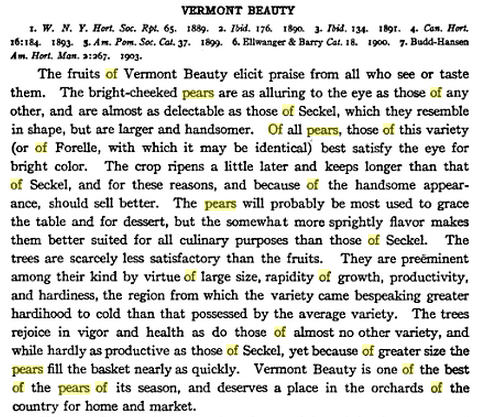
Earlier this year, I was putting away the “Pears of New York” book by U.P Hedrick and had this impulse to open it and look at one of the colored plates. When I opened it, the pear I landed on was called “Vermont Beauty.” I’m right across the lake from Vermont and one of the orchards I work with is in Vermont, so I decided to read on…

Screen Shot 2015-09-24 at 10.06.31 PM

From this book, I learned that this pear was a seedling planted out by Benjamin Macomber of Grand Isle, VT…an island in Lake Champlain. I currently live across the street from Lake Champlain! So, I got to hunting. The first step in fruit exploring is research, which occupied an entire Sunday. After having an idea of where to look for this pear, I called my good Vermont friend Meg Giroux and we went fruit exploring for this pear over Memorial Day Weekend.

Fruit exploring involves a lot of cold-knocking. “Hi. My name is Eliza; I’m a fruit preservationist and I have a story to tell you [insert story for specific fruit]…. Do you know if you have any fruit trees on your property?” That is the usual gist of my approach, full of smiling and excitement. Only once, in Georgia, have I been turned away…

We were looking for the remnants of an old 40-acre orchard we discovered through a local Georgia historian who knew a lot about peaches, brandy and a particular Southern family’s plantation drama/legacy. Thanks to his directions, we were right in the epicenter of where the orchard once was and we decided to go door to door knocking, seeking permission to check out the apple trees possibly growing on their property. We knocked on one door and the people were obviously home, just not answering. I left a message on their car about why we were there, how we’d love to look at their orchard (which is the only remnant we could find of the once 40 acre orchard), and my contact information. I got a call later that day: “Hai, I’m lookin’ for Elyyyzuh. My husban’ tol me to call yew and tell yew that yew are not welcome on our properteee.” After I tried to tell her that we were only interested in their apple trees, she kept interpreting/spitting condemning words for her husband, who I could hear in the background.

Upset and saddened by their isolationist/paranoid ways, I wrote the pastor of their church (because we previously talked with the home owner’s mother who told us they belonged to the church on the hill) and asked the pastor to preach a lesson on “Do not neglect to show hospitality to strangers, for thereby some have entertained angels unawares.” (Hebrews 13:2). And then proceeded to tattle on the couple, because if anyone knows me well, you know that I have band of “angels unawares” by my side.

Anyways, back to Vermont. After knocking on every single door we thought might have a property with fruit trees attached to it, we were given wide-spread permission to look around. We found an old, old pear. An old old apple. Another old property with an old pear and apple, etc. And after finding a map from the 1800s, we found an old, old apple orchard. Excited, I promised myself to go back in the fall when they had fruit. AND BOY DO THEY HAVE FRUIT.

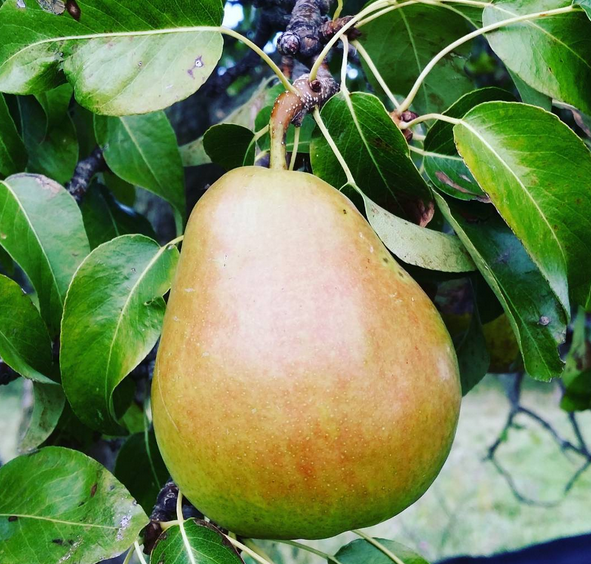
This story will be about the first pear tree we found, which I checked first with fingers crossed in hopes that the fruit wasn’t an early season ripener. Luckily, it wasn’t and the tree was loaded with fruit which had just decided to start dropping (!).

Screen Shot 2015-09-24 at 10.46.28 PM

I had every hope back on Memorial Day that this might be the Vermont Beauty. And, well, it may be. An extension agent recently told me that cooler temperatures instigate better color in fruit. With the downright hot fall we’ve had up until a few days ago, that could be a reason for the lack of color on this pear. Otherwise, it seems to match up decently well with the description found in “Pears of New York.” The flavor is sweet, very fine grained, has potential to be buttery-melty in the mouth once it has been given a chance to fully ripen off the tree.  I might be overly hopeful, but…

I stopped at three other properties on Tuesday, each one tied for having the oldest pear trees I’ve ever seen. Here’s one of the trunks (shoe for scale, it was completely hollowed out and probably close to 4 feet in diameter)…

Screen Shot 2015-09-24 at 10.49.17 PM

And you know what? ALL OF THE PEARS ARE THE SAME KIND!!!  They all taste the same (minus some minor soil differences); They all have that light blush on them; They all have the same shape.

I’ve since done some background research of these properties and they line up with my research as having a connection with Benjamin Macomber, the cultivator of the “Vermont Beauty.” I can’t reveal this connection just yet because it’s a chapter in my book, but just trust me for the time being that they are all connected. The rest is left to old books with descriptions so I can try to key this pear out. The trouble is finding an adequate description of it!  If in fact this is the “Vermont Beauty,” I have just found a lost variety. In order to save it, no matter what it is, all property owners have given me permission to take cuttings this winter from their trees. We might never know the name, but it has proven itself to be resilient for at least 100 years (I think closer to 200), and that is worth saving and propagating.

I hope to graft this tree this year. Some of you might ask for scionwood, which is quite alright with me, but my team and I have been trying to come up with a way to both spread the goods and retain some funding for our future fruit exploring missions.  With that said, the proceeds of this scionwood and future tree sales will go into #thefruitexplorers research fund. We poor-yet-passionate heirloom/resilient fruit nerds will ask that every propagation of this pear (or anything else we find) will spur an on-your-honor royalty donation on our soon-to-be website…and that it’s story be passed on to the new owner (who, if they decide to propagate, will carry on with the royalty donation).

Stay tuned, we have found some amazing specimens this year and there are more to come (we have loads of self-funded research that, of course, costs money). Already, we’ve found a Southern bittersweet crabapple out of Alabama which I think could be the next great Southern cider apple, showing awesome pest and disease resistance. Pending is to see if it has an annual bearing tendency.  Another is a gorgeous, insect and disease resistant (from what I can tell) “sweet” apple that lacks acidity, which Benjamin Watson touts as a great ingredient to blend with high acidity/sugar American heirlooms. Many more…we just need to get our acts together, which is a winter task.

Thoughts? Would love to hear.