Fifty More Chances

Earlier this month, I was sitting in a circle with thirty other East Coast orchardists discussing theories, observations, research, what’s next and experiments in the realm of holistic/organic/alternative orchard management. We concluded this year’s meeting with talk about marketing and the different techniques used by the group to sell apples.  Being a user of social media (I use it more than most in that group), I piped up to tell everyone how in the past year, a blog post of mine was picked up by a larger blog (Epicurious.com), turned into an interview, and was read and retweeted by MC Hammer to his 3.5 million twitter followers.  The title: “Why We Should All Consider Eating Ugly Fruit.” Thanks to social media, a single blog post with a readership of a few hundred turned into hundreds of thousands of people seeing a title about eating ugly fruit (#eatuglyapples).

As a result of this public exposure, I received quite a bit of mail. Most of the mail had to do with people being terrified about biting into worms and wanting more guidance/hand holding on the worm subject. I tried my best to get back to all of these people and when I said as much at this orchardist meeting, someone asked me: “Responding to emails takes so much time. Do you think the time spent in correspondence is worth the energy when it comes to selling apples?”

My answer was “Absolutely!” I do believe that consumer awareness can change how and why we grow food and at this point, we should never overestimate the awareness of others about the food they eat. At 31 years old, I’m hoping to have many more years ahead of me and the sooner awareness happens and people start thinking about why they aren’t eating ugly fruit, the healthier our environment becomes. After delivering this answer and soap-box speech, someone in the circle said:

“Fifty more chances… Eliza has fifty more chances to make this happen. That’s why this type of gathering is so important. We’re giving each other more chances.”

At first, that statement hit me hard. It’s true. In 50 years, I’ll be 81 years old and hopefully settling into some sort of apple-derived retirement. In those 50 remaining years,  I have 50 more chances to bring about awareness for cosmetic diseases and maybe see some consumer change during that time. 50 seasons (100 if I travel between New Zealand and the USA every year and avoid all traces of winter) are all I have left…and suddenly, it dawned on me that my time here on this earth is very short. All of those extra years I thought I had, my [dwindling] advantage of youth, has been reduced to only 50 more seasons.

And then I stopped being so self-centered and started to understand what he was actually saying…

Alone, I have 50 more chances. But with the help of others, my chances go up exponentially.  In seeking out collaboration, networking with others, and forming real and lasting relationships with our surroundings and with other humans, we are earning more tries at what we’re trying to accomplish in this life. A season filled with peers and enriching relationships turns into a season with far more potential chances for accomplishing our goals.

There’s so much power in interdependence, yet on the whole, very little positive collaboration seems to be happening in this realm (aside from that annual orchardist meeting I spoke of above).  Why is that? Well, from my personal standpoint, I can tell you that over the past few years, I’ve had ideas, theories and physical work taken (stolen?) from me and projected onto larger platforms without any credit or acknowledgment. One must question why no acknowledgement was given, and to me, the answers are likely found in ego, greed, vanity or self interest/promotion. Instead of working together, instead of reaching out to combine powers in order to achieve a greater good, we as humans often tend to head down a path of selfishness or self-preservaation. It’s alright to take care of ourselves first, it’s basically the survival of the fittest, but we must realize that the stealing of words/ideas/etc without acknowledgement, or some similar action used to get a temporary leg-up in life, could cost you and everyone else some extra chances in achieving a greater good.

The truth is: It does bother me when people take my words and other people’s words and use them as their own without any acknowledgement. Perhaps it’s because I laboriously went through half of my life citing other people’s works in scientific papers to let those grading my homework know where I got this information. Perhaps it’s because I’ve got a big ego. Regardless, I often beat myself up when I get aggravated about this. Why can’t I just put it to rest and do what I love with the end goal being to better this world where I’m currently residing? Why should I care about someone stealing my ideas for their own?

It’s because I deeply (on a cellular level, it seems) care about what I do and want to see this system change for a healthier future. Tied to my ideas are many many other ideas, supportive theories, and people who have helped or inspired me. If people were to give credit, a works cited of sorts,  they would essentially be funneling information seekers (aka- potential innovators) to the source, which can often be the grail for information and resources. In building upon other’s work without acknowledgement, we are hampering true progress and innovation.

“Trust and mutual respect among employees and users are the foundation of our success, and they are something we need to earn every day.” That comes from Google’s code of conduct. They are one of the most powerful and innovative businesses of our time and what are they doing?  They are fostering respectful relationships among their employees in order to bring out the best in each other’s skills. Take note, ag world. Let’s start to collaborate, eh?

Currently, I’m trying to strike a balance between making relationships/collaborating (more chances) and holding my cards close to my chest (no increase in chances). In a sense, I’d like to think the team I’m a member of is something of a Google. I have some wonderful role models in my life who depend on trust and community in order to live a full life, and I’m reaching deep into that resource. In the end, though, it’s a conscious decision of who is surrounding you.  How many chances will I end up with for metering my collaborations? That’s the risk, isn’t it? Given this world we’re in, we’ve got to somehow maintain a balance between competition and working together in order to bring about some effing change.

In any event, I’ve gotten a little off topic from marketing/social media/#eatuglyapples. I don’t care if people start using #eatuglyapples; As a grower, I need that awareness spread in order to increase my chances at changing the food system. We’ve got a long way to go. #Eatuglyapples.

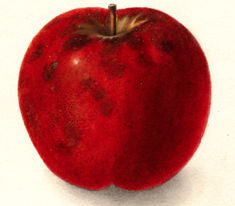
The Dula Beauty, my family apple. Picture pulled from USDA archives.

The Dula Beauty Apple, my family apple. Picture pulled from the USDA archives. I find it amazing that when this picture was painted, there was no need to cover up the cosmetic fungal diseases. That’s what fruit looked like.


Eat Ugly Apples

 This is a post I wrote for AskHRGreen.org

apples2

When you walk through the produce section of a grocery store, it’s always the same view once you get to the apples. Large, glistening orbs of pristine red, yellow and green apples are neatly piled on the shelves, their looks alone inviting the shopper to add them to their cart. So you pick one up and scrupulously examine it to make sure nothing is wrong, add it to your cart, and move on with your purchases. As an apple grower in Southwestern Virginia, I’d like to use four words to tell you what I think about these pristine apples at the grocery store: I won’t eat them.

apples1

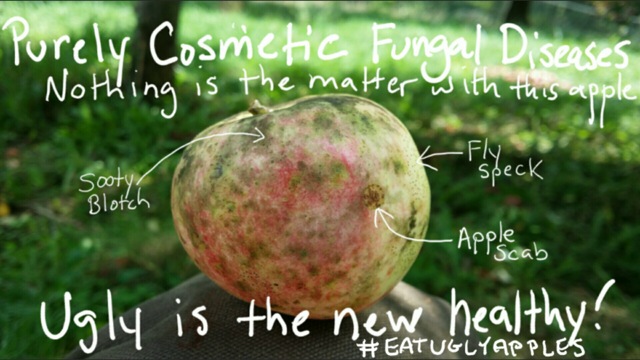
It’s not just because they often taste bad (Red delicious – seriously?), but also because how they are grown. You see, that pristine, blemish-free beauty is a result of management – apples do not naturally look like that in Virginia. Left to its own devices on a tree (and it depends on the apple variety), an apple would likely be covered in a smattering of cosmetic diseases.  These diseases do not alter the taste of these apples (aside from sometimes making them sweeter) and are not in any way an indicator of your apple having a worm.  Yet we Americans have been trained to eat beautiful fruit and reject the blemishes. Because we fear these harmless blemishes, millions of gallons of fungicides are sprayed on apples (organic and conventional) every year across the United States to make them go away.

apples3That person on the tractor in a white tyvec suit who is being followed by a white plume of chemical spray – that’s me, Eliza Greenman, age 30. No matter how much I try and cover-up with all of the necessary gear, I get those chemicals on me at a higher concentration than what lands on the fruit. I’m one of the youngest orchardists in the country by a generation and hope to have a long life ahead of me so I’ve started a campaign to reduce the threats on my health as the farmer, your health as the consumer, and the environmental impacts from  farming practices. Eat Ugly Apples.

Making the conscious choice to eat ugly apples is better and cheaper for you as the consumer, protects environmental quality and it’s better for me as the farmer. It’s time we challenged the social norm that currently has us demanding glistening orbs of perfection from the growers. This takes some awareness and I’m here to help.

Good to Do:

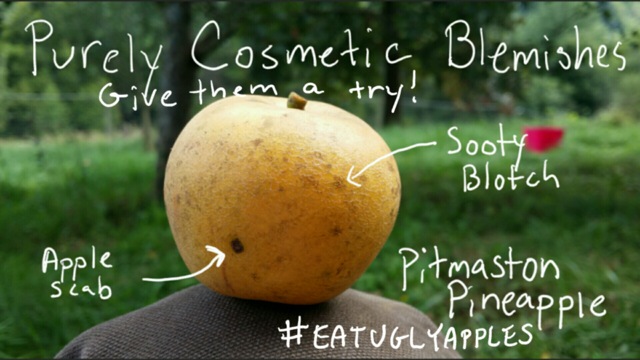
  • Consider eating varieties of apples that you’ve never heard of before. There are 7,000 different known varieties of apples in North America and many of these are better suited for growing in the hot and humid Virginia climate. For example, apples called “Russets” look like potatoes and aren’t very susceptible to many of the cosmetic diseases. They taste amazing. Ask for them and keep asking for them!
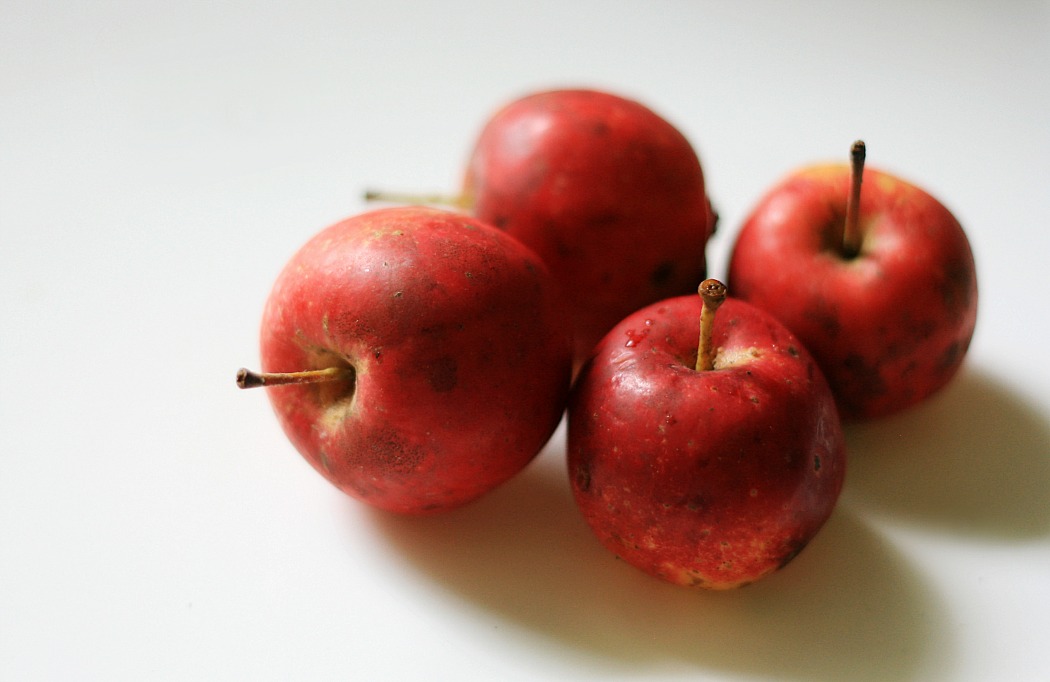
  • Learn the blemishes. I’m convinced that corporate agriculture named these diseases to sound much worse than they actually are. Sooty blotch, fly speck, apple scab and powdery mildew are the top four cosmetic diseases. My pictures above should help you identify them.
  • Spread the ugly apple gospel! Bring down those naysayers with assurance that they will not get sick from eating sooty blotch or fly speck. Naysayers still rejecting the blemishes? Peel it!
  • Take ugly apples social! Tweet, Facebook and Instagram the handle #eatuglyapples when consuming a beautifully blemished specimen. Let’s get this out there.

Thank you, and may you have many ugly apples in your future!

Heterozygosity. It’s Why I’m Concerned for Broad-Acre Permaculture

Over the last few years, I’ve watched and read of many people who have put in highly diversified, large scale orchards in the name of creating a commercial-scale food forest (or something to that extent). By “highly diversified,” I’m talking chestnuts, apples, grapes, hazelnuts, persimmons, paw paw, sea buckthorn, lonicera, black locust, etc. Some people call it “Agroforestry” while others are calling it “Silvopasture,” yet both of those systems traditionally involve the harvest of timber crops rather than fruit and nut harvests. The difference between a timber crop and a fruit crop is HUGE when it comes to planning out a landscape, and this difference alone is why I am predicting the economic hard times of many broad-acre permaculture farms. Employing some basic horticultural/orcharding knowledge to repair what has been overlooked is necessary in order to progress and evolve into a better agricultural system. This blog post is designed to air out my concerns and get people thinking about these overlooked topics in order to bring about faster innovation and success. Note:  This blog post is intended for future and potential commercial growers. Not homesteaders.

The reason why I’m predicting hard times? It’s called heterozygosity: Plants grown from seed may not exactly duplicate the characteristics of its parents. What does this mean? Well, let’s use apples as an extreme example… When you eat a red delicious apple and then plant the seeds, you will not get a red delicious apple tree.  In fact, if you plant the seeds from a red delicious, its offspring will produce entirely random results and you’ll likely get something very far from the looks and taste of red delicious. The apple might be green and tiny with a sour taste, or orange and triangular shaped with tastes of honey. The variability is huge, and that’s why we graft. Grafting is basically a form of cloning and every single red delicious apple tree grown in the world comes from the genetics of one single tree. (I’m not going to get into “sports” in this conversation).  

A small sampling of the shapes and sizes of apples, due to extreme heterozygosity

A small sampling of the shapes and sizes of apples, due to extreme heterozygosity

Diversity fuels sustainability and is a basic tenant of ecology, so planting out row upon row of the same grafted tree variety is not seen as a very ecologically-minded process. In fact, as we continue to graft the same thing over and over again (Just yesterday, I learned that 60% of all apple trees planted in New York State are Macintosh), we are hindering any co-evolution for disease and pest resistance and we growers become more reliant on chemicals to produce a crop as nature evolves around us and becomes increasingly resistant to what we throw at her.

The genetic characteristic of heterozygosity found in varying degrees across many, many tree crops is allowing  for a myriad of genetics that might stand up against the current coevolution of nature. In this light, many permaculturalists are advocating planting trees from seed in order to select for a diversity of genetics that will work with your site, climate, etc because that is one of the only ways we’ll create a truly healthy and sustainable agricultural system. Yet, this is agriculture and those of us farmers heading towards growing perennials on a commercial scale need to make a living doing this. Like, a living off the crops…not off of classes, workshops, speaking engagements, etc.

So, what’s the problem in growing food-tree crops from seed on a massive scale? Heterozygosity. You see, though you’re selecting for better genetics, you are also opening yourself up to a bunch of other unknowns about the tree…like when these fruits and nuts will actually ripen. In the case of apples, your ripening/harvesting window in certain areas can run between June and October. That’s a 4 month-long period!  Now, imagine that you just planted thousands of trees across broad acreage without paying ANY attention to when your crops will ripen. Imagine trying to harvest those crops with any sort of efficiency. Hint: It’s nearly impossible unless you have a huge crew of free labor.  And according to the Department of Labor, once your free labor has the skills to competently do a task, they must be paid minimum wage (or else you are breaking the law).

I once managed a 5 acre orchard with over 100 varieties of apples. These varieties were planted in a patch-work style across the orchard without much sense or order. During harvest, apples were ripening across the entire orchard rather than row-by-row and when I left that orchard, I learned to always clump varieties together that will ripen at the same time (or close). In doing this, you’ll save money in harvest costs, sanity, and also be able to actually provide a merchantable crop other than renting out your rows to finish your animals/other’s animals on an absurd amount of nuts and fruits.

In regular agroforestry or silvopasture systems, you are harvesting timber in addition to growing alley crops or livestock. Trees can grow at different rates, but if you planted them all at the same time, there’s a good chance you’ll be able to harvest them at the same time. That sort of planning ahead for timber crops should not be applied to tree-food crops and we need to stop pretending like it can.

A Silvopasture System For Timber

This is a fact: If you plant trees with intention of harvesting their fruit/nut crops for markets/value added without a harvest plan, you will be screwed when they come into bearing. 

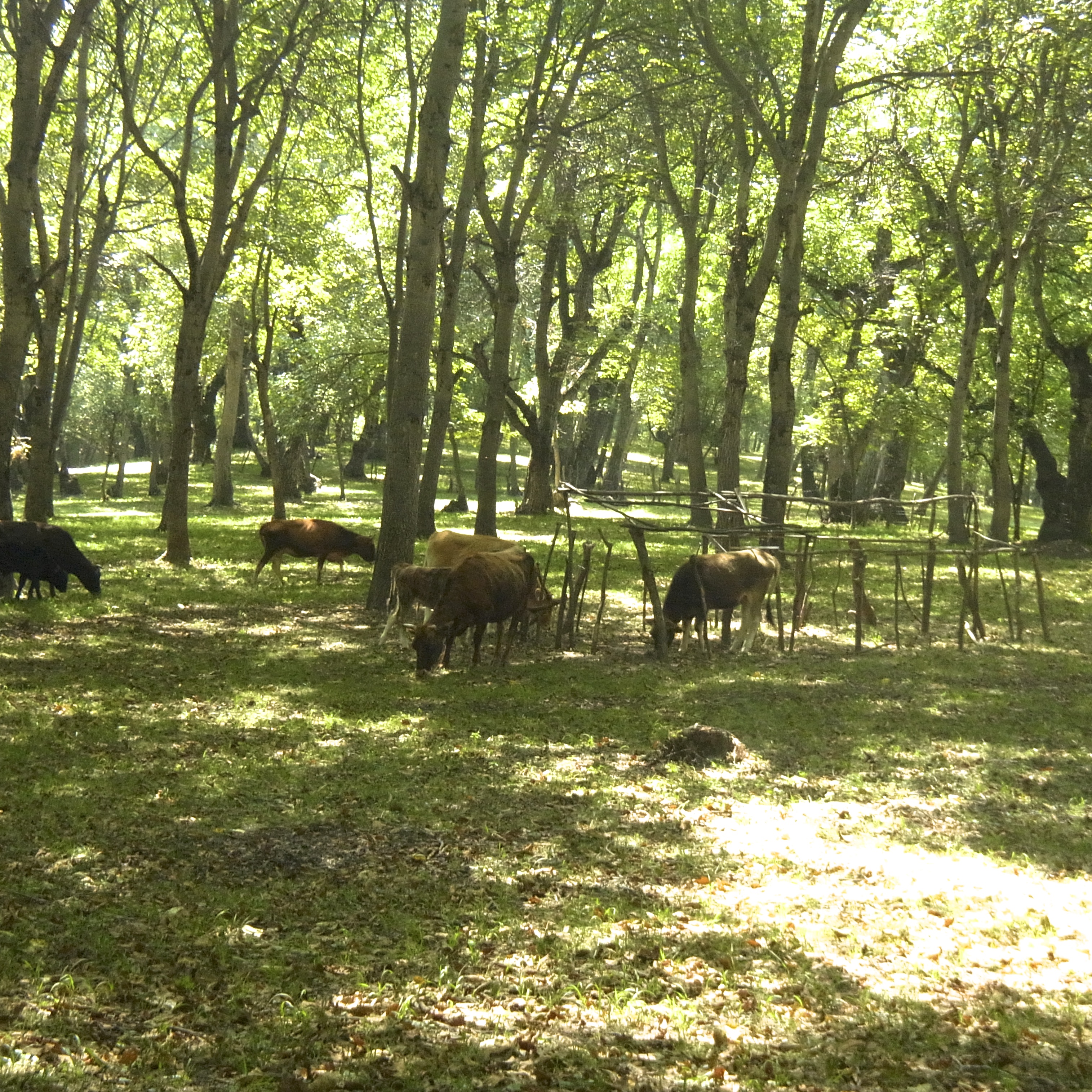
In Central Asia,  edible”silvopasture” (harvesting apple/walnut trees for timber/firewood is illegal) is an integral part of their apple and walnut harvest. The basal area (term used to describe the average amount of an acre occupied by tree stems) of the apple and walnut trees in the forest allows for healthy pasture underneath the trees where livestock are grazed before and after the harvest. The results: You get an apple crop (home processing), a walnut crop (one of few ways to make money there), meat and milk products from livestock (to feed your family) AND the livestock are cleaning up the pre-harvest drops (usually full of pests), keeping the grass low for actual harvest off the ground, and eating the post-harvest drops/leaves (to get rid of pest and disease). These forests are rather broad-acre (thousands of acres) and are broken into parcels which people lease. Walnuts and apples don’t ripen uniformly within these forests, so having these small parcels leased to families ensures a complete harvest because their livelihoods depend on it.

Apple-Walnut

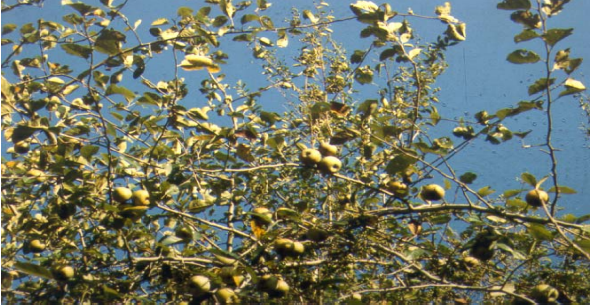
Apple-Walnut “Silvopasture” in Kyrgyzstan.

Planning out a broad-acre planting of anything? Farmers, regenerative agriculture designers and permaculture designers heed warning.  It is very important to have your rows timed according to harvest if you or your client intends on making any money off the system. Stefan Sobkowiak of Miracle Farms has done a wonderful job of this in his permaculture orchard which has allowed for people to go in and pick a variety of different fruits from a single row. In the coming weeks, the rows change to account for ripening. He’s not on a broad-acre scale just yet and has integrated u-pick into his business plan, but it’s the same type of thinking needed for broad-acre perennial plantings.

I’ve seen a lot of pictures of a vast diversity of trees planted on contour swales, keyline, terraces, etc. People wanting to incorporate livestock into the mix have these grand visions of running livestock row by row to create fruit/nut finished meat. Now, wouldn’t that be nice if everything in that row ripened at the same time so you’d only have to send your livestock down that row once after harvest? You can also add some extra value to the scenario by listing off specific varieties (which have stories) that went into this meat.  That’s efficiency and truly forward thinking and planning.   It’s where permaculture and regenerative ag needs to be.

Some of you reading this might have this feeling of dread because you just planted out a acres of extreme, unharvestable chaos.  If you leave your landscape be, you won’t end up with the commercial perennial agricultural system you sent out to create that talks bushels per acre, yields, and everything else an investor or someone replicating your model should ask about. Instead, you’ll likely end up with a food forest preserve that you might be better off treating in the same fashion as those in Central Asia. The model of having others come in and lease parcels of your food forest to harvest isn’t a bad idea either. Perhaps some will consider this as a future model.

I’m interested in creating and using low-input management techniques to grow fruit and nuts in an ecologically savvy way that will change the face of current agriculture. I’m interested in bushels per acre, harvest efficiency, timing. When a corn-grown kid from the FFA wants to know bushel numbers and pricing for these agriculture systems, I want people to be able to present a serious and factual case for him or her to consider changing over.

How do you fix and prevent this?

Some questions to ask your landscape designer:

1.) How many bushels per acre of (insert crop) do you anticipate for harvest once this system is mature?

2.) Will these trees be planted in a way that will allow for a streamlined harvest rather than a hunt-n-peck scenario?

3.) What varieties of these fruits and nuts are you thinking of? Can you please give me harvest dates for these varieties in my area (or extrapolate)?

Tips for those of you who have an unharvestable situation:

1.) Start your research on ripening times for varieties/band your research with others/hire a consultant who can give you this information. Try to procure scionwood from people who have harvest information. There are 7500+ known varieties of apples out there. How much do you want to bet that a couple hundred of them ripen at the same time?

2.) Learn how to top-work or hire someone who is an expert to do it for you once you’ve found varieties suitable for your layout. Or, if you already have trees producing in a haphazard pattern on your landscape, start taking notes of when each tree is ripe and be prepared to top work them into a pattern that makes some harvesting sense.

3.) Planting from seed? Start reading up and learning about true plant propagation and breeding. You can get a good idea of what to plant out from your nurseryin a few year’s time with conscious breeding and innovative techniques.

4.) Encourage and support nurseries and individuals to venture off the beaten path and start really breeding/fruit exploring for low-input management techniques. Support their taking of notes.

5.) Don’t balk at these plant breeders for patenting a plant/tree which they’ve put many hours, dollars (from their own pockets) and observations  into in order to improve the agricultural system. That’s the cost of innovation. Heck, universities are doing it on tax-payer dollars.

Whoa there, apple scab is a healthy thing?

I decided to get scientific this evening and look up what happens to the apple when it has been infected by apple scab, Venturia inaequalis. Like I had guessed, it looks like the benefits to the consumer are heightened when the apple has scab. After some searching, I found this article, which I’ll go ahead and spoil by saying this: The health benefits were multiplied with the presence of scab on the apple.

Once upon a time, Slovenia and Austria teamed up to study the differences between a “healthy” apple peel without any disease and an apple peel infected with apple scab.

Apple With Scab Lesions

Versus

Apple Without Scab Lesions


The study found the following:
Compared to a “healthy” peel, scab lesion tissue had:

  • ≤ 3.1-times higher hydroxycinnamic acid content
  • ≤ 1.3-times higher dihydrochalcone content
  • ≤ 3.9-times higher flavan-3-ol content.
  • Showed slightly higher phenylalanine ammonia-lyase, chalcone synthase, chalcone isomerase, flavonol synthase, and dihydroflavonol 4-reductase activities.

That’s a mouthful. Let me just tell you what some of these mean (and provide links):

Hydroxycinnamic acid – A group of flavonoids, best known for their antioxidant and anti-inflammatory health benefits as well as the support of the cardiovascular and nervous systems.

Dihydrochalcone– Another group of flavonoids, known for anti-inflammatory qualities.

Flavan-3-ol– Associated with the prevention of chronic diseases. Often found in tea, citrus, and wine.

Phenylalanine ammonia-lyase– Used for treatment of the metabolic disorder Phenylketonuria.

Chalcone synthase– A promising enzyme that pharmaceutical companies are currently exploring for dietary supplements and health products.

How about that. This, of course, is the peel of the apple we are talking about. Given the article above, would you rather drink cider made from scabby apples, or cider from non-scabby apples?

I welcome all articles proving me wrong. I searched for all I could find relating to apple scab and nutrition, and didn’t come up with much. This is a learning process and I don’t have access to scientific journals and such. I take what I can view for free on the internet.


A Radical Orchardist? Part One

Last fall, I wrote a blog entry for my previous employer talking about apple scab, and how brix tests have shown that apples with scab have a higher sugar content than apples without scab. The article got a lot of attention and sparked some new (and much needed) conversations, and I should have saved what I had written (so I could post it here). You see, I wanted to reblog it today, but have realized that it has been taken down since I left. This is all very interesting to me and has basically supplied me with content for today’s blog entry: Being a radical orchardist.Screen Shot 2015-02-16 at 9.43.13 AM

Part 1: Fungal Disease People want affordable organic, and that’s usually not possible unless you grow it yourself or start eating ugly (cosmetically blemished) fruit. Fungal diseases like apple scab can largely be controlled by orchard cleanliness: breaking down the leaves after they fall, making sure the fruits are all picked up, pruning for good air flow (and removing the debris) and selecting apple genetics that aren’t as prone. Despite these efforts, however, you’re likely to still get some disease in your orchard. To the commercial dessert fruit grower, this is a bad thing because a scabby apple is an unsaleable apple. But to the cider maker, I think we’ve thought this more of a problem than it actually is. My article I wrote for my previous employer (seen in the snapshot above-right) said that after repeated trials with my refractometer and a bunch of apples, I found that apple scab raises the brix, or sugar content, of an apple due to the apple’s response to the fungal stress. Higher brix= higher sugar content=more alcohol in cider. I have spent a little time researching the nutritional content of apples with scab compared to apples without scab, and the overall nutrition of the apple is higher with scab (click to read that blog post). To me, that’s a value added disease if managed for moderation…especially if the apple hasn’t been repeatedly slathered with fungicides (organic or inorganic). Yet, we North Americans have been taught to only accept the most beautiful of apples, ones free of cosmetic blemishes, and that is why fungicides are sprayed at alarming rates in orchards across the continent.

Hewes VA Crab

(Hewes Virginia Crab, without fungicide or insecticide)

Dessert fruit is NOT process/cider fruit, so why are cideries accepting apples that have, in my opinion, been inferiorly managed for cider? The short answer is this: Unless cideries are growing their own apples, they have to buy from conventional growers. The information given from extension agents is how to grow dessert fruit, not cider fruit, and there is a difference. There’s such a shortage of cider apples that cider makers really don’t have much choice at the moment to question growing practices, and they aren’t at a point to talk with the growers about management.

This also begs the question: What is a cider apple? Sure, you can have all the old French and English varieties like Dabinett, Frequin Rouge, Tremletts Bitter, Norfolk Beefing, etc, but if they are managed the same as dessert apples…are they really cider apples? I don’t think so.

But back to where I said that these apples are being inferiorly managed for cider… Here’s a scary example: If you work within the cider or wine realm, you’ll learn that fermentations have been known to delay due to the late season sprays of sulfur based fungicides like Captan (a broad spectrum fungicide) on apples and grapes arriving at the press. Some cider makers I have talked with said that their ferments have stopped before and they attribute it to late season fungicide sprays. This means that some of the yeast added to the juice to start the transition from juice to alcohol died due to the fungicide residue on the apples. A fungicide used to keep the dessert fruit beautiful.  Those who spray Captan will sing the praises of how, if used in combination with IPM practices, it will hardly leave an environmental impact. Yet, if the residue is killing the yeast during fermentation, I can’t imagine what it is actually doing to the environment and the person spraying it in its concentrated form. Also, imagine what it is doing to the flora in your gut. This isn’t talked about. Cider is new with consumers, so they don’t yet know the questions to ask.  I once asked a couple dessert apple growers who have traditional cider apple varieties why they are treating their cider apples the same as their dessert fruit. “It’s cheaper to manage them all the same,” they said. I think the truth actually rests within the realm of “Doing something different to the cider apples is a pain in the ass.” Which is, basically, the mantra of almost every apple grower (minus about 30 people) I’ve ever met. Would you rather drink cider from an ugly apple free of chemicals which encourages a healthy fermentation, or a cider from conventional dessert fruit apples that has to be babied with all sorts of enzymes, yeast nutrient and other additives due to an ill fermentation? Would you rather eat an affordable, organic apple with cosmetic blemishes, or one that has been repeatedly sprayed with chemicals in order to ensure it’s beauty? That’s a radical thought, and it’s what I’m after.

I’m excited to learn and work towards building a different cider story. It’s such a new industry… there’s room for a rewrite. Understanding the insects, preserving diversity in the soil, working with more disease resistant genetics, managing for the site… it’s all so radical, yet so very practical.

Questions to ask your local cider company: 

1.) What percentage of apples do you import from other orchards in order to make your cider? (I can list 3 cideries off the top of my head who grow ALL of their own apples. It’s not many)

2.) Are the apples you are buying grown as dessert fruit? Or grown as cider fruit? (Ask them to differentiate)

3.) What are the management practices of these growers? Do they spray a late-season fungicide to prevent the cosmetic diseases apple scab and powdery mildew? Consumer awareness can change the ethics of agriculture. By asking these questions, correcting your buying habits and telling your friends what you have learned, growers and cider makers will eventually have to give in to change. That’s how Ag works in America, unfortunately.

Recent essay about my trip to the national future farmers of america convention

A Report on the FFA 

by Eliza Greenman

Greenhorns, in partnership with Organic Consumers Association were in attendance last week at the national gathering of the FFA. The FFA National Convention in Louisville, Kentucky, saw a sea of 60,000 students representing every nook and cranny of America (and its territories) gathered together for fellowship, belonging, education and scholarly competition. Between the ages of 13 and 18, many of these students are next-in-line to the family farm and occupy a strategically powerful position in the future of American Agriculture; they are kids with land. With a self-confidence rarely seen in teenagers and impeccable public speaking skills, these students in their blue corduroy jackets cut quite the impressive figure, particularly in a stadium context.

They are team-spirited, motivated and articulate, and most of them credit these qualities to the organization that brought them together, the FFA. The FFA is turning these next-in-line farmers, agriscientists, ag teachers and farm sympathizers into successful leaders, fierce entrepreneurs, and good Samaritans…for Big Ag.

 This polished youth constituency at the FFA sing the praises, almost exclusively, of Big Ag. How did this happen? Lets start with the obvious place, and let’s follow the money.
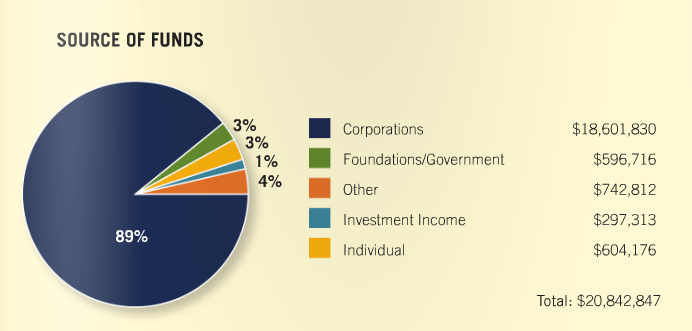
Based on the funding sources published in the 2012 National FFA Annual Report, corporate sponsorship represented 89% of total funding for the organization, or 18.6 million dollars (see page 17). This funding came from companies like:

  • Zoetis- World’s largest producer of medicine and vaccinations for pets and livestock under Pfizer

  • Cargill- Distributor of agricultural commodities such as the raising of livestock and production of feed

  • Monsanto- Leading producer of genetically engineered seed (GMO) and herbicides (Roundup)

  • Dow- 2nd largest chemical producer in the world

  • Syngenta– Biotechnology and genomic research, distribution of seeds

  • Elanco– Global animal pharmaceutical branch under Eli Lilly and Company

The corporate influence of the companies above and others were widely detected by all of the Greenhorns, as well as many of the parents and guardians in attendance at the convention. Throughout the expo, flashy, digital, draconian and utterly Orwellian interactive displays and mountains of corporate schwag beckoned students to answer the question: “Who will feed the world when it reaches 9 billion people by 2050?”

The “feed the world” sloganeering has been carefully crafted by “Big Ag” to make organic agriculture seem inadequate or even dangerous to the health of the world. The energy from the main stage resembled an arena playing Jock Jams more than an address by a CEO. Full of college football jeering, promises for thousands of future scholarships, and cheering for money (“Scream if you think money is neat-o”), students were all riled up. Tyson Foods, Elanco and Monsanto executives coached the students, with polished evangelical speeches, about the “grave risk” we face if we can’t use “technologies we have (including drought resistant seeds) to feed the world.”  Afterwards, FFA students approached the Greenhorns booth to [politely] ask us why biotechnology isn’t currently accepted by our organization. We were accused of not knowing the facts and dabbling in unethical, fear-mongering tactics (in league with Chipotle) giving consumers false and condemning information. Sweet, clean, well-meaning students explained to us why organic agriculture just isn’t realistically able to feed the world. It’s not innovative and technologically advanced enough, they said.

 Our retort: Without a return to restorative organic agriculture, our legacy won’t have a world to feed. But that’s almost besides the point. The goal is not for ‘we biotech’ to feed the world, but for the world to feed itself with foods appropriate to the culture and landscape – empowerment of communities with food sovereignty and seed sovereignty. The goal is to grow food in a way that respects the land and soil while building a biodiverse and environmentally resilient landscape that can provide us a well balanced diet, not just corn and its myriad of products. “Who will Feed the world in 2050” is a marketing tactic for big businesses that realize the destruction they are causing now, to our diets and our soil health, but don’t want to lose any market share. They don’t want to talk about feeding the world today.

To help transform the public conversation from questioning our diets and soil health towards being concerned with the future of feeding two-billion more people, companies like Monsanto are smartly investing their money to indoctrinate the FFA’s 610,000+ student member base, the next generation of agricultural leaders, their own young farmer lobby. For example, funding is being poured into extensive public speaking training for these students so their voices will stand out, even in the sensory-overloaded social-media generation. Just watch the extemporaneous public speaking finals from this year for proof of success, their stage presence is impressive to say the least.

It’s all about diversion. The keynote address from the CEO of Tyson Foods was delivered after first telling the young audience it was okay not to pay attention: don’t put your phones away, was the first thing Donnie Smith said, as he took a ‘selfie’ on stage. Instead, he ordered the young audience: “GET YOUR PHONES OUT! Let me see your phones, Louisville! Let me see them all! Light it up!” His main point, and the point of the phone gimmick was to ask the crowd to use social media to “take back” the “story of agriculture:” “These people are hijacking your story and you need to take it back!” Within hours of delivering this message with the hashtag of #myagstory, Donnie Smith’s message trended #1 on Twitter.

But, for those of us who were listening instead of tweeting, we want to know: take back the story of agriculture from whom?? Tyson Foods and others indict the organic industry, corporations like Chipotle, “basement dwelling loser bloggers,” presumably even our very own young farmers movement, have stolen the story of agriculture and distorted it with fear-mongering. These students are taught that the organic movement has co-opted the “story of agriculture” because we want to vilify and condemn America’s farmers. How unreasonable to question the farming practices of the most patriotic and hardworking of Americans. Watch these Amazing videos and see for yourself, learn the facts and know the issues, help us defend our work, help us insist on the truth.

Videos to watch from the 2014 National FFA Convention:

Tyson CEO Donnie Smith Delivers Keynote to 2014 FFA Conference

Monsanto President Brett Begemann speaks to 2014 FFA Conference

FFA introduction for Brett Begemann, Monsanto President

Extemporaneous Public Speaking Finals

 So why is Big Ag investing like this in the youth? These corporations are working towards rewriting America’s rural identity into one where hard work ethic, ingenuity, entrepreneurial spirit and family values are based, not on real relationships with the soil, land and local communities, but on the use of high-cost and high-input biotechnological innovation. Students at FFA have bought into the fairytale of Big Ag: that the best way to farm is with bigger-better-newer equipment, leasing or buying ever-larger parcels, and cultivating with high-tech seed and synthetic chemicals to ensure high yields. As one student said: “Why should I farm 600 acres organically when I can farm 6000 acres with GM products? It just makes more business sense and the world’s gotta eat.”

These bright and charming kids are getting hooked on a narrative that undermines their autonomy as business people, and gives them a shortsighted picture of farmland and soil stewardship. It is no secret that chemical inputs for monoculture crops cause serious, long-term soil degradation. It is no secret that farmers, especially those under contract with Tyson Foods and Tyson’s subsidiaries, have little control over the fates of their small businesses, where they get big or are squeezed out with crushing debt. (Read: The Meat Racket).

Given the current political and economic landscape, it would appear to make a lot of sense for young entrepreneurial-minded rural farmers to grow crops like corn because the market is demanding it (ethanol, livestock feed and export) and tax payers are subsidizing it. As farmers and advocates of diversified and specialty crops, a monoculture largely supported by American tax dollars seems to have a precarious future, yet these FFA students don’t see it that way. One feisty young man swore on his family’s farm that if subsidies were taken away, his family’s corn and soybean business would still prosper like it has been, even with the recent purchase of a $380,000 harvester. This may or may not be the case for this young man, but according to David Griswold of the CATO institute in a 2007 debate with the Farm Bureau: “Subsidized farmers are selling out their future competitiveness in the market for the sake of federal handouts.” From 1980 to 2005, cash receipts for subsidy supported crops like corn, soybeans, wheat, sugar beets, etc rose 14 percent while cash receipts for non-supported crops like fruits, vegetables, and nuts, soared by 186 percent.

We have reached a moment where the mainstream American public has begun to question the contents, supply chain, ethics and health of their food supply, and wants it labelled. Big Ag is getting worried. Last fall the “Farmers and Ranchers Alliance” paid for and distributed a ‘documentary film about young farmers in America,’ called Farmland. This film was distributed to Farm Bureaus across America in order to hit their target audience of sons and daughters born into conventional agricultural families who feel squeezed and misunderstood by mass media depictions. Outside of the Farmers and Ranchers Alliance’s reach, this film was dismissed as an elaborate high-cost puff-piece (“more like a feature-length advertisement than like a documentary”). Many students we talked with asked if we had seen this film, which they felt was a fair portrayal of their lifestyle.

Through millions of dollars in donations, corporations have created a heroic strawman, an all-American, football loving narrative painting themselves as saviors of global hunger and harbingers of sustainable agriculture. This heroism gets piped into rural schools right alongside the pledge of allegiance, beckoning student farmers to join them in their effort to intensify production in order to meet growing food demands. The rewards are big and the conventional way of farming is seen as a sure thing for right now.

The national FFA conference was best summed up by Greenhorns teammate Katie Murray: “These corporations and FFA mindsets are in-put, output driven. These students aren’t being taught to think of the long-term effects. They are a rising generation of agricultural thinkers and actors who aren’t considering the whole system.” Feeding the growing population, 9 billion by 2050, is just a piece of the whole-system puzzle, including our diets and soil health today, in 2014. The FFA is built on camaraderie and relationship building, yet it seems to fall short when considering the ecological relationships needed to sustain this earth for centuries to come. This is a disservice to the members of the Future Farmers of America, who deserve to learn and be exposed to more than what the current educational constraints dictate.

Can we feed 9 billion using organic techniques? This UN report says its the only way forward. In order to further this train of thought and practice, we’re going to have to invest in relationships with the incoming generation. The FFA students are smart, friendly, respectful, hard-working, down to earth, and completely insulated by the FFA curriculum. It’s our job to help them to make more connections with a more diverse nature and expose them to the way of life we believe in. Reach out to your local FFA chapter and see what you can do to help. Volunteer, offer guided tours, be a guest speaker and get to know these students clad in blue corduroy jackets. They are good kids, and we’ll need them on the team.

In the words of William C. Gehrke, who as farmer-teacher-advocate in 1936 wrote a letter published in The Kansas Union Farmer about “a better way to get farmers to realize social problems“: If the common people would awaken, especially your farmers, shake off the shackles of ignorance and quit following blindly, you would become master of your own destinies. Let’s learn from this history and stop teaching ignorance.

(This essay has been taken out of the most recent Greenhorns Eblast, which can be found HERE)

This article was also helped and enhanced by the editing talents of Severine Von Tscharner Fleming, Ann Marie Rubin and Anna Isserow. . 
How in the heck can apples and black walnuts grow together? A thought

Last year I traveled to Central Asia to see and (briefly) study the native-wild apple forests  of Kyrgyzstan (article found HERE). Once there, I learned that the forest composition was primarily walnut-apple. This was a bit of a surprise for me to see, because everything I had learned in forestry school told me that walnuts produce a chemical called juglone, which creates a hostile environment for plants that come within contact of walnut roots (as in, it messes with their respiration). Seeing these apples growing happily and harmoniously next to these walnuts was a bit of a mind-blowing experience for me because a thriving apple-walnut ecosystem would have never occurred to me based what I had been told in school.

The walnuts in Kyrgyzstan are known as Carpathian walnuts, or English/Persian walnuts (Juglans regia). They are known to have a lesser amount of juglone than our native black walnut, so I just assumed this was how apples were able to grow in the company of walnuts in these forests. Either that, or the ancient apple genetics had co-evolved to tolerate juglone. Whatever the mechanism was that allowed for these trees to grow together, the results were stunning to me.

The apples in this forest were no-maintenance-flawless and I thought this might be due to a combination of three things: 1.)Excellent genetics (which had co-evolved for over millions of years to resist certain pests and diseases). 2.) The fact that I could smell the juglone chemical being released from the leafy walnut canopy (which acted as a pest deterrent). 3.) The presence of livestock in these forests, which helped keep pest pressure down through disrupting life cycles. After witnessing this, I thought: I have got to figure out how to mimic this apple-walnut ecosystem in the United States.

I decided to start down a path of finding walnut family members that produced a lesser amount of juglone than our black walnut, like hickories and pecans, which wouldn’t kill my apple trees but would still provide the benefits of deterring insects. Though I am still interested in further experimenting with this concept, I’m writing this blog to announce that I’ve discovered another possible pathway… SOIL BACTERIA.

This article has me really excited (warning: it is uber-nerdy): http://amo.colorado.edu/schmidt1988.pdf

Basically, it identifies a juglone-metabolizing soil bacteria which has been known to cancel out the allelopathic properties underneath black walnuts! This would explain some people’s claims that all sorts of plants are able to grow under their black walnuts while others have a barren landscape underneath. This could also explain the relationships in Kyrgyzstan…the native soil could be full of this bacteria and many others like it! All of a sudden, mimicking a wild walnut-apple ecosystem in the US might be made possible by identifying and then inoculating juglone-metabolizing soil bacteria into the orchard(!).

I need to do more research on this, but it would be fund to run a few experiments on identifying landscapes which can grow apples underneath/within the root zone of walnuts and taking a few scoops of soil, in which you then start a new black walnut seedling and transplant out near to an apple.  It’s kind of like fruit exploring, only soil bacteria-meets- fruit exploring.

Putting in my notice.

On my one year anniversary here, I put in my notice that I would be leaving by the end of the year.

It’s an exhilarating feeling to put in your notice, there’s a certain thrill when it comes to “what’s next.” At the same time, I’m in mourning. I had so much hope and energy to be here, had told myself that it was going to be a permanent move. I spent all of my savings on erecting a greenhouse and starting a nursery business, taking any security blanket away and throwing me into this crazy world. I have learned many things this year about myself, running a business and working with southern heirloom apple varieties. I had some really awesome days and some days where I felt so miserable that I wanted to just disappear. I have never been more stressed out, sleep deprived or lonely in my life, yet I still thought this was where I needed to be. I attribute this to my often ridiculous love for the trees, which blinds me at times.

When I worked with a very old man in Maine managing his 100 variety orchard, he had me spraying a fungicide on the trees with a wand sprayer as he drove the tractor up and down the rows. Having never sprayed this fungicide before, he assured me that wearing a rain coat was sufficient. I got so much of the fungicide on me that that my skin started to burn intensely and I felt physically ill (vomiting). I was confined to the bed for the remainder of the day and didn’t feel right until about a week later. The smell of this particular fungicide makes me ill to this day, much like certain hard alcohols make others feel after one bad night of overconsumption…you know, our body reminding us to stay the hell away.  I know that I was improperly clothed, but I vowed then and there never to be in a situation where I had to spray anything like that again. I also vowed to never be in a management position where I have someone spray those chemicals.

This is why I decided to head down the cider apple route. As an apple orchardist with an heirloom niche, it was a perfect transition for me to manage trees in a way that I thought would be more responsible for the farmer, the consumer, and the environment. It was a way to grow ugly apples and have them be valued for their flavors and nutritional content rather than their looks. Every tree is different and these old genetics have a thing or two to teach us, so I was excited to learn from the varietal collection here. Over the past year, I have learned a lot from the trees, some subtleties and some big picture items. Enough to have me convinced that I can grow within my own personal/environmental ideologies in order to produce a fantastic and all together healthy product if given the opportunity to keep working with the trees in what is nowadays seen as a careless, ignorant, and improper management approach.

At this time, “This is a business” is not a good enough excuse to get me to spray things I don’t believe are necessary given the goals and objectives. Especially when only 20% of apples in the cider are from the orchard (Aka: Why not use this opportunity to grow apples for cider, since the cider will still be made without them). I can’t concern myself with the now and turn a blind eye to what my impacts might be down the road on this landscape and other people.  That’s not responsible, I can’t let myself spray a tree with pesticides, fungicides, hormones and other chemicals without first knowing what the tree’s genetics and natural associations are capable of producing. Perhaps that is the definition of a radical these days.

Yesterday someone from a University came by the cider house and asked me what I had sprayed earlier that day. I hadn’t sprayed anything. She was smelling the residues left behind from the previous pressing of apples brought in from a conventional orchard. When I had walked past them last week, I could smell fungicide residue from 50 feet away.  Had there been any question, one could just go and look at the dusty film on the apples to confirm suspicions. Apparently this smell can linger 3 days in a parking lot, which is disturbing on a variety of levels.

I’ve been told that I should seek out this conventional dessert fruit orchardist’s advice, the one who delivered the above mentioned apples. I should have him look at my spray schedule in order to help me adjust it and make the right decisions, they said. Perhaps I’m just really naïve or ignorant, but it’s hard for me to believe that this person and I have anything in common other than the fact that we’re growing the same fruit that has more than 7000 known and genetically different varieties.

Eliza is very (might be tragically) wrong, but smart and innocent.”

That’s from an email haphazardly forwarded to me from a person concerned that I didn’t know what I was doing, so they sought out professional advice.

I will be the first person to tell you that I’ve only just begun to trust my gut when it says to go one way rather than another. This has no scientific backing without my ability to explain it in a scientific language, which I’ve only started to do.  I have an understanding of conventional horticulture, but I question many of the processes. I have no idea what is actually the right way to be doing things, given the broad scope of human-caused tragedies. But to be called “tragically wrong” when pushing the envelope… man, that makes me want to defend myself.

And I did. Without hesitation.  I called him up, read him what he wrote, and asked for him to please describe what he meant when he said those things. “You weren’t meant to read that,” he said. I grilled him on what he knew about the soils, the cultivars, the humid temperate rainforest climate in this area… “How could you say those things about me without walking in these shoes, knowing this soil, growing these cultivars? You have never experienced these conditions. In your statements, are you implying that all is universal?” He was upset that I was sent that email. He appeased me, but later called me disrespectful. Which I was, because I stooped to his level. I regret stooping to his level.

After having that confrontational conversation, I made the decision to accept those who will always criticize me and doom me to failure. Hell, in time, I might also find room to love these people because they don’t understand. Maybe they are right. Maybe my work will never amount to anything. But I’m not giving up because these people think this way and have these opinions about me and my work. I’ve only just started and this is my life’s fire.

Deep down inside of me, there is an unexplained energy that propels me forward with all of this and gives me a voice. It’s the same feeling I had 6 years ago when I was up in the tree, learning how to prune for the first time. It’s a purpose, as if every cell in my body thinks I should be doing this. I will keep learning from the landscapes and people around me. I’ll keep following my gut and trying to decipher why it steered me in that particular direction. I’ll do more fruit exploring in order to learn from the trees and the people who planted them 100+ years ago. I’m going to continue to ask hard questions, be insatiably curious, look beyond the orchards for solutions, and convince people to eat cosmetically blemished fruit (#eatuglyapples).

I’m prepared to fail terribly in pursuit of potentially valuable/viable horticulture gains.  With that, I put in my notice.  Lookout, world.

(we set a record this year for harvest, 7 tons per produceable acre. It was a good production year, but that number I just gave you, 7 tons per acre, was the amount we pressed. )

virgin birthing

In a recent article written by National Geographic, a female python in captivity, Thelma, gave virgin birth to 6 (half-clone!) baby snakes in 2012. Only recently has the DNA confirmed that no male has ever been present in the making of these hatchlings. This phenomenon of virgin birthing in nature is called “parthenogenesis,” which basically means that these creatures were able to self-fertilize or reproduce asexually. (Harry Potter fans out there, I can’t get “parthel tongue” out of my head. Which is totally what Thelma the snake speaks, with a lisp.)

My introduction to the concept of “parthenogenesis” happened over a decade ago when I was writing a paper for a biology class. I had grown tired of writing the same old standard science papers, so I decided to turn in a paper that was half science, half sultry romance. At the time, Jerry Springer was a big name on television and the concept of parthenogenesis fit in quite well into a “who’s the daddy” type of drama.  I remember being handed back the graded paper and written in giant red across the top, it said: “Ms. Greenman- See me after class!!!”

I walked into the office after class and was commanded to SIT DOWN. So I did, thinking that I might be receiving an F-. It took me a while to look into her eyes and when I did, I saw a face beaming with entertainment. She looked at me for a few seconds and with a laugh, got up with chalk in hand and made me sit through a lecture on the juicy particulars I had missed in the Jerry Springer scenario and then told me re-write the paper to include what I had just learned.

She sent me that national geographic article this morning with a note: “Perhaps this will help contribute ideas towards the nature novel you need to write.”

What does this have to do with apples? Well, let me try to tie this all together (since this is an apple blog, after all).  In the horticultural world, we have a similar term called “Parthenocarpy,” which literally means “virgin fruit,” and refers to fruit which is developed in absence of fertilization. These fruits are naturally seedless and, basically, they are freaks in nature. Just like Thelma the python.

Lee Calhoun writes about an apple called Bloomless, Seedless, Coreless in his book, Old Southern Apples, but it turns out not to be seedless, and actually has two cores.  Still, TIME magazine wrote an article in 1941 about a discovered coreless apple:

“The first coreless, seedless apples known to science were discovered only last year. Weighing a plump quarter-pound each, they grow on a freak tree in Mrs. Libbie Wilcox’s backyard in Huntington Park, Calif.

This week the Department of Agriculture is working with the tree in the hope of making seedless apples as commonplace as seedless oranges. Since there are no seeds to plant, the new fruit must be propagated by grafts on normal apple trees.”

To the extent of my knowledge, this project was not successful (or else they are being kept where the fertile mules live). It makes sense for these apples to be quite rare, because it’s the apple tree’s #1 job to disperse seed. If an insect gets into an apple, it’s often headed straight for the seeds. Once those seeds are eaten, the tree notices that the apple can no longer do it’s job in growing future apple trees and (literally) lets it go. Apple trees don’t like free loaders, either.

So there, I’ve brought it back to apples. I’d love to find that apple written about in TIME magazine, though. Would be nice to add to the collection.